
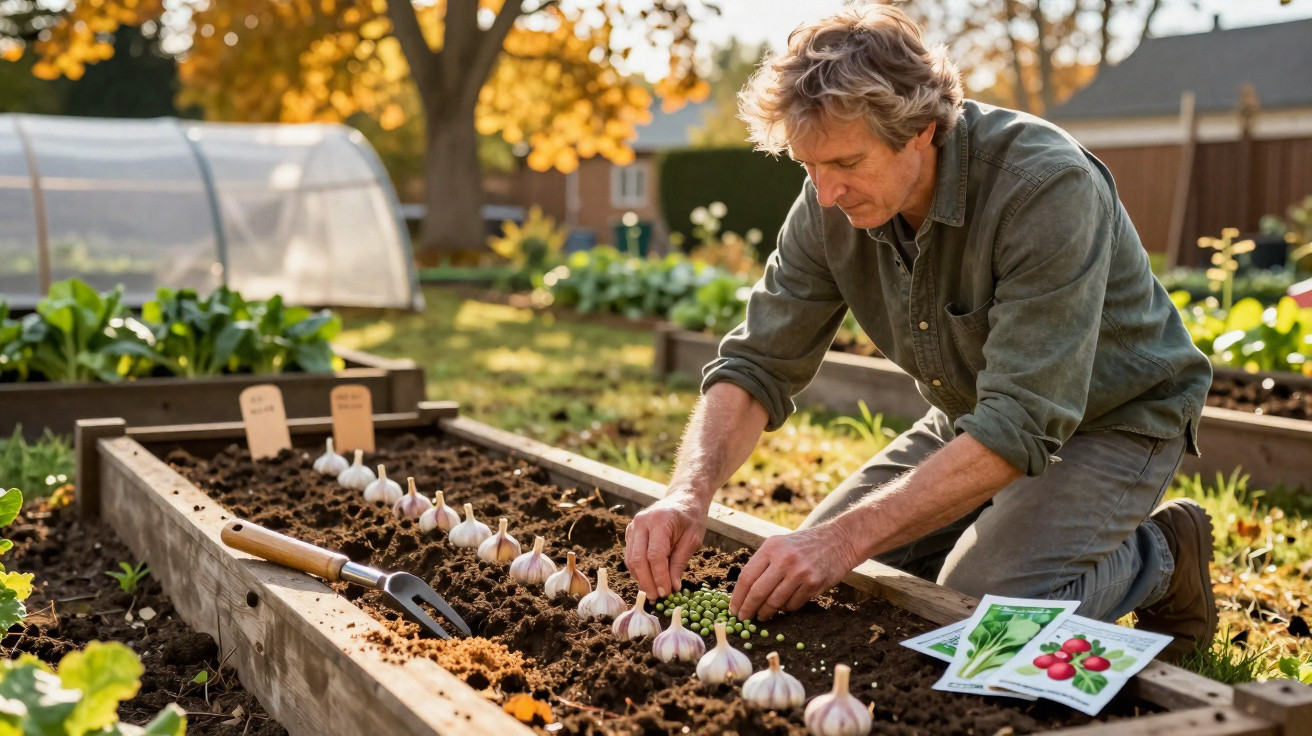
While plenty of growers put everything away once the final tomatoes are picked, a determined minority stays out in the plot and keeps the beds in play. They’ve learnt that a few well-chosen October sowings can effectively outsmart the calendar and put fresh food on the table several weeks earlier next year.
Why late‑season sowing flips the script on spring gardening
In the UK (and across much of the northern US), October often feels like the moment to wind everything down. The daylight fades, leaves carpet the ground, and seed packets get shoved to the back of a drawer. But underfoot, the situation is often better than it looks: soil still carries a trace of summer heat, the air tends to be gently damp, and weeds are far less aggressive.
October gives seeds something they never get in April: time, space and a quiet soil with almost no competition.
Sown now, many tough, cold-tolerant crops establish at a slow pace and then simply hold when true winter arrives. Whenever temperatures lift above freezing, their roots keep edging forward. Then, as the days lengthen again, those plants accelerate-often well before anything sown in spring has even germinated.
Hidden advantages of sowing into autumn
For home growers, autumn sowings offer clear, practical upsides:
- Earlier harvests that can arrive two to four weeks ahead of spring sowings.
- Less congestion in the greenhouse and seed trays in March and April.
- Reduced disease pressure, since foliage emerges before many pests and fungi peak.
- More efficient use of space, with beds occupied productively all winter.
This approach is particularly valuable in compact gardens. If a bed is carrying garlic, winter spinach or field peas from October to June, you can keep containers, cold frames or indoor shelving for crops that need more cosseting once early spring arrives.
The mistake beginners make when autumn arrives
Less experienced gardeners often close the gate after the last courgette and treat October as a hard stop. More seasoned growers see it as a second sowing window, staying focused on growing seasons rather than the calendar year.
Missing autumn sowings can leave beds bare for months and create an awkward hungry gap towards late winter. With a small selection of hardy species, that gap can be reduced dramatically. The key is to pick crops that cope with cold, wet soil and short days-instead of trying to push summer favourites beyond their natural season.
The autumn all‑stars: seeds that quietly work through winter
Not every plant benefits from a long, cool lead-in to spring. The crops below are staples in the beds of long-time gardeners because they tolerate frost, take drizzle in their stride, and turn patience into something you can eat.
Garlic: the classic October planting that pays off big
Garlic is often missing from gardens that only think in spring terms, even though it’s very much an autumn crop. Putting cloves in now lets winter chill trigger proper bulb formation. They establish strong roots, sit tight through wet spells, and then push into active growth as soon as light levels climb.
Plant garlic once in October and it will quietly pay you back in June with fat, well-cured bulbs that store for months.
In temperate regions, many growers aim for mid‑October to mid‑November, with timing adjusted by latitude. Set cloves point up, around 3–4 cm deep, spaced roughly 10–15 cm apart along the row. Drainage is more important than high fertility, so in areas with wet winters, raised beds or ridged rows can make a real difference.
Salad foundations: lamb’s lettuce, spinach and hardy radishes
Winter salads can seem like a treat, yet the seed costs very little. For October sowing, three crops consistently earn their place:
| Crop | Typical October sowing method | Likely first harvest window |
|---|---|---|
| Lamb’s lettuce (corn salad) | Broadcast or tight rows, barely covered | Late winter to early spring |
| Winter spinach | Rows 20–30 cm apart, seeds 5–8 cm apart | Early to mid‑spring |
| Winter radish / Asian radish types | Under cloche or tunnel, rows 15 cm apart | Late winter, depending on climate |
Lamb’s lettuce stays compact and thick, making it useful for plugging spare spaces. Winter spinach forms sturdier leaves with a deeper flavour than many summer types. Hardy radishes take longer than spring radishes, but they hold reliably in the soil and provide a crisp, peppery bite when very little else is available.
Autumn-sown peas: an early hit of sweetness
It surprises many gardeners that certain round‑seeded pea varieties can come through winter in good shape. When sown in late October or early November, they often germinate at a crawl, build stocky young plants, and then burst forward once the light returns.
Where conditions allow, overwintered peas can deliver the first sweet pods just as neighbours are only sowing their seed trays.
Pick varieties described as hardy or suitable for autumn sowing. Plant in double rows so plants support one another better, then add a light mulch of straw or shredded leaves. A low net or mesh is useful to deter pigeons and mice while seedlings get established.
Soil preparation tricks that make autumn sowings succeed
In winter beds, dependable structure matters more than heavy feeding. More crops fail from waterlogging, compaction or a sealed surface than from modest fertility.
Loosen, feed lightly, then protect
Before you sow, lift and fracture the ground using a fork or broadfork, keeping the soil unturned. That approach preserves soil life while creating channels for roots and winter rain. Add a modest layer of well-rotted compost over the top, rather than digging it down.
Think of autumn bed prep as setting up a soft, breathable duvet for your seeds, not as a full renovation project.
After sowing, lay on a thin mulch-leaves, straw, or old compost-to protect the surface from heavy rain. This helps reduce nutrient leaching and stops a hard crust forming that can block small seedlings from emerging.
Working with the weather, not against it
October can flip quickly from warm, golden afternoons to cold, blustery days. Skilled gardeners tend to watch the forecast and choose their window. Sowing into wet, sticky ground often creates clods that smother fine seed. A dry, still day usually produces cleaner drills and more even covering.
Many people sow just ahead of a light, steady shower. That gentle rain settles seed without battering the soil surface. In tougher climates, some start in pots or trays under cover during October, then plant out sturdier youngsters once the worst of the wet has eased.
Small habits that separate experienced autumn sowers from the rest
Good results rarely hinge on one dramatic trick. They usually come from small, repeatable habits that limit winter losses and keep young plants steady.
Respecting spacing and depth, crop by crop
Every crop has its own sweet spot. Put garlic too deep and it labours; leave peas too close to the surface and birds will unearth them. Spending an extra moment matching crop to depth pays back later:
- Garlic: 3–4 cm deep, 10–15 cm between cloves, 25–30 cm between rows.
- Lamb’s lettuce: surface-sown or covered with 0.5 cm of fine soil.
- Winter spinach: around 2 cm deep, giving each plant space to leaf out.
- Hardy peas: 3–5 cm deep to discourage pests and stabilise roots.
Spacing helps foliage dry faster in damp conditions, which reduces fungal issues. It also turns winter weeding into a quick job-important when you can’t keep cold hands outside for long.
Smart protection from cold and hungry visitors
Frost isn’t the only winter challenge. Pigeons home in on young leaves, slugs gather in sheltered pockets, and rodents will happily raid large seeds. Light protection can prevent major losses without turning beds into bunkers.
A simple low tunnel of hoops and fleece can feel like moving your bed 300 miles south, climate-wise.
A common approach is to pair two layers: mesh or netting to keep birds off, plus a breathable fleece or horticultural fabric to take the edge off frost. Weigh covers down with bricks or secure them with pegs so they don’t flap and abrade seedlings. Where slugs are a persistent problem, rough mulch, beer traps, or quick checks on mild evenings can keep numbers manageable.
From October seed to first harvest: managing the quiet months
After sowing, everything slows right down. Instead of constant action, the job becomes occasional monitoring and small tweaks through the darker part of the year.
Watering lightly and watching for subtle changes
Autumn and winter rain will usually do most of the watering. Too much water is often a bigger threat than too little. Many experienced growers only water covered beds during dry, windy stretches-and even then, they do it sparingly.
Weeds still appear, just at a slower pace. A brief hand-weed on a mild day stops them overwhelming tiny seedlings. Those short bursts of effort can prevent a large, exhausting clear-out when early spring arrives.
The payoff: harvesting when gardens still look bare
When the days begin to brighten, overwintered crops often change gear very quickly. Garlic leaves bulk up, spinach puts on size, and pea tendrils start searching for anything to cling to. March and April meals look very different when those plants are already producing.
Early spring salads and the first handful of peas feel less like a harvest and more like proof that patience actually works.
For many growers, that morale boost is almost as important as the food itself. While neighbours are still saying nothing is ready, you already have leaves, shoots and pods appearing on the kitchen counter.
Going further: turning autumn sowing into a long‑term strategy
Once it’s clear how much October sowings can reshape the beginning of the growing year, planning often changes. Some gardeners start thinking 18 months ahead, plotting beds so garlic, peas, spinach and follow-on crops run as a continuous sequence.
It can also spread the risk. By dividing sowings between autumn and spring, you’re less exposed to a brutal winter or a cold, delayed start to the year. If one window disappoints, the other can make up ground-and your meals will show it far more than your seed bill.
October will probably always feel like a goodbye in the garden. But for gardeners who keep a few seeds back, it’s also the quiet, almost secret starting point for next spring’s best harvests.



Comments
No comments yet. Be the first to comment!
Leave a Comment