
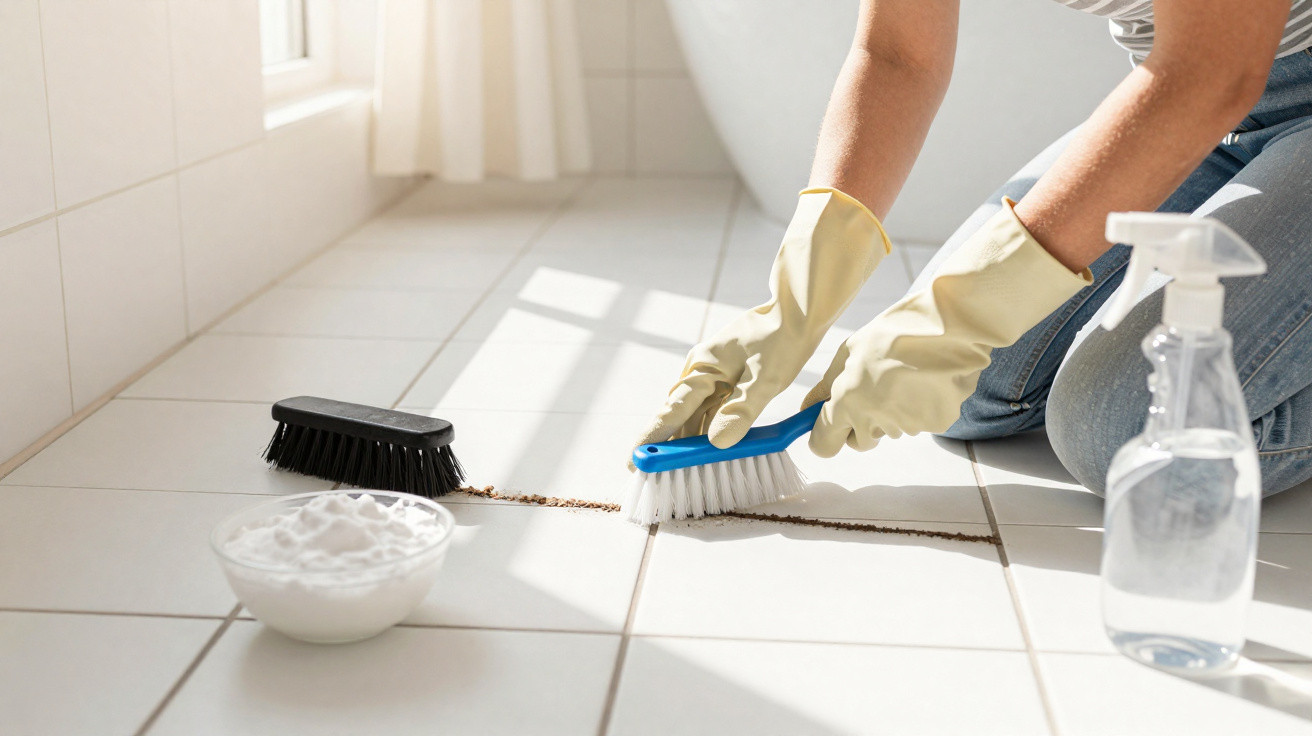
Dirty bathroom grout tends to trap soap scum, body oils, dust and moisture. Rather than repeatedly reaching for bleach, an effective option for light-coloured cement-based grout is sodium percarbonate, used with minimal water and targeted scrubbing to lift the grime embedded in its pores.
Why doesn’t bleach always fix darkened grout?
Bleach can lighten surface staining and act against certain micro-organisms, but it does not necessarily remove all the dirt that has worked its way into the grout’s pores. The finish may look brilliant straight after cleaning, then fade once oils, product residue and damp build up again.
Using very harsh products often can also change the look of coloured grout and speed up wear in materials that are already porous or degraded. Before you clean anything, check what type of grout you have and test the product on a small, hidden spot first.
How do you use sodium percarbonate to clean grout?
Sodium percarbonate releases oxygen-based compounds when it meets water and can help loosen organic stains. For spot cleaning, the key is to mix only a small amount and avoid flooding the floor or wall:
- Wear gloves and keep the bathroom well ventilated;
- Dissolve a small amount of sodium percarbonate in warm water, following the ratio stated on the packaging;
- Apply it only to the grout line you intend to clean;
- Leave it for the time recommended by the manufacturer;
- Scrub with a sturdy brush;
- Rinse thoroughly and remove all residue.
Why does the brush make such a difference to the result?
The chemical helps release the dirt, but it is the mechanical action that reaches the tiny irregularities of porous grout. A firm-bristled brush lets you work directly along the lines without pouring on large amounts of solution.
For best results, use short strokes following the grout line and repeat the application only where staining remains. Metal brushes are not advised because they can scratch tiles and wear away the grout between them.
What can you do so the grime doesn’t come back quickly?
After cleaning, limiting how much water and residue can soak into the grout is more effective than constantly repeating heavy-duty cleans. A few routine habits help the results last longer:
- Air the bathroom out after showering;
- Remove excess water from walls and floors;
- Do light cleans before dirt becomes embedded;
- Fix cracked areas or spots where grout is missing;
- Consider a sealer compatible with cement-based grout;
- Follow the curing and reapplication times stated by the manufacturer.
Can waterproofing solve the problem for good?
A grout sealer reduces water absorption and makes dirt easier to remove, particularly on cement-based materials that are naturally porous. It is not a substitute for ventilation and it will not fix leaks, and some types of grout-such as epoxy-behave differently and may not need the same approach.
It is also worth working out why the darkening appears in the first place. If stains return quickly, there is a musty smell, or the grout stays damp for a long time, you may be dealing with poor ventilation, a leak, or deteriorated sealing. In situations like these, sodium percarbonate and a brush can improve the appearance, but addressing the source of the moisture is what stops the issue from repeatedly coming back.




Comments
No comments yet. Be the first to comment!
Leave a Comment