
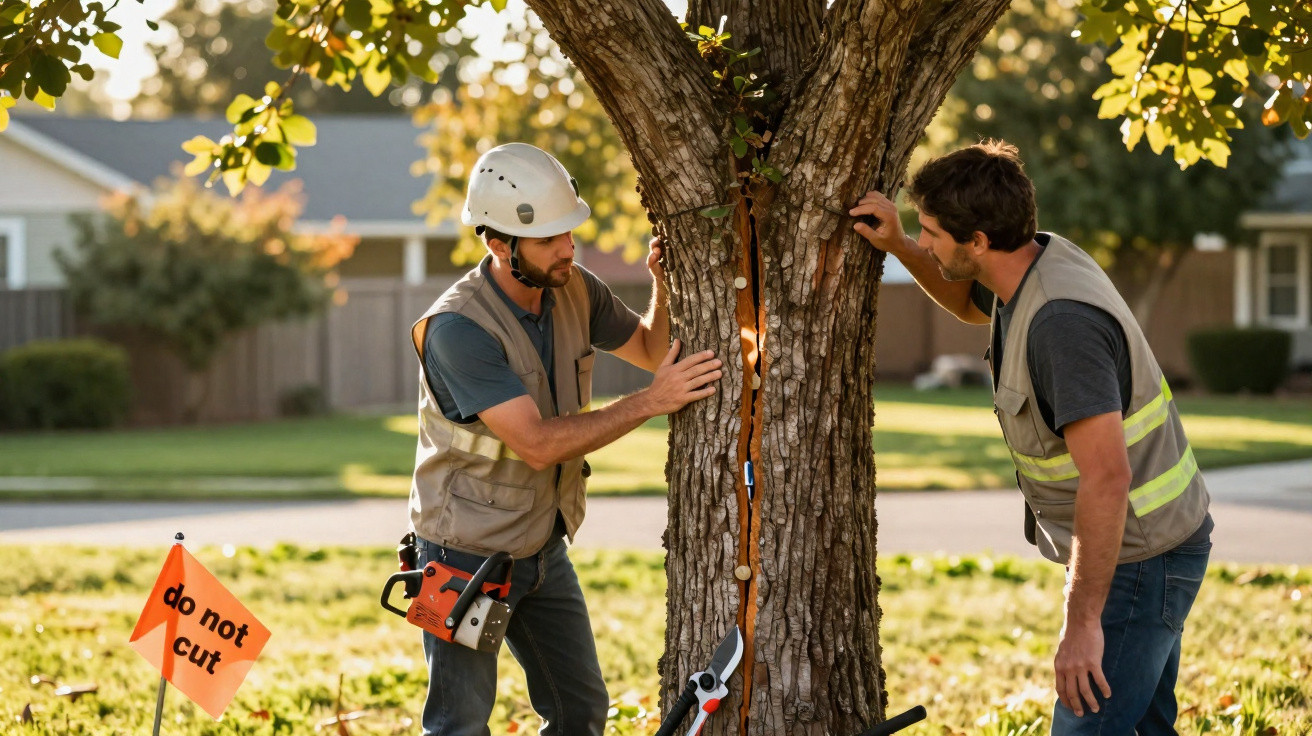
When you spot a crack in a tree trunk, it is natural to assume at once that the tree is diseased or about to fall. However, not every split points to a serious issue. Some are only surface-level changes linked to growth or temperature fluctuations, whereas others may reveal structural damage and require closer assessment.
What causes a tree trunk to crack?
A trunk is continually exposed to shifts in temperature, moisture and growth. Under certain conditions, its tissues expand and contract, which can lead to bark fissures, particularly in older trees or those exposed to substantial environmental variation.
Injuries caused by poor pruning, machinery, animals or impacts can also split the bark. In some instances, disease, pests or unfavourable growing conditions may contribute to the development and progression of cracks.
How can you tell whether a fissure is superficial?
Start by examining the crack without attempting to pull it apart, cut it or remove sections of bark. A narrow, shallow fissure confined to the outer layer can mean something very different from a deep opening that reaches the tree’s internal tissues.
It is also useful to check whether it remains unchanged or becomes larger over time. Recording its progression with photographs taken at intervals can make changes easier to identify than relying on memory alone.
When can a crack in a tree trunk be a concern?
Deep, long fissures, or those that continue to widen, need greater attention. The same applies if there is exposed wood, cavities, sections of trunk pulling apart, or signs of decay around the opening.
Extra care is needed where the crack is linked to large branches, a leaning tree, exposed roots or signs of instability. In these circumstances, it is not advisable to try to deal with the issue yourself using cuts or makeshift fillers.
What should you not do when you find a crack?
A common response is to cover the opening with cement, filler or another material in an attempt to “seal” the trunk. This kind of treatment can hinder assessment of the affected area and does not necessarily address the cause of the fissure.
Nor is it advisable to widen the opening with tools or strip away healthy bark around it. Before taking any action, it is best to establish whether there is a genuine structural problem or simply a superficial change.




Comments
No comments yet. Be the first to comment!
Leave a Comment