
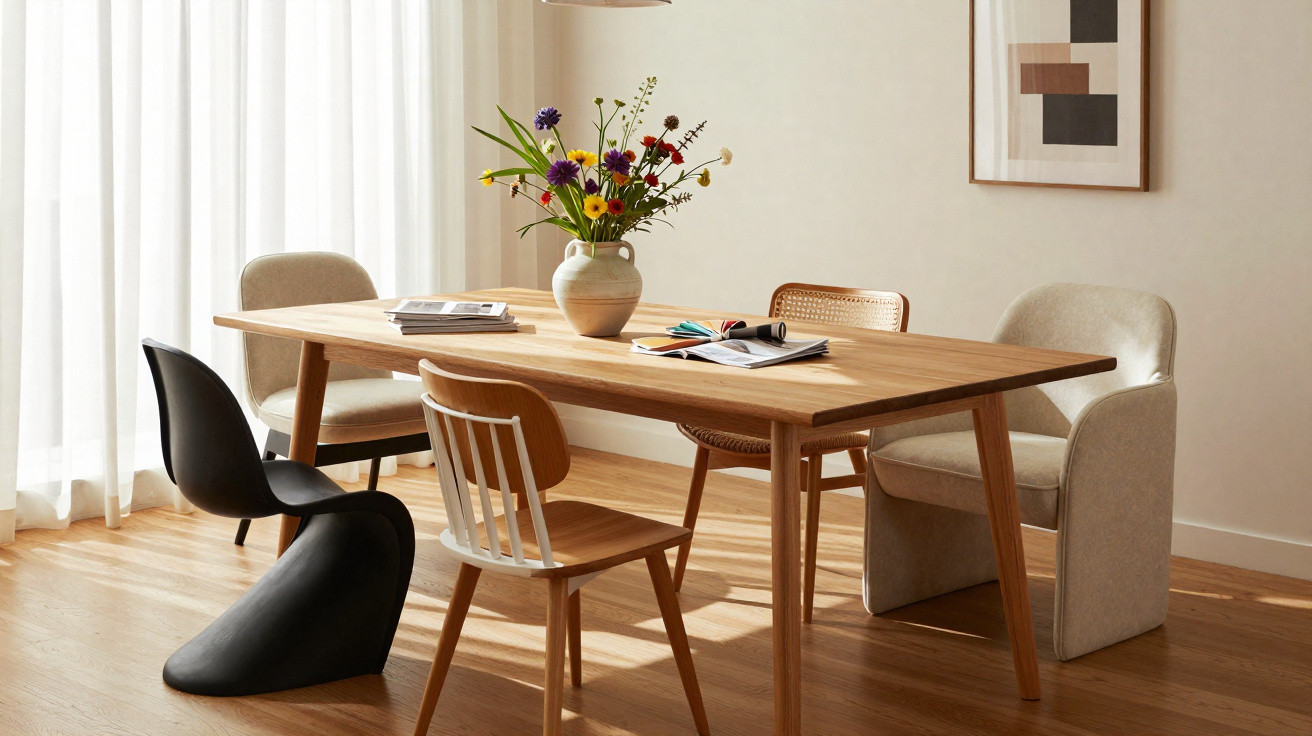
A dining table surrounded by exactly matching chairs has long been the conventional choice, but this look is losing ground in some interior design schemes. Mixing chairs in different designs, materials or colours can make the room feel more individual and create a less predictable look. Designers speaking to The Spruce say the arrangement works best when there is an element that links the pieces.
Why are different chairs becoming more popular in interior design?
This shift reflects a preference for rooms that feel more personal and less like a pre-packaged set. Rather than buying a table with six identical chairs, some people are opting for pieces with distinct characteristics to give the dining room more personality.
According to designer Leah Hook, this approach can make a space feel more lived-in and thoughtfully put together. The aim is not to place whichever chairs are available around the table, but to build an arrangement that feels intentional and full of history.
How can you mix chairs without making the dining room look untidy?
The key is to identify a feature that connects the pieces. The chairs may vary in design while sharing the same material, finish, provenance or style. A group of different designs in similar wood, for instance, will generally look more cohesive.
Another option is to begin with the chairs at either end of the table. These can stand apart more noticeably from the side chairs, through a different shape, fabric or colour. The contrast works best when it appears to be a deliberate choice, rather than a random collection of furniture.
Do dining chairs need to be the same size?
They do not have to match exactly, but keeping the proportions similar makes a considerable difference. Side chairs with very different heights can make the arrangement look visually confusing and may also lead to an uncomfortable dining experience.
The designers consulted recommend paying particular attention to seat height. The end chairs may be larger or more eye-catching, while the side chairs can remain close in size to one another.
Is it worth using different chairs at the ends of the table?
This is one of the simplest ways to try the trend without replacing the entire set. If you already have matching chairs, you can change only the two end positions for designs with a different visual presence.
For example, a rounded upholstered chair can contrast with wooden side chairs with straight lines. The difference needs to be noticeable enough to read as a decorating decision, but not so strong that every piece competes for attention.





Comments
No comments yet. Be the first to comment!
Leave a Comment