
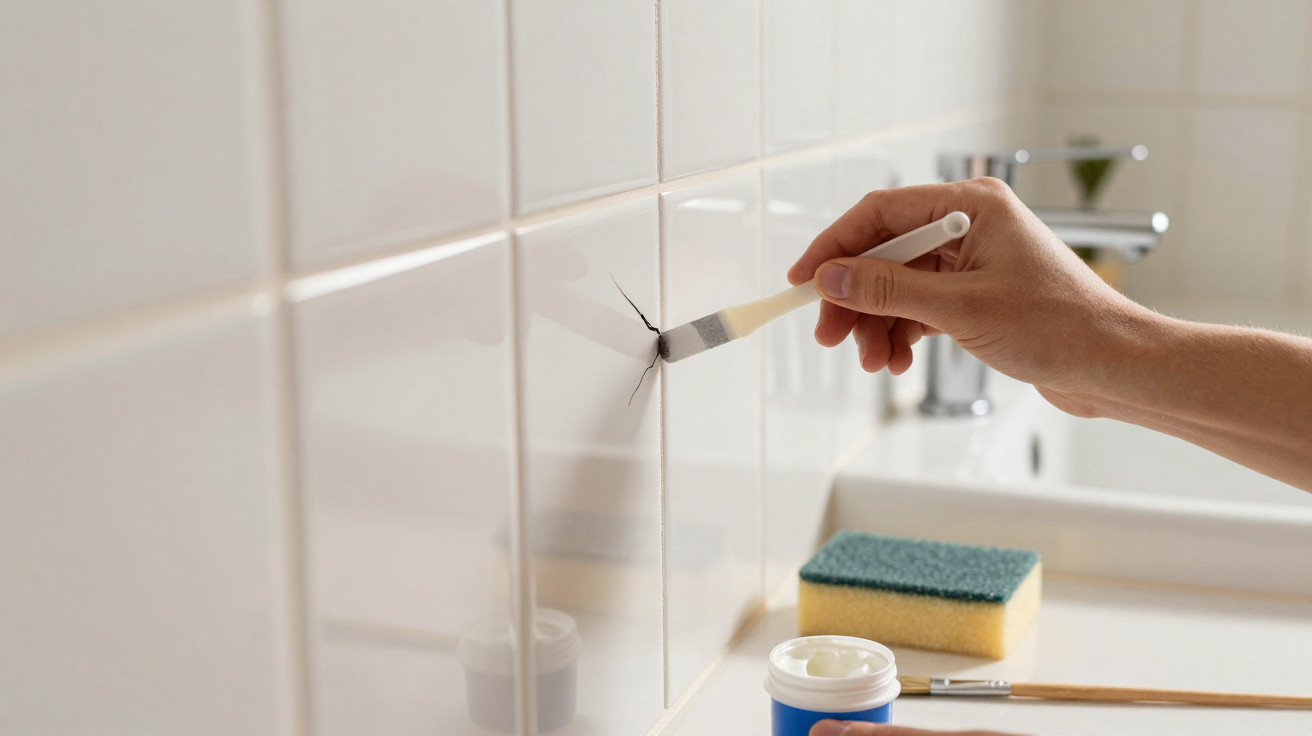
Small cracks in ceramic tiles and wall tiles do not always mean the tile needs replacing straight away. If the crack is superficial and the covering remains secure, a ceramic repair filler can be used to fill the gap and finished in a shade matching the surface. Thorough cleaning, careful levelling and using only a small amount of filler are essential, as too much product makes the repair more noticeable.
Why do wall tiles and ceramic tiles start to crack?
Cracks may appear following knocks, movement in the tiled surface or installation defects. For instance, insufficient adhesive behind a tile can leave hollow areas that are subjected to greater pressure when pushed. Missing suitable joints and movement caused by temperature changes can also lead to this issue.
Before attempting to conceal the mark, check whether the tile is still firmly fixed. A fine, stable crack is not the same as a ceramic tile that moves, sounds hollow across much of its surface or continues to split.
- Direct impacts can cause small cracks;
- Adhesive failures leave areas with less support;
- Movement in the substrate can transfer stress to the tiled covering;
- Moisture and temperature fluctuations may contribute to deterioration;
- Cracks that repeatedly widen show that the underlying cause needs investigating.
What is the trick to fill a crack without replacing the tile?
The solution is to use a repair filler or paste that is compatible with ceramic. First, the area must be completely clean and free from grease, dust, soap residue and deposits. Press the filler into the crack using a small spatula, then smooth it until it is almost level with the surrounding tiled surface.
How can a ceramic tile repair be made less visible after the filler dries?
Leave the product to dry for the period stated by the manufacturer, which may be up to around 24 hours depending on its formulation. Only once it has fully cured can minor unevenness be corrected with fine sandpaper, provided it is suitable for the material and used solely on the repaired section.
If the filler is a different colour from the ceramic, apply a small amount of compatible enamel or paint with a fine brush. The aim is not to paint the entire tile, but to bring the repair closer to the existing shade and sheen.
- Clean and dry the crack thoroughly;
- Apply only the amount of filler required;
- Remove any excess before it hardens;
- Wait for full curing before sanding;
- Use a small brush to touch up the colour;
- Test the shade in an inconspicuous spot before the final finish.
When is a crack too large for this kind of repair?
If the ceramic tile is broken, has loose sections or contains a wide crack running across the entire piece, simply filling the opening may result in a temporary and visible repair. Replacing the tiled covering is usually the more suitable option in this case. The same applies if the crack returns after repair, as this can indicate movement or inadequate support behind the tile.
- Replace tiles that have loose or broken sections;
- Investigate ceramic tiles that move when pressed;
- Do not try to conceal water ingress using filler alone;
- Check whether other nearby tiles also have cracks;
- Address the cause before fitting a replacement tile where there is a substrate problem.
A good finish starts before applying the filler
The least noticeable result depends mainly on preparation. Dust and grease prevent proper adhesion, while a thick layer creates a raised area that remains visible even after painting. Working only within the crack in the wall tile, levelling it with care and observing the drying time greatly improve the likelihood that the touch-up will blend into the rest of the surface.
This method is best suited to small, stable cracks, rather than concealing structural problems in the tiled covering. Where the tile remains firmly fixed, suitable filler, fine sandpaper and a colour touch-up can avoid immediate replacement. However, if there is extensive breakage, movement or water ingress, replacing the ceramic tile and rectifying the source of the damage is a more durable solution than merely covering the mark.


Comments
No comments yet. Be the first to comment!
Leave a Comment