
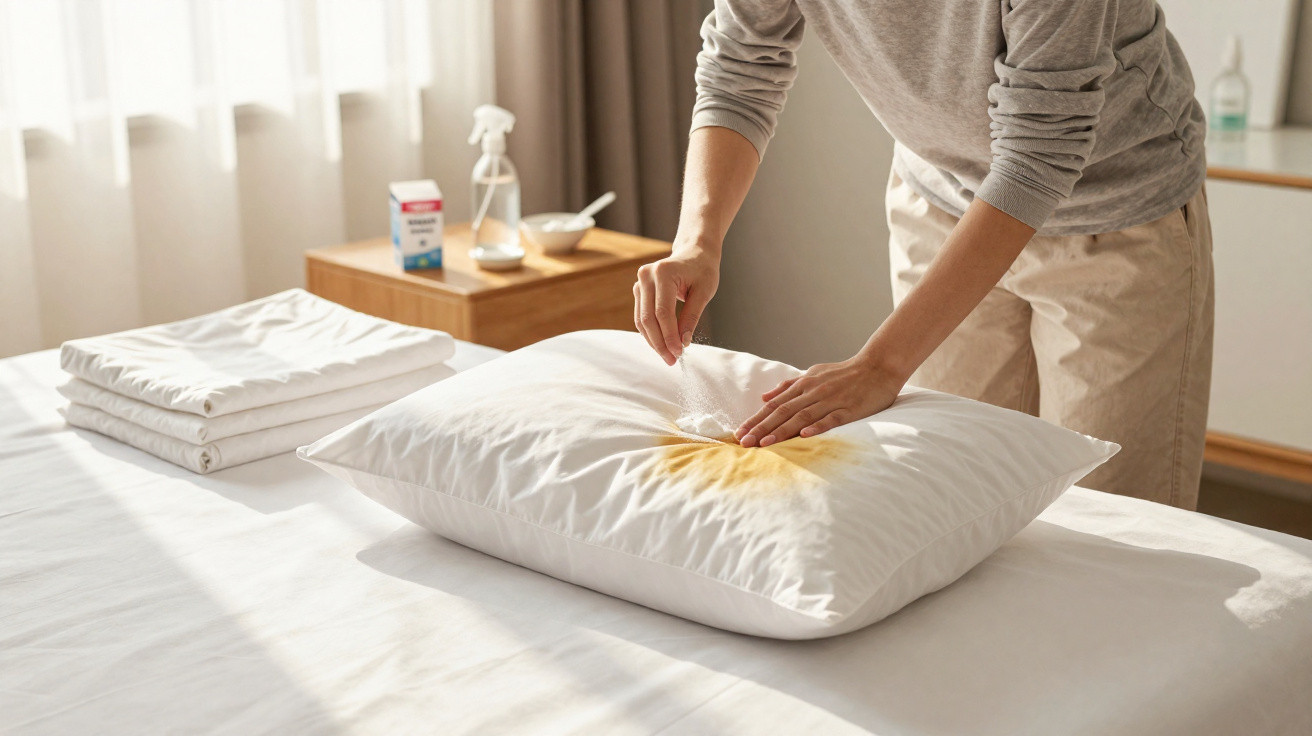
Yellow stains on pillows tend to develop slowly as sweat, natural skin oils, moisture, and traces of cosmetics or hair products build up over time. Before you decide to replace the pillow, a simple paste made from bicarbonate of soda and water can help lift surface grime-so long as the approach suits the fabric and the filling.
Why do pillows turn yellow over time?
Over many hours of sleep, the outer fabric absorbs small amounts of perspiration and body oils. Facial moisturisers, hair products and everyday moisture also transfer to the surface; night after night, these residues accumulate and oxidise, leaving yellowed areas-most noticeably where your head and face rest.
Changing your pillowcase regularly reduces direct contact, but it does not completely stop moisture from reaching the pillow itself. That is why pillows used for months can yellow even when your bedding looks consistently clean.
- Sweat released overnight;
- Natural oils from the skin and scalp;
- Residue from creams and hair products;
- Saliva and trapped moisture;
- Long gaps between proper pillow cleans.
How to use bicarbonate of soda on yellow stains
For light, surface-level staining, mix a paste using roughly equal parts bicarbonate of soda and water. Spread it only over the yellowed patch and leave it for about 20–30 minutes. Rinse the area with water, then wash the pillow according to the care instructions on its label.
What to do when the yellowing is deeply set
If bicarbonate of soda is not enough, you can apply a solution of hydrogen peroxide diluted with an equal amount of water to the affected area for a few minutes-provided the fabric is suitable. Before doing this, test a small hidden spot to check for any colour change, and follow the manufacturer’s washing guidance.
Hydrogen peroxide must not be mixed with bleach, and it should not be combined casually with other cleaning products. Pillows made from foam, latex or other specialist materials may also need spot-cleaning only, as soaking them or putting them in a washing machine can damage their structure.
- Check the care label before wetting the whole pillow;
- Patch-test on an inconspicuous area first;
- Treat only the yellowed section to start with;
- Do not mix different cleaning products;
- Rinse thoroughly to remove any residue;
- Let the pillow dry completely before putting it back on the bed.
Does a layer of protection between pillowcase and pillow help?
A washable pillow protector adds an extra barrier between your body and the filling. It catches some sweat, oils and cosmetic residue before they reach the pillow, and it can be laundered far more often. It is also advisable to clean the entire pillow once or twice a year-so long as the manufacturer allows that type of washing.
How to stop yellow stains coming back
Prevention is more about routine than the occasional intensive clean. Change pillowcases frequently, wash protectors regularly, and make sure the pillow is fully dry before putting bedding back on. Going to bed with very wet hair also increases the amount of moisture held in the pillow and bedding.
A clean pillow must dry all the way through after any wash to avoid moisture being trapped in the filling. When sweat and residue are removed before they set in, the fabric takes longer to yellow and cleaning is far easier than trying to revive stains that have built up over years.

Comments
No comments yet. Be the first to comment!
Leave a Comment