
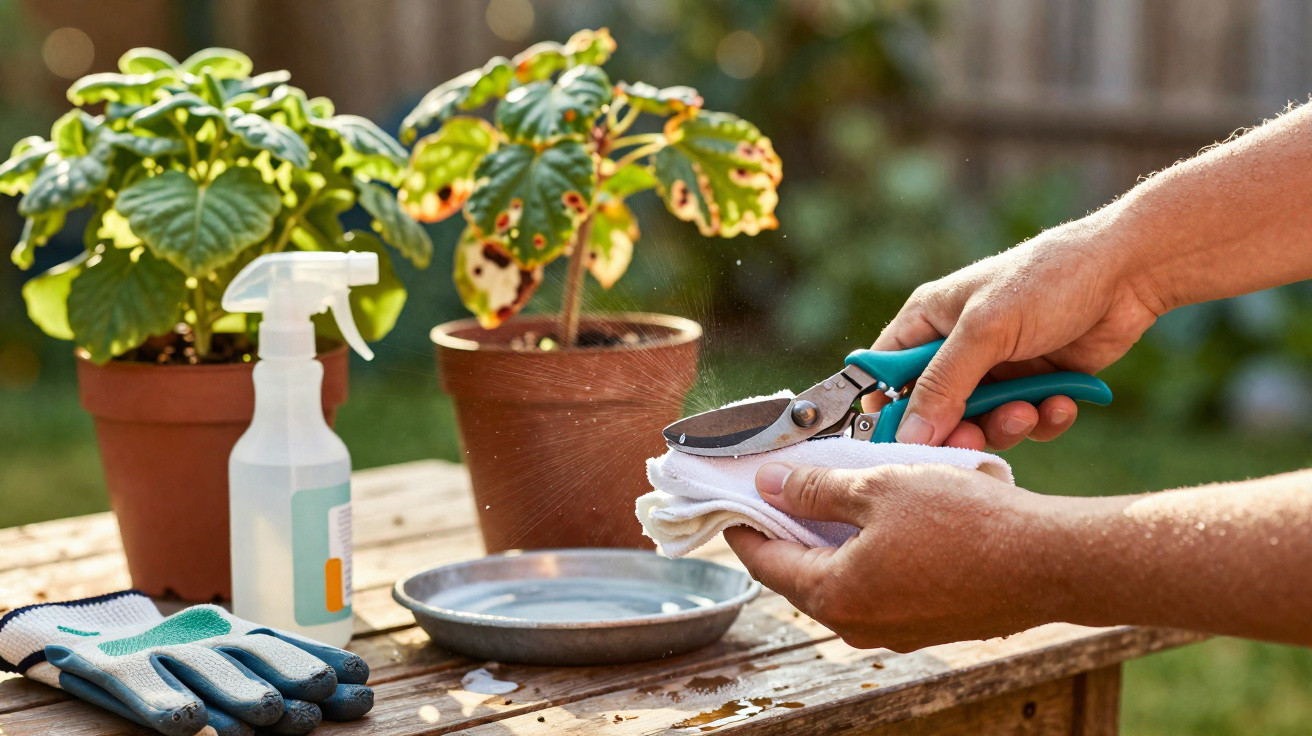
A clean pruning shears (secateurs) are a key tool for lowering the chance of carrying microorganisms from one plant to another while making cuts. Soil, plant debris and sap can cling to the blade, so the physical clean should always come before disinfection. For small pruning tools, 70% (or higher) isopropyl alcohol can be used in suitable situations.
Why clean the shears before moving on to another plant?
When pruning, the blade makes direct contact with leaves, stems, sap and other plant material. If a plant is carrying a pathogen, residue left on the tool can help spread it during the next cut.
That is why simply giving the shears a quick wipe is not enough. Organic matter must be removed before you disinfect, because soil and plant fragments can prevent the disinfectant from properly contacting the tool’s surface.
What is the difference between cleaning and disinfecting the tool?
Cleaning means physically removing soil, sap and plant matter stuck to the blade and moving parts. This step prepares the surface for disinfectant and needs to happen first.
Disinfecting is the use of a product that can reduce or eliminate certain microorganisms on the tool. For small pruning shears, isopropyl alcohol at 70% concentration or higher is one option recommended by the University of Minnesota Extension.
How do you clean pruning shears properly?
Start by taking off any visible soil, leaves, bark pieces and sap. Once the blade is clean, apply your chosen disinfectant following the product directions. With isopropyl alcohol, the recommended strength is 70% or above and it should not be diluted.
After sanitising, allow the tool to dry completely. Ongoing maintenance also helps keep the shears in good condition, particularly when they are used often in the garden. Metal tools should be protected against rust with suitable products that do not create a risk of being transferred to plants.
When might alcohol not be enough?
There is an important caveat for specific diseases. The University of Minnesota Extension warns that alcohol may not disinfect effectively tools used on apple trees infected with fire blight, a bacterial disease.
In these cases, the hygiene method needs to be selected based on the pathogen involved. So, when disease is suspected, it is not advisable to treat every pruning situation as if it were only ordinary dirt. Identifying the issue helps you choose a more appropriate disinfection strategy.


Comments
No comments yet. Be the first to comment!
Leave a Comment