
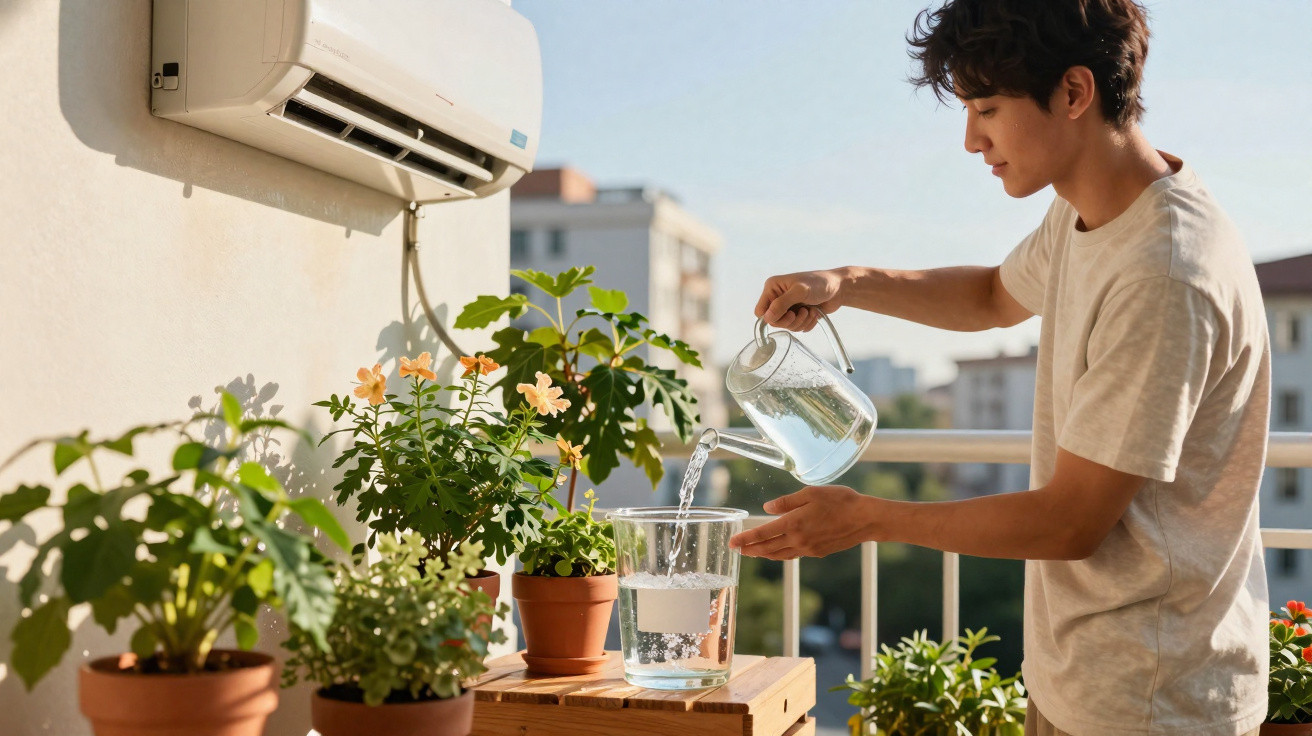
Water dripping from the air conditioner forms when moisture in the air condenses on the cold coil and is carried away through the unit’s drain. Although it is not safe to drink, this liquid has a low mineral content and can be reused for certain household jobs, including washing floors and cleaning outdoor spaces. The key point is not to mistake its clear appearance for drinking water, as it travels through internal components that may harbour dust and microorganisms.
Why does an air conditioner produce so much water on certain days?
As the unit cools a room, some of the water vapour in the air reaches the cold surface of the evaporator and turns into droplets. The more humid the room and the longer the appliance runs, the greater the volume that may be collected. The water then flows into a tray before leaving through the drain.
Because this liquid results from condensation rather than coming directly from the mains supply, it usually contains very few minerals. It can therefore be reused for jobs that do not involve drinking it or using it for personal hygiene.
- Washing floors and patios;
- Cleaning outdoor areas and handrails;
- Washing the car bodywork;
- Cleaning certain hard-wearing surfaces;
- Reducing the use of treated water for simple household tasks.
Can water from an air conditioner be used to water plants?
For ornamental plants, condensation water may be used occasionally if the unit is clean and the liquid has no smell, colour or visible residue. However, as it contains very little mineral content, it does not provide the nutrients plants need and should not permanently replace other water sources and proper fertilisation.
Why should it not be used for drinking or cooking?
The water may look clear, but it passes through the coil, collection tray and drainage pipe before leaving the appliance. Along this route, it may come into contact with dust, biofilm, cleaning residues, metal particles and microorganisms. It should therefore not be regarded as distilled water that is suitable for consumption.
The same precaution applies wherever the liquid could come into direct contact with people or animals.
- Do not use it for drinking or cooking;
- Do not wash fruit, vegetables or utensils with this water;
- Do not put it in pets’ drinking bowls;
- Do not use it in aquariums;
- Do not add it to humidifiers;
- Do not use it for personal hygiene.
How can the water be stored without creating another problem at home?
Ideally, the drain should be directed into a clean container, preferably one with a lid. Collected water should not be left forgotten for several days, as it can develop an odour, collect dirt and create conditions in which insects can breed. The sooner it is reused, the easier it is to manage.
- Use a sanitised container;
- Keep it covered whenever possible;
- Do not leave water standing for long periods;
- Dispose of the contents if an unusual smell or colour appears;
- Clean the container and drain outlet regularly.
Reusing air conditioner water also depends on maintaining the unit
A clean air conditioner reduces the build-up of dust and other matter in its filters, tray and drainage system, but even perfect maintenance does not make condensation water safe to drink. Dirty filters, slimy trays and unmaintained drains are further reasons to restrict its use to tasks that do not involve consumption.
Rather than allowing litres to run straight onto the ground, some of this water can be diverted for cleaning, outdoor areas and selected ornamental uses. Reuse is sensible when it follows three straightforward rules: collect it in a clean container, use it promptly and never drink it. In this way, an unavoidable by-product of the appliance’s operation can replace a small amount of treated water in jobs where it is simply unnecessary.

Comments
No comments yet. Be the first to comment!
Leave a Comment