
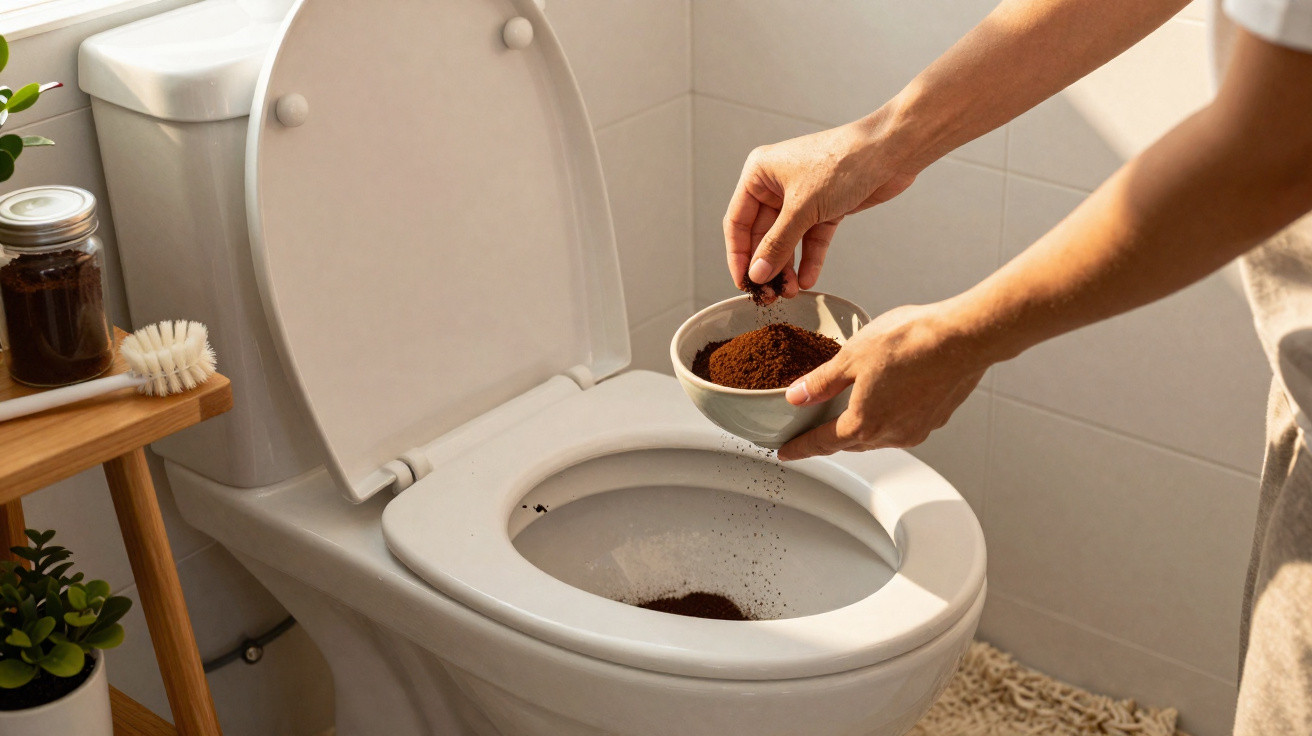
Many people look for eco-friendly ways to keep their home in order, making use of items that would otherwise be thrown away. Coffee grounds can be a straightforward option for easing unpleasant smells and helping with light, surface-level cleaning of the toilet bowl without much effort.
Why do used coffee grounds help in the bathroom?
The grounds left over from your morning brew still retain qualities that can be useful around the home. This organic material works as a simple deodoriser, lending a pleasant scent that helps neutralise bad odours while also assisting with the removal of fresh dirt on the porcelain.
Because the grounds are slightly gritty, their grainy texture provides gentle mechanical action on small marks on the glazed surface. By reusing this everyday waste, you can spend less on conventional cleaning products and turn a daily discard into something helpful for the household routine.
How do coffee grounds remove odours in the toilet?
The leftover powder holds on to unpleasant gases thanks to its microporous structure, which acts directly… Read more
How do coffee grounds work against odours?
Unlike some chemical products that merely mask strong smells, coffee grounds have a natural ability to adsorb. Their porous structure can capture volatile compounds, helping to stop sewer gases from spreading through a closed room.
This deodorising effect can make the space feel fresher straight away, without relying on artificial fragrances. The recognisable coffee aroma acts as a mild barrier, making the bathroom feel more inviting soon after correct application.
Below is a video from the YouTube channel Quando Menos é Mais that explores the points discussed in this topic:
What precautions prevent damage to the plumbing?
Although it is a sustainable habit, putting coffee grounds into the toilet requires care to avoid harming your home’s plumbing. Fine particles do not fully dissolve in standing water and may build up as solid deposits in the bends of the pipes.
To reduce the risk of unwanted blockages, keep the amount used moderate and limit it to occasional cleaning. Avoiding excess helps residues move through the pipework more easily, without affecting the water flow in the building’s system.
Care when using coffee grounds
Safe bathroom uses
Main recommendations to prevent plumbing problems:
- Apply no more than two tablespoons at a time;
- Scrub the toilet bowl gently with the brush;
- Avoid daily use so residues do not accumulate.
How to apply coffee grounds to the toilet bowl?
Apply the grounds in a simple way so you benefit from the powder’s friction without damaging the fixtures. Spreading a small amount over the inner walls allows it to soften light build-up without scratching the white ceramic.
Scrub gently with a suitable toilet brush, making sure to reach all necessary corners. Afterwards, flush to remove all the material and restore a clean appearance to the treated toilet.
Follow this basic step-by-step to do it safely:
- Place a spoonful of damp coffee grounds along the inside edges of the toilet;
- Scrub the bowl with a toilet brush to lift superficial marks;
- Flush with a strong flow to rinse through all the pipework.
When should coffee grounds not be used?
Bathrooms that already have ongoing issues such as slow flushing, or constant bad smells caused by a faulty trap, should not receive the grounds. In these situations, the coffee grounds can worsen an existing blockage and create issues in the sewer network.
In addition, coffee should never replace regular disinfection routines using recommended bactericidal products. Prioritising proper hygiene helps protect the health of everyone in the home from harmful micro-organisms in the environment.


Comments
No comments yet. Be the first to comment!
Leave a Comment