
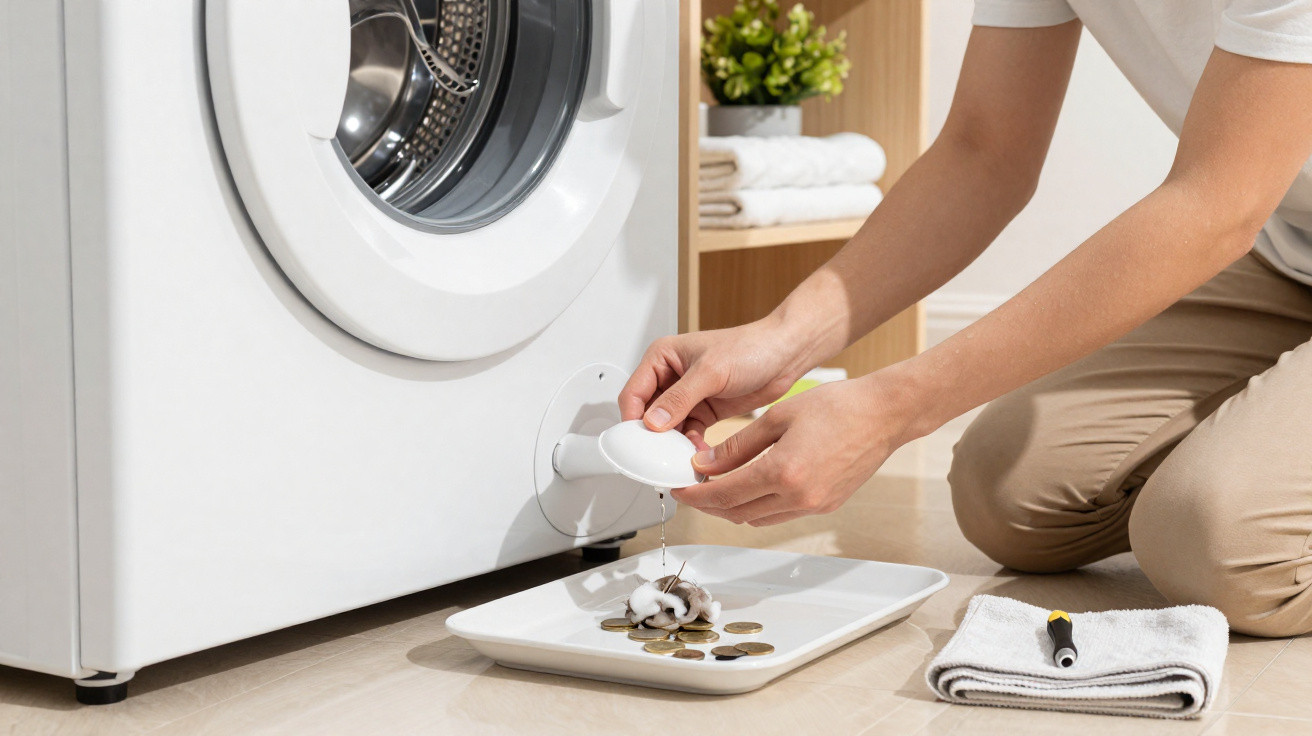
A small part of a washing machine can easily be overlooked in day-to-day cleaning, even though it is tasked with catching lint, small items and other debris. Depending on the model, it may be labelled a debris filter, pump filter or drain filter, and where it sits - as well as how it is maintained - differs from one appliance to another.
Why can the washing machine filter build up debris?
As the machine washes, lint, hair, tiny fabric threads and items left in pockets can be carried along with the water. Some of that material moves into the drainage route, and certain models include a filter there to trap larger pieces.
If this compartment becomes heavily soiled, water flow may be restricted. In some machines this can show up as slower draining, water left sitting in the drum, or error codes linked to the drainage system.
What can get stuck in this part?
What ends up inside varies with the type of laundry and how the machine is used. Common finds include:
- Lint and fabric fibres;
- Hair and pet fur;
- Small bits of paper;
- Coins or items forgotten in pockets;
- Other debris carried along by the water.
Not every washing machine has a user-accessible filter. Some models use alternative filtration arrangements, or have filters that should not be removed without guidance.
How do you know whether the machine has this filter?
Start by checking the manual for your specific model. On many front-loading machines, the drainage pump filter sits behind a small flap on the lower front of the appliance. On other machines, it may be located elsewhere.
Before opening any compartment, switch the machine off and follow the manufacturer’s instructions. Some filters can hold residual water, so be ready to catch any liquid released during cleaning.
How to clean the filter without causing problems
If the manual confirms the filter can be cleaned by the user, remove the trapped debris carefully and wash the part as directed. Afterwards, check the access area for any lodged objects and refit the component securely.
Do not force a cover or part that is not designed to be removed. It is also not advisable to dismantle the drainage system yourself. If the machine still has issues after completing the cleaning steps specified by the manufacturer, you may need to contact a service technician.



Comments
No comments yet. Be the first to comment!
Leave a Comment