
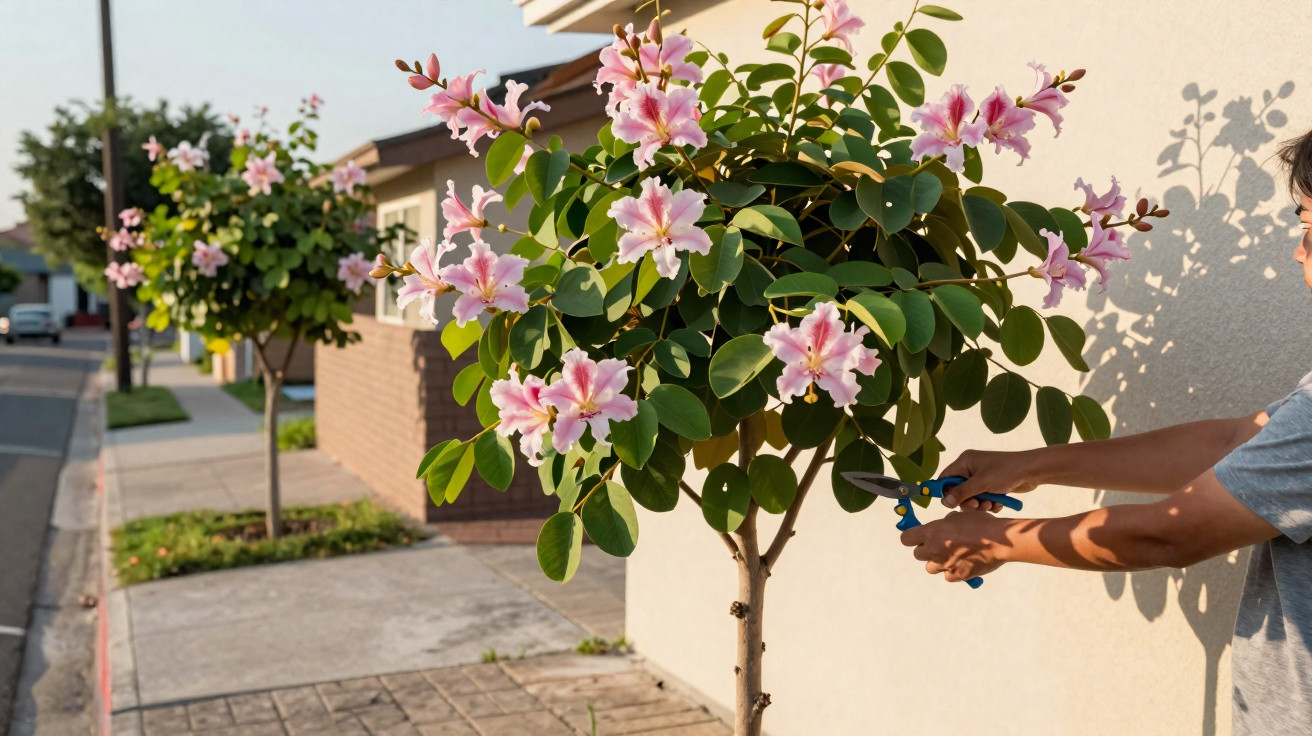
The orchid tree, a name applied to several species within the Bauhinia genus, has qualities that make it appealing for gardens and pavements: a medium-sized habit, comparatively fast growth, a rounded crown and roots that are usually not overly invasive. Its pink, lilac or white blossoms also enhance its ornamental appeal and draw pollinators while it is in flower.
Why is the orchid tree suitable near homes?
Some Bauhinia species form shallow root systems that are regarded as relatively non-invasive, making them suitable for urban planting. This lowers the likelihood of damage compared with trees that have highly spreading roots, although it does not mean they should be planted right next to paving, foundations or pipework.
The Bauhinia genus contains hundreds of species, including ornamental trees commonly called orchid trees. Their mature size, flowering pattern and root behaviour differ between species, so identifying the tree before planting helps prevent the selection of one that will outgrow the available space.
- A suitable size for many residential gardens;
- A rounded canopy that can provide shade;
- Relatively quick growth in favourable conditions;
- Good suitability for tropical and subtropical climates;
- Less invasive roots in several species used for landscaping.
Do orchid tree flowers really last for nearly the whole year?
How long the tree flowers depends greatly on both the species and the climate. Bauhinia variegata, for instance, generally produces most of its flowers from winter into spring, whereas other varieties follow different schedules. In warmer regions, the ornamental display may continue for longer, but it is not accurate to promise blooms in almost every month for every orchid tree.
How should you plant it to avoid issues with paving and walls?
Even a tree with relatively non-invasive roots requires permeable ground around its trunk and sufficient room for its diameter to increase. Before digging the planting hole, locate any buried pipes, assess the distance from buildings and allow for the canopy’s eventual mature spread.
Where space is limited, leaving several metres between the tree and walls or key structures gives it a better margin for healthy development. The same approach applies when selecting shade trees for compact gardens, where root behaviour is only one of the factors that should guide planting.
- Select a position that receives several hours of direct sunlight;
- Leave clear, open space around the trunk;
- Do not plant directly above water or drainage pipes;
- Water regularly while the young tree establishes its roots;
- Choose well-drained soil enriched with organic matter;
- Consider the canopy’s future diameter before deciding on the final location.
Why are formative pruning cuts important?
A young Bauhinia can be pruned to create a well-structured trunk and keep branches clear of roofs, walkways and vehicles. Once the canopy has developed, pruning should focus on dead, broken, crossing or poorly positioned branches. Excessive cutting should be avoided, as it can weaken the tree and reduce flowering.
Does the leaf shape explain the name orchid tree?
Its bilobed leaves have a central split resembling a cow’s hoof, which has led to common names such as cow’s-foot tree, camel’s-foot tree and hoof tree. Certain species, particularly Bauhinia forficata, are also used in traditional medicine. However, medicinal use should not be based solely on visual identification, as different Bauhinia species can be mistaken for one another and plant-based preparations may also carry risks.
As an ornamental tree, the orchid tree combines an attractive canopy, relatively rapid growth and striking flowers, without the highly invasive root system associated with some trees in many cultivated species. Given appropriate distance from buildings, permeable soil around the base and well-planned formative pruning, it can be grown in gardens and along pavements without requiring intensive maintenance to retain its shade and flowers.





Comments
No comments yet. Be the first to comment!
Leave a Comment