
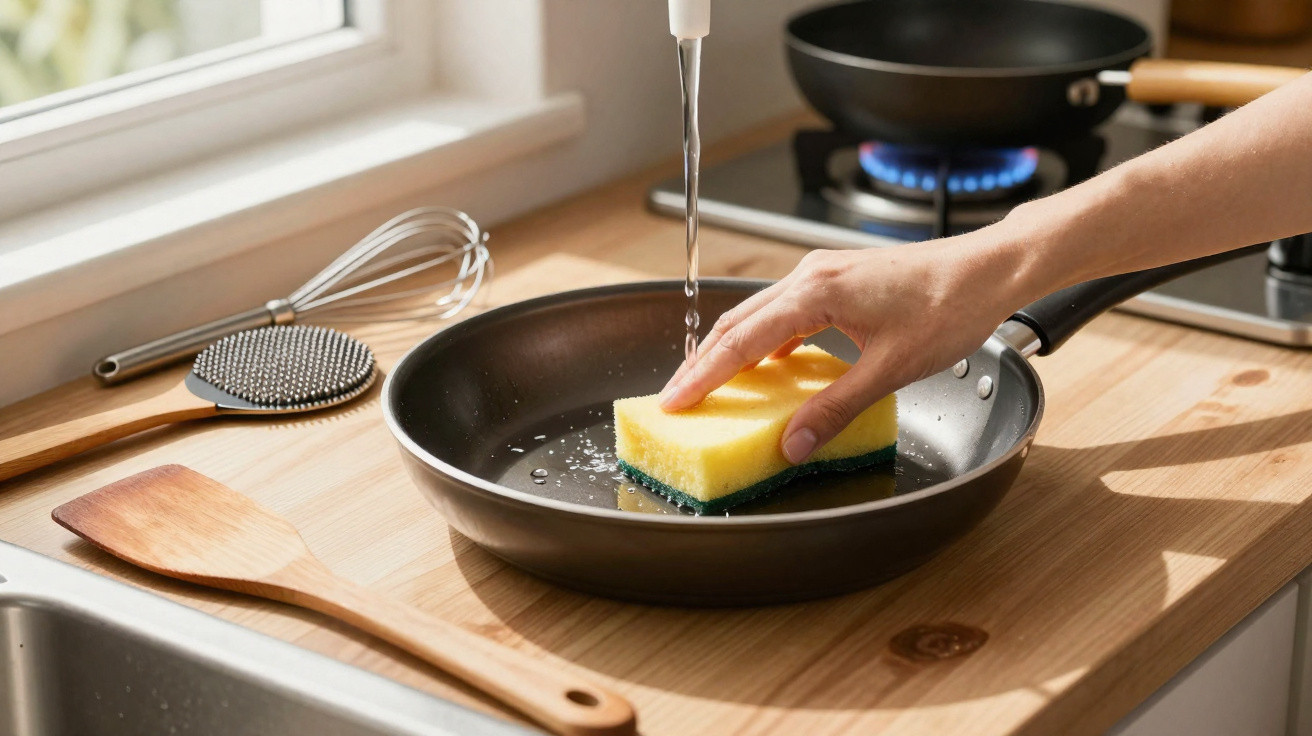
A non-stick frying pan can make cooking easier, but its coating is not indestructible. Over time, certain utensils, excessively high temperatures and unsuitable cleaning methods can speed up wear on the surface. A few straightforward precautions while cooking and after washing can therefore help the pan retain its performance for longer.
Why does the non-stick frying pan coating become less effective?
A non-stick coating is a layer applied to the pan’s surface to prevent food from sticking. With repeated use, this layer may deteriorate, particularly if it is exposed to friction, scratches or conditions that differ from the manufacturer’s recommendations.
Once the surface shows scratches, worn patches or visible changes, food may begin to stick more readily. This does not necessarily mean the frying pan has been used incorrectly, as every coating has a limited lifespan.
Which utensils can scratch a non-stick frying pan?
Metal utensils may touch the surface during cooking and, depending on their material and how forcefully they are used, can raise the likelihood of scratching. For this reason, many manufacturers advise using silicone, wooden or other suitable utensils.
Care is particularly important when turning, stirring or serving food. Rather than scraping the surface forcefully to loosen food that has stuck, use compatible utensils and follow the specific instructions for the frying pan.
Can abrasive sponges also speed up wear?
Yes. How the pan is cleaned after use also affects how well its coating is preserved. Very rough sponges, steel wool and abrasive cleaning products can cause unnecessary wear when used repeatedly.
In most cases, a soft sponge and suitable washing-up liquid are enough for everyday cleaning. If food has stuck to the pan, soaking it in line with the manufacturer’s recommendations may be a better option than scrubbing the surface vigorously.
Does excessive heat damage a non-stick frying pan?
Very high temperatures can accelerate wear on certain coatings and may also damage other parts of the pan. It is therefore best to stay within the temperature range stated by the manufacturer and avoid leaving the frying pan empty over a high flame or intense heat source for too long.
It is also important to consider the type of hob being used and whether the pan is compatible with it. Each model has its own characteristics, and following the manufacturer’s instructions is the safest way to protect the coating.


Comments
No comments yet. Be the first to comment!
Leave a Comment