
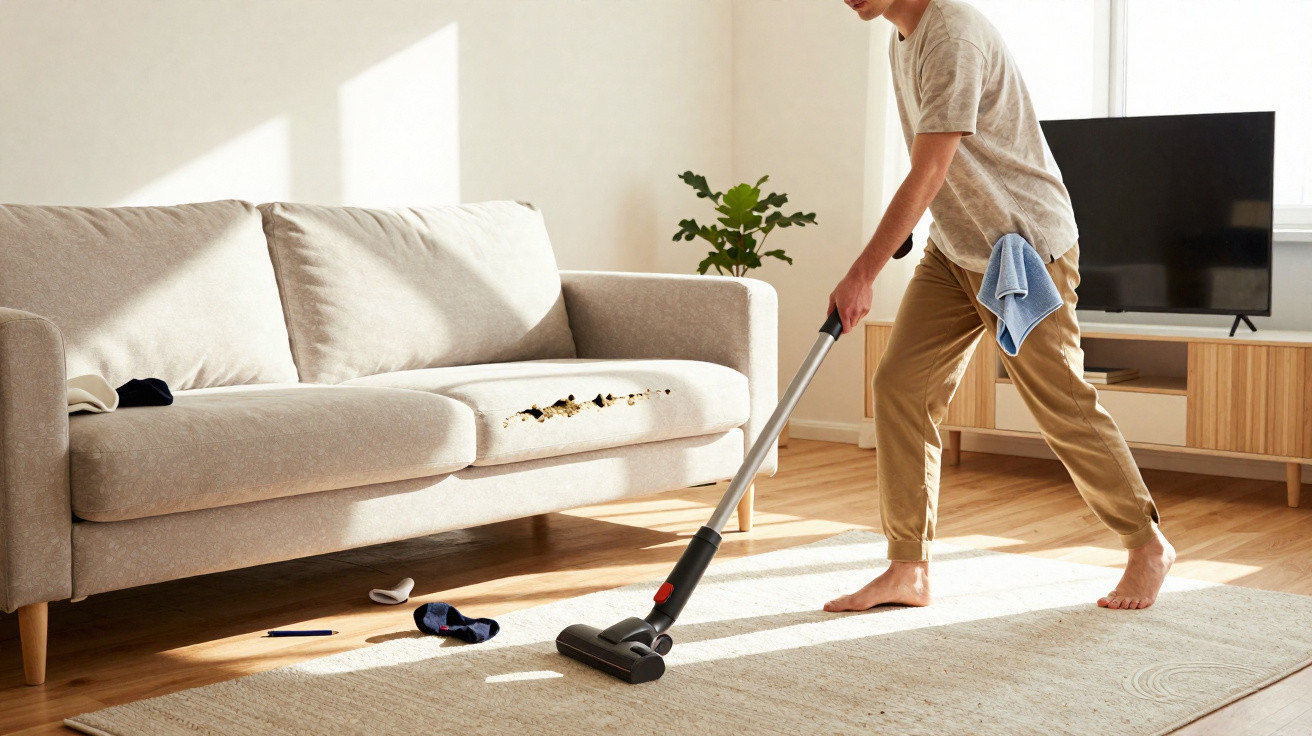
Some parts of the home sit outside your line of sight during a clean, which means they can go for weeks without being tackled. Behind furniture, in the gap between the wall and appliances, and underneath heavier structures, dust, pet hair and small bits of debris can build up without you noticing.
Which areas behind furniture tend to collect the most dirt?
The space behind sofas, wardrobes, chests of drawers and bookcases often catches dust particles that move around the room. Because these pieces are rarely pulled away from the wall, grime can stay concentrated there for a long time.
It’s also common to come across pet hair, loose hairs, small scraps of paper and items that have slipped underneath or behind furniture. An occasional check helps you spot these areas before the build-up gets worse.
Why can the back of furniture become so dusty?
Airflow carries tiny particles that eventually settle on horizontal surfaces and in sheltered corners. When a piece of furniture is pushed up against, or very close to, the wall, some of these spots become difficult to reach with a broom or vacuum.
The shape of the furniture matters as well. Skirting boards, legs, gaps and the backs of cupboards can create small pockets where dust gets trapped. That’s why cleaning only the visible surfaces doesn’t remove all the dirt in the room.
Four places worth adding to your cleaning routine
Some areas are worth checking regularly:
- Behind the sofa: can gather dust, hair and small items.
- Behind wardrobes and chests of drawers: the space right by the wall is often forgotten.
- Under low furniture: dust and hair can collect without being noticed.
- Behind appliances: the fridge, washing machine and other units can have hard-to-reach areas.
You don’t need to move heavy furniture on your own. If there’s any risk of something toppling or causing injury, it’s best to get help and follow the manufacturer’s safety guidance-especially for appliances.
How to clean these spots without spreading dust
A vacuum cleaner can be a practical choice for narrow gaps, particularly if it has long, slim attachments. A suitable cloth or duster can also reach surfaces that aren’t easily accessible.
How often you need to do this depends on your home and how much dust it produces. In homes with pets, lots of people, or higher footfall, these areas may need attention more often. Keeping an eye on dirt behind furniture helps you finish the clean properly without turning housework into a daily task.



Comments
No comments yet. Be the first to comment!
Leave a Comment