
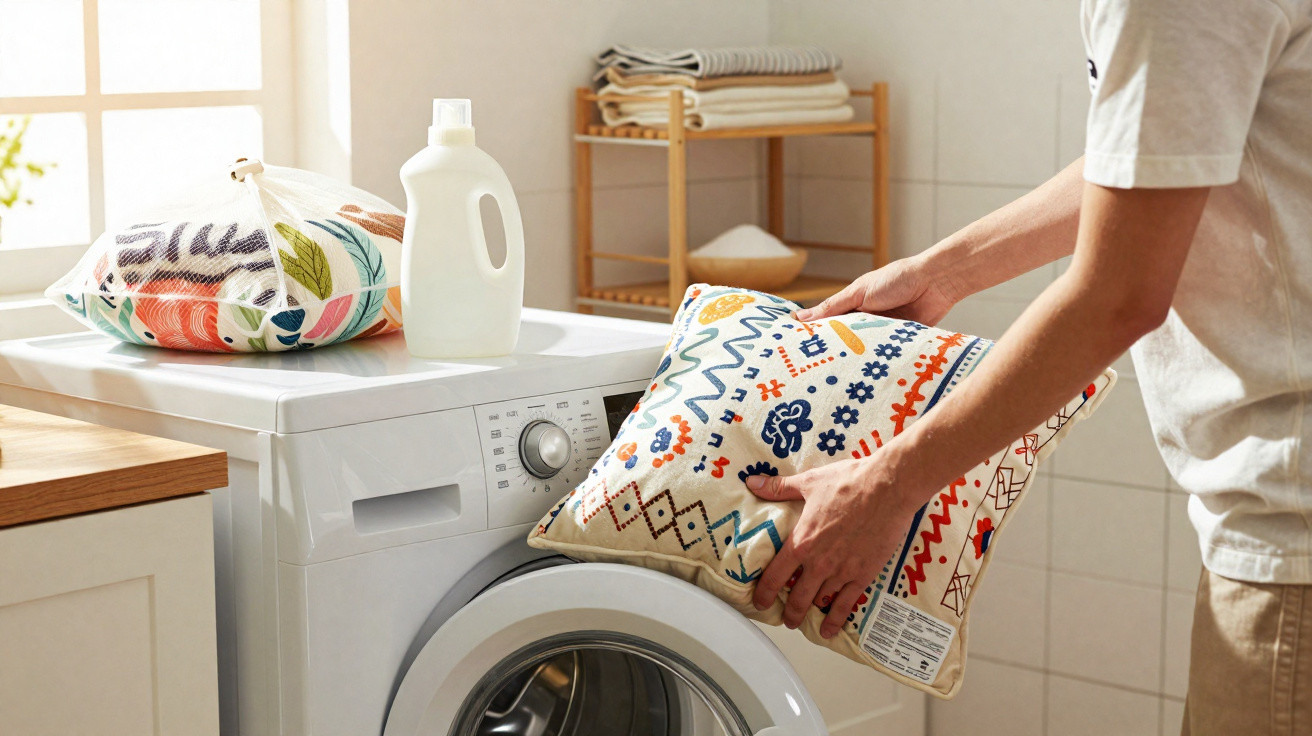
Regularly cleaning decorative covers at home calls for a bit of extra care to lift the everyday build-up of dirt and dust. Choosing gentle products is key to safeguarding delicate fibres and keeping items naturally soft for much longer.
Why is the wash label essential for protecting the fabric?
Before you put any item into the washing machine, taking the time to check the care symbols helps you avoid irreversible structural damage. Those instructions indicate the highest permitted water temperature, helping to prevent accidental shrinkage of the cover and supporting the preservation of the original colours.
Many decorative fabrics need a mild approach so they do not lose their distinctive texture or start to fray too soon. Following the manufacturer’s guidance means the textile structure can cope with mechanical agitation without losing its original volume and beauty.
How to clean cushions without losing their original volume?
To stop the filling from losing its shape during home washing, the main secret is… Read more
What is the importance of using the correct dose of mild detergent?
The amount of soap used during cleaning should match the recommended dosage for the level of soiling. Using more product does not improve the outcome and can lead to a harmful build-up of chemical residue between the textile weave.
When detergent becomes trapped in the fabric, the surface can gradually turn stiff and lose its pleasant feel. Measuring precisely allows rinsing to remove all particles, keeping flexibility and a light fragrance.
Below is a video from the DECO PROteste YouTube channel that explores the points discussed in this topic in more depth:
How does the delicate cycle help preserve textile fibres?
Selecting a gentle programme on the washing machine reduces mechanical friction between covers during the agitation stages. This care significantly cuts wear on more sensitive threads, helping to prevent unwanted pilling and early distortion.
A low spin speed also plays a crucial role in keeping seams straight and intact after washing. As a result, the pieces retain their original drape, ensuring greater structural strength and extending the product’s useful life.
Essential Kit
Items for a safe wash - key features for caring for covers effectively:
- 1
Mild liquid detergent for delicate fabrics; - 2
Protective wash bag with a secure fastening; - 3
Graduated measuring cup to control the amount of product.
Which practices help remove odours without damaging the material?
Getting rid of unpleasant smells in decorative cushions depends on a deep-cleaning action that does not rely on harsh ingredients. Well-balanced formulas dissolve trapped grime without weakening the threads, delivering lasting freshness with complete textile safety.
Using moderate water temperatures in the machine is another essential step for loosening impurities without affecting dye. This helps remove everyday odours and prevents early fading of the living room’s elegant prints.
A few simple habits during washing can improve the cleaning of covers:
- Close zips before placing the items in the machine drum;
- Turn covers inside out to protect embroidery and prints;
- Avoid chlorine bleach, which can damage fibres.
How does correct drying prevent damage and unpleasant odours?
Once the wash cycle has finished, drying should be done in a well-ventilated place, away from direct sunlight. Too much sun dries out delicate fibres, spoiling the soft feel and causing a loss of vibrancy in the shades.
Laying the covers flat and pulled straight on the clothes line helps prevent deep creases and speeds up the evaporation of internal moisture. This care reduces the risk of mould, ensuring comfort and hygiene remain in the room.


Comments
No comments yet. Be the first to comment!
Leave a Comment