
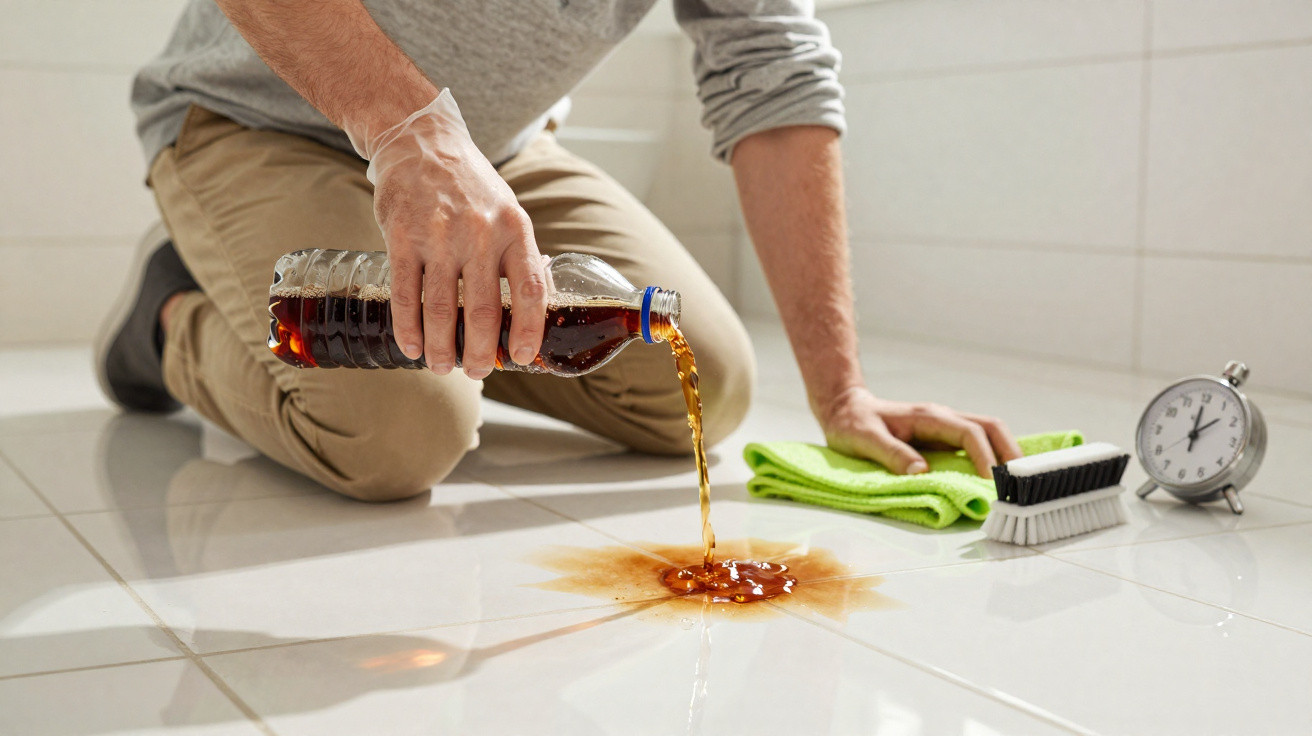
Many people look for practical ways to reuse fizzy drinks that have gone flat when doing household chores. Used on ceramic tiles, cola can help lift stubborn grime and built-up deposits, making your cleaning routine far more efficient and budget-friendly.
Why does cola work on stains on tiles?
Cola’s formula includes acidic components that can react with minerals that commonly build up in bathrooms. This gentle chemical reaction helps break down the layer of ingrained dirt, so removal takes less physical effort during cleaning.
The key ingredient behind this effect is phosphoric acid, which is added to give the drink its distinctive taste. When you apply it to shower enclosure walls, it can dissolve soap scum and limescale particles, bringing back the original shine and making the process of scrubbing easier.
Related: How to keep mosquitoes out of the bathroom without using bleach?
With the right mix of simple homemade ingredients, it’s possible to sanitise surfaces and deter unwanted insects without causing damage… Read more
What is the ideal time to leave cola on ceramic?
For the most practical results, pour the liquid over the ceramic tiles and leave it for 30 minutes. That window gives the acids time to work into body oils and accumulated water marks, delivering continuous action that is genuinely effective on the surface.
While it sits, heavy dirt starts to release from the tiny pores in the ceramic finish. You’ll notice yellowed crusts softening quickly, allowing a soft sponge to lift the residue without the need for abrasive or toxic products.
Below, you can watch a practical demonstration shared by the MBClife YouTube channel on how to make use of this drink.
Why is a thorough rinse essential after using it?
Even though it helps with mineral staining, cola contains a significant amount of sugar. If it dries on the wall, it can leave a sticky film that attracts dust and ants, which is why a generous rinse with clean running water is essential.
Using a mild, neutral washing-up liquid straight after removing the drink helps ensure no tackiness is left behind. This extra step also neutralises any remaining acids and leaves the tiles fully sanitised, supporting a long-lasting result with an excellent visual finish.
Essential care when applying
Important recommendations for tiles
Follow these guidelines to keep cleaning safe and avoid damaging surfaces:
- 1
Avoid using it on natural stone such as marble and granite, as these materials are sensitive to acids; - 2
Protect porous grout by applying the liquid mainly to the ceramic tiles rather than soaking the joints; - 3
Always finish with plenty of water and mild soap to remove all residual sugar.
Which surfaces and materials require extra caution?
Although standard ceramic tiles generally tolerate contact with acidic solutions, other bathroom finishes can be permanently harmed. Natural stones such as marble, granite, and limestone quickly lose their polish when they come into contact with highly acidic substances.
Older or worn cement-based grout also needs special care during the cleaning process. Prolonged exposure to fizzy drinks can weaken the porous joint material, so you should apply the liquid carefully and with precision to the tiled surface.
Before you start, keep these essential points in mind:
- Do a patch test on a small, discreet area of the tile before spreading it across the whole wall;
- Use only on glazed ceramic pieces, avoiding direct contact with premium/natural stone surfaces;
- Rinse immediately if the product accidentally runs onto taps or chrome fittings.
Does cola replace conventional bathroom disinfectants?
It’s important to understand that cola works only as a descaling agent, helping to dissolve minerals and stuck-on dirt. It has no bactericidal or fungicidal properties, so it cannot eliminate the germs that thrive in the warm, humid environment of a shower enclosure.
For that reason, traditional disinfectant and antibacterial products remain essential for keeping the home healthy. The drink is best treated as an occasional helper for surface build-up, while disinfectant provides ongoing sanitary protection and family safety.
Comments
No comments yet. Be the first to comment!
Leave a Comment