
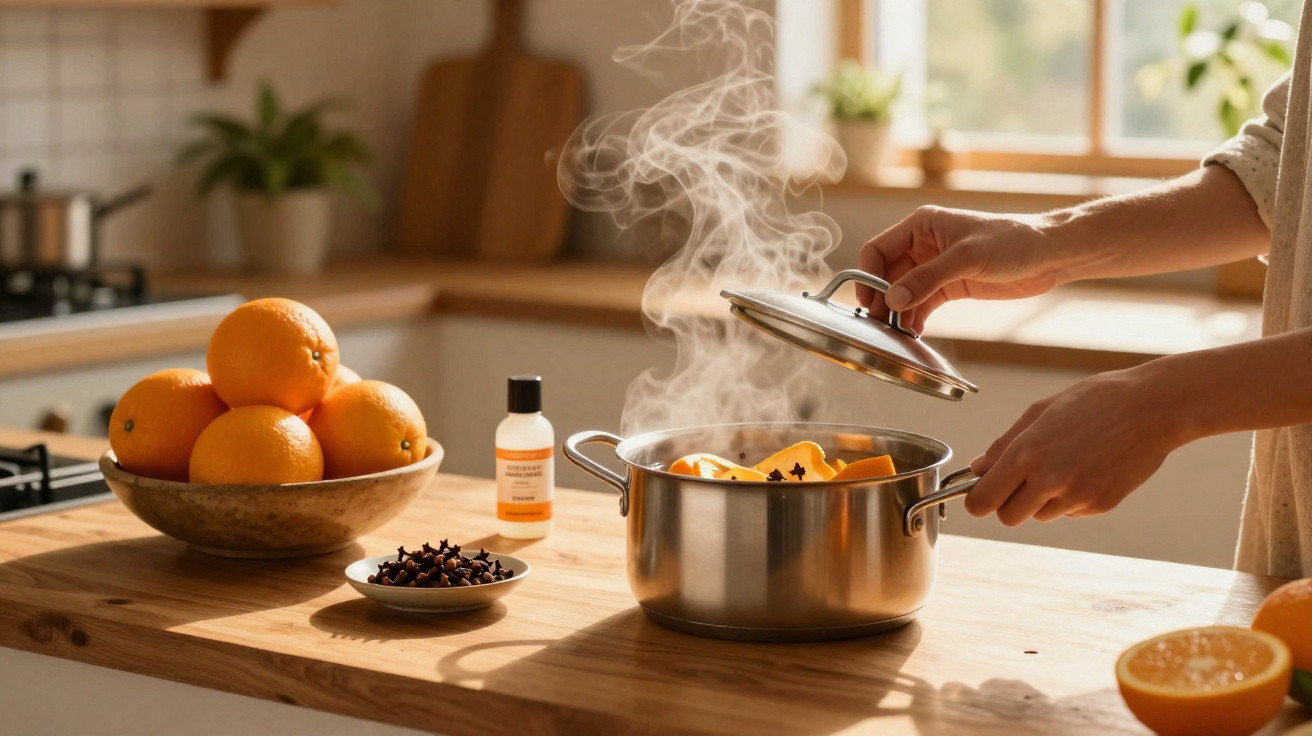
Simmering orange peel with cloves is an easy way to fragrance your home using ingredients that would usually be thrown away or left forgotten in the cupboard. The outer skin of the orange is rich in essential oil dominated by limonene, while cloves contribute mainly eugenol. When they are gently heated in water, volatile aromatic compounds are carried into the air with the steam, creating a citrus-and-spice scent without the need for a conventional air freshener.
Why does orange peel smell so strong when it’s heated?
Most of the fragrance comes from the coloured outer layer of the peel, which contains tiny sacs that hold orange essential oil. Composition studies show that D-limonene is the main component of this oil and is responsible for much of orange’s distinctive citrus smell. Heating helps these volatile compounds escape more easily, so they rise with the steam and disperse around the room.
- The outer peel concentrates the fruit’s aromatic oils.
- Limonene is one of the key compounds behind the smell of orange.
- Hot water helps release these components into the air.
- The scent continues as long as there is liquid and the ingredients are kept gently warm.
What do cloves add to the mixture?
Cloves bring a warm, sweet, slightly peppery note that contrasts with the orange’s citrus character. Their essential oil contains a high proportion of eugenol, a volatile aromatic substance responsible for much of the spice’s instantly recognisable smell. Research on clove oil identifies eugenol as its major constituent.
This pairing is often linked with cold days and the end of the year because it brings to mind hot drinks, desserts, and spiced recipes. That association is a sensory preference rather than any special property of the mixture: orange peel and cloves can be warmed at any time of year when you want a different aroma in the kitchen or nearby rooms.
How do you simmer orange peels with cloves at home?
Put the peels in a small saucepan, cover them with water, and add a few whole cloves. Once it reaches the boil, turn the heat down so it only simmers gently. There is no fixed ratio: using more peel or more spice makes the scent stronger, but in smaller spaces it can also become overpowering.
- Use clean peels from one or two oranges.
- Cover everything completely with water.
- Add a few whole cloves.
- After it boils, keep the heat low.
- Top up with water if the level drops during heating.
- Never leave the pan on the hob unattended.
Does the smell really linger in the house for hours?
How long it lasts depends on the size of the space, ventilation, the amount of ingredients, and how long you heat them for. While the mixture stays warm, fresh aromatic compounds keep being released; after you turn the heat off, the scent may remain noticeable for a while in the air and on fabrics, but there is no single duration that can be guaranteed for every home.
It is also worth separating fragrance from “purifying”. Although limonene and eugenol have chemical properties studied in laboratories, simmering orange peel and cloves in a pan does not turn the steam into a room disinfectant and does not replace cleaning or ventilation. The most direct household benefit is simply adding scent while making use of the peel.
Why can this reuse replace a shop-bought air freshener?
If your goal is only to add a temporary fragrance, orange peels with cloves use straightforward materials and avoid immediately discarding a highly aromatic part of the fruit. Peel that would go in the bin still contains essential oil rich in limonene, and just a few cloves provide the eugenol that gives the blend its spiced contrast.
The result, however, depends on heating the mixture safely and recognising that this is a homemade aroma, not a product with standardised intensity or longevity. If you keep enough water in the pan and maintain a low heat, the method uses naturally occurring compounds from both ingredients to perfume the home during simmering and for a short time afterwards, without relying on sprays or plug-in fragrance devices.

Comments
No comments yet. Be the first to comment!
Leave a Comment