
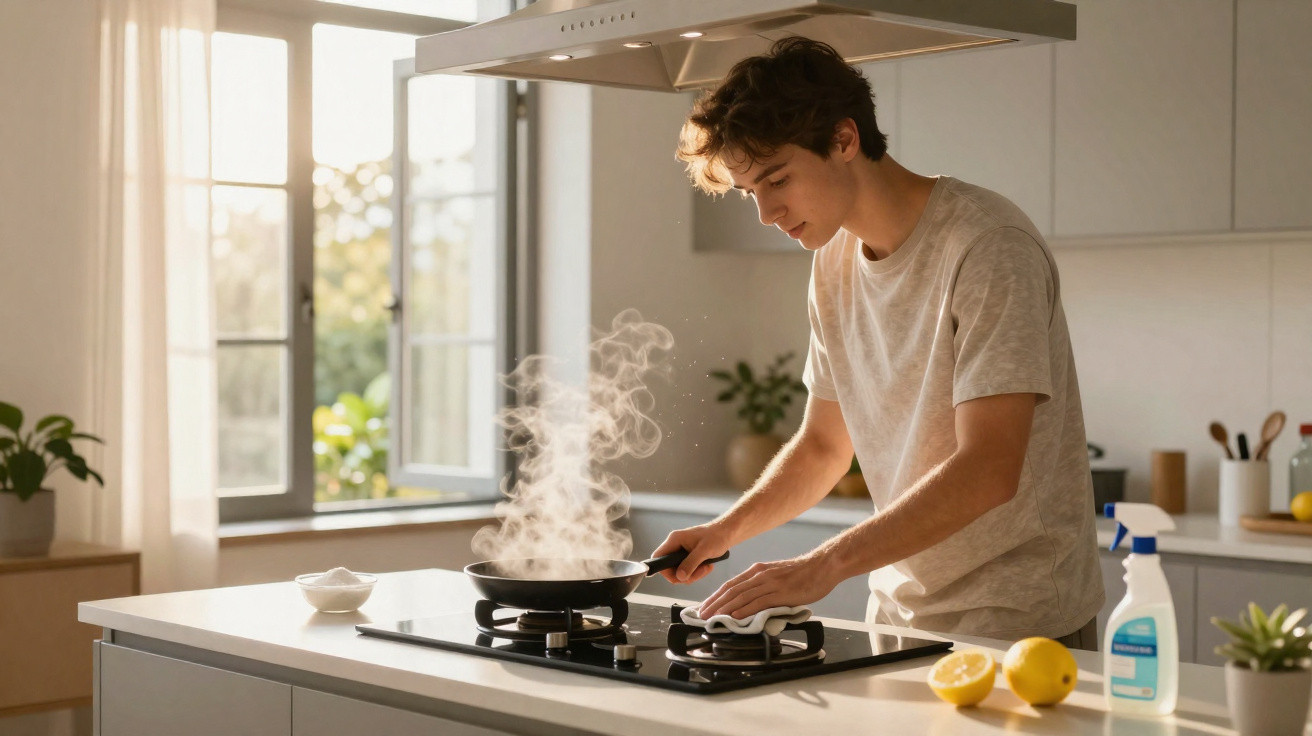
Frying fatty foods often sends heavy vapours and lingering smells through the whole home. A reliable approach combines steady air circulation with thorough cleaning of surfaces, so your kitchen stays fresh and pleasant once you’ve finished cooking.
Why does the smell of grease cling to the room?
While you fry, tiny droplets of aerosolised fat drift through the air and settle on walls, cupboards, and other surfaces. When this invisible residue is left in place, the odour keeps evaporating back into the room, making it hard to remove the bad smell without the right action.
If there isn’t enough airflow, microscopic oil particles remain suspended for longer. In very enclosed spaces, the concentrated haze builds quickly, which makes frying odours especially persistent and uncomfortable for the residents of the home.
Why do Japanese people use tea leaves in the kitchen?
In Japanese households, used tea leaves have natural properties that can absorb strong odours that have become embedded in the… Read more
How can you use targeted ventilation while cooking?
Switching on the cooker hood or extractor fan a few moments before you start creates a continuous airflow. This directed circulation pulls in oily particles before they spread, dramatically reducing grime build-up on the kitchen worktop.
Opening windows in the right places helps refresh the indoor air while the hob is on. Keeping the hood filter clean also ensures the appliance performs properly, preventing greasy vapours from being pushed back into other rooms.
Below is a video from the Casa GNT channel on YouTube that explores the points discussed in this topic in more depth:
Why is it important to clean surfaces straight away?
Wiping away oil splashes as soon as cooking ends stops the grease from drying onto surfaces. Using a damp cloth with a degreasing product makes it easier to clean the hob, removing the main source from which strong odours tend to reappear.
Tiles near the hob also collect tiny droplets of fat during frying. Quick cleaning of this area prevents sticky layers from forming, making it far more practical to keep the space tidy over the long term.
Essential Cleaning Kit
Items to eliminate odours
Keep the following essentials close by to help purify the air in the kitchen:
- 1
High-efficiency degreasing washing-up liquid; - 2
Microfibre cloths dedicated to removing oil; - 3
A natural solution made by warming citrus peel.
What extra steps help prevent bad odours from lingering?
Using splash guards reduces how much oil is sprayed around while food cooks. This protective barrier stops grease reaching more distant surfaces, making the end-of-meal routine quicker and more efficient.
Throwing away used oil in tightly sealed containers helps stop strong vapours escaping from the kitchen bin. Washing greasy frying pans promptly also helps keep the environment free from unpleasant smells and much more comfortable for everyone.
The key steps to prevent odours lingering in the kitchen are:
- Clean the extractor filters on a regular basis;
- Keep windows open during cooking and afterwards;
- Wipe worktops and surfaces with degreasing products.
How can you keep the air fresh after cooking?
Leaving ventilation running for a few minutes after turning off the heat helps ensure the indoor air is fully replaced. This simple habit refreshes the home’s atmosphere, removing invisible traces of suspended grease in a truly effective way.
Bringing these precautions into your everyday cooking routine changes the feel of the home, stopping unwanted smells from repeatedly soaking in. Well-ventilated spaces provide lasting comfort, making every family mealtime far more enjoyable.
Comments
No comments yet. Be the first to comment!
Leave a Comment