
The solution begins well before the odour becomes obvious.
On TikTok, in Reddit threads and across cleaning forums, there’s been a quiet move away from old pantry “hacks”. Rather than flinging baking soda and lemon at every mark, more people are opting for a more clinical routine: pharmacy staples, enzymes, and a clear order of steps that deals with both the yellow staining and the lingering smell that follows.
Why urine smell seems to survive every clean
Anyone who has cleaned the loo thoroughly, only to notice a faint whiff the next day, will recognise the annoyance. The bowl can look spotless, the floor appears clean, and yet the room still carries that subtle train-station-toilet smell.
That persistence has a simple cause: once urine dries, it forms crystals. Tiny deposits can stick to porcelain, under the seat, around hinges, in grout, and in the silicone at the base. In a warm bathroom, this happens faster than most people expect-one missed splash can set within a few hours.
As those residues build, they make surfaces less smooth. That gives fresh urine more to cling to, and small crevices start behaving like permanent odour pockets. Even the silicone seal around the toilet-meant to block moisture-can end up holding on to smells like a sponge.
Soak first, then scrub: the contact time does most of the work, while frantic scouring just spreads residue around.
The method that skips baking soda and lemon
Hydrogen peroxide with a drop of dish soap
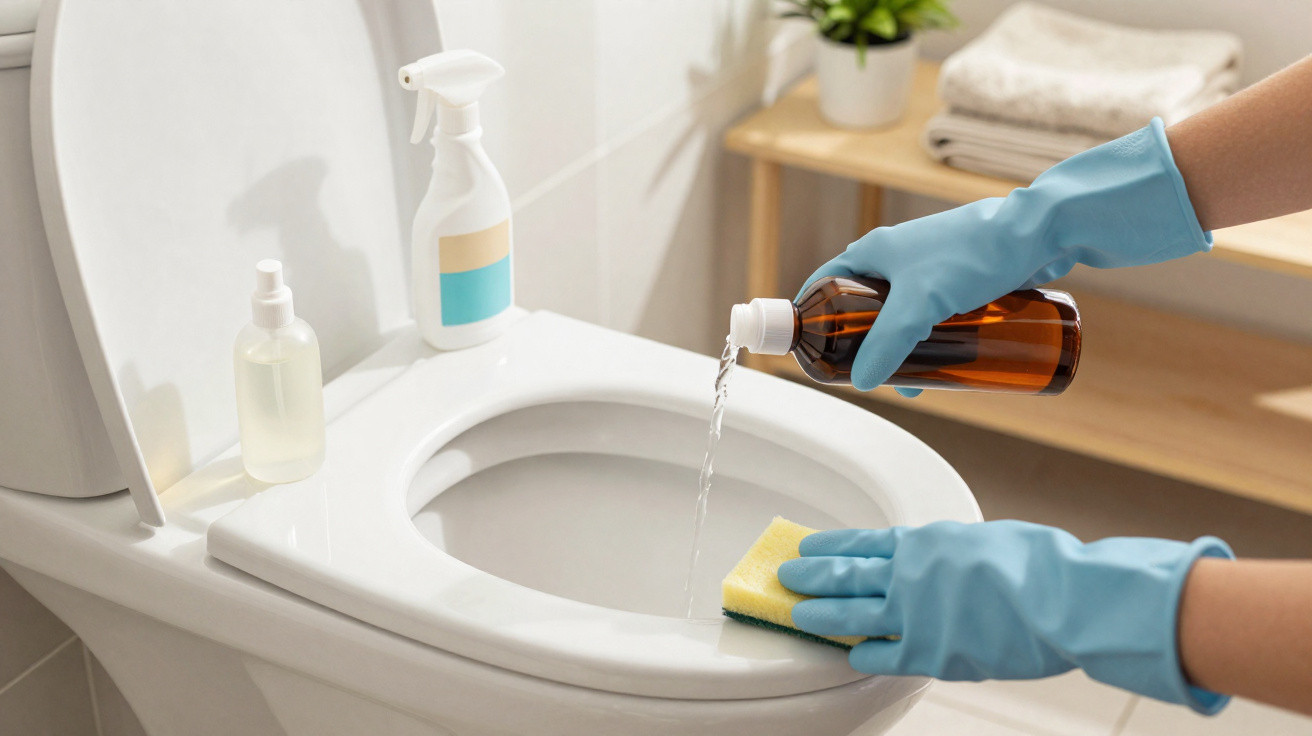
The routine doing the rounds is built around an everyday bottle of 3% hydrogen peroxide (the standard first-aid strength sold in most pharmacies), paired with a small amount of mild, unscented washing-up liquid.
Hydrogen peroxide breaks down organic staining, helping lift the yellow tint that often settles around the waterline and under the rim. The tiny dose of washing-up liquid isn’t for bubbles or fragrance-it reduces surface tension, allowing the mixture to travel into edges, hinges and the underside of the seat.
This is the step-by-step method people are following:
- Dab up any fresh splashes with kitchen roll or a cloth so the solution isn’t immediately watered down.
- In a spray bottle, combine about 240 ml of 3% hydrogen peroxide with roughly five drops of mild washing-up liquid.
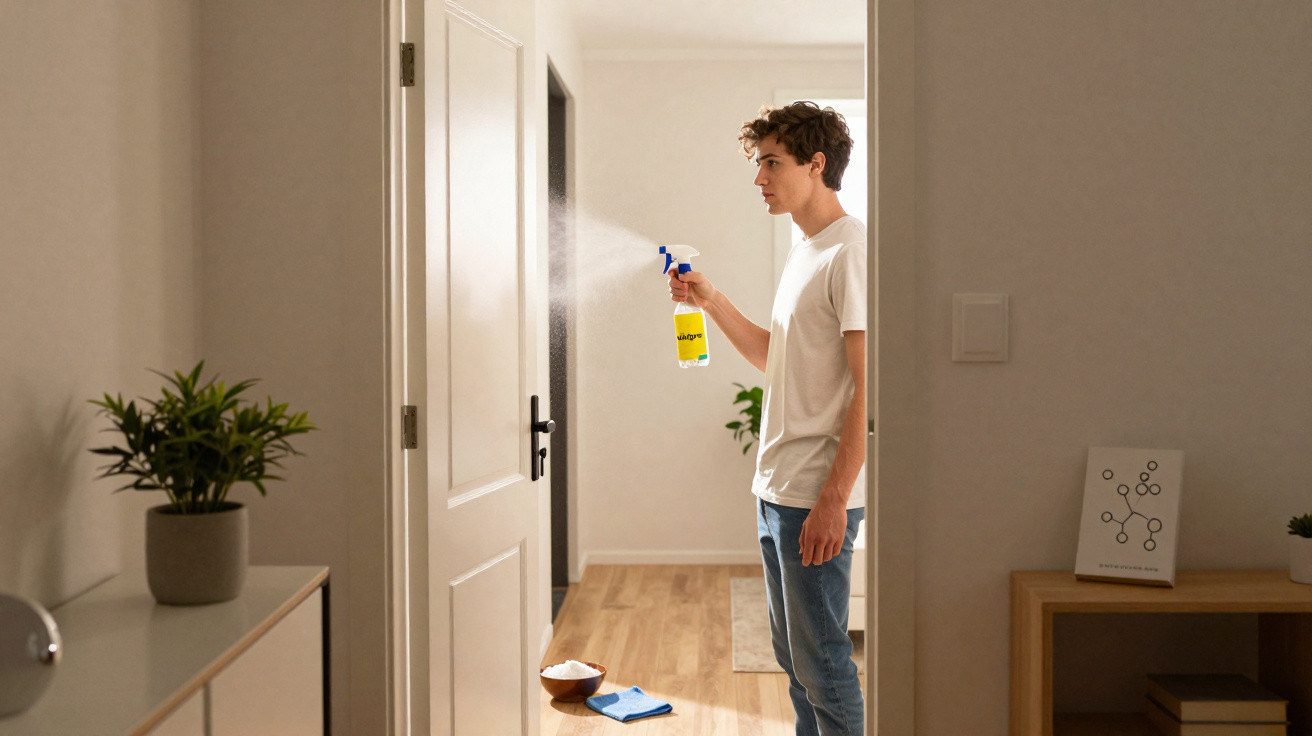
- Spray the inside of the bowl, the rim and underside of the rim, the underside of the seat, the hinges, plus the “splash zone” on the floor in front of and around the base.
- Leave it for 8–10 minutes, re-spraying if needed so everything stays visibly damp.
- Brush the bowl, taking extra care with the jets under the rim where urine commonly collects.
- Wipe the hinges, seat and base using a non-scratch sponge or cloth, then wipe again with a damp cloth to rinse and finish by drying.
Stick to 3% hydrogen peroxide, ventilate the room, and never mix it with vinegar or bleach - the combo can release dangerous fumes.
For stubborn odour, bring in enzymes
If the smell still won’t shift after a proper clean, it’s often coming from grout or silicone. Uric acid crystals can lodge in these more porous materials and continue to release odour even when the surface looks pristine.
That’s where an enzymatic cleaner helps. These products use specific enzymes to break down urine compounds, rather than covering them with perfume.
To get the best results:
- Thoroughly wet the grout lines around the toilet base, the tiles immediately in front of the bowl, and the area around the seat hinges using an enzyme cleaner labelled for urine.
- Leave it for 10–15 minutes so the enzymes have time to “digest” the crystals.
- Blot instead of scrubbing, so you lift liquid out rather than forcing it deeper.
- If deposits are heavy, lay plastic wrap over the treated area while you wait to slow evaporation and increase contact time.
- If the odour has been present for months, repeat the process the following day.
Odour control without citrus tricks
Social media is full of suggestions like bowls of lemon slices or jars of citrus peel left in the bathroom. It can smell nice briefly-and then the effect fades.
Citrus oils mainly disguise odours. They do very little to neutralise the salts and residues left by urine. The approach gaining traction is a two-step plan: remove the smelly molecules first, then introduce a subtle background scent.
- Put whole cloves and a cinnamon stick in a small open jar or dish near the toilet. They give off a warm, clean scent for a few weeks.
- Leave a cup of activated charcoal pellets nearby. Charcoal’s porous structure captures odour molecules from the air.
- Use the extractor fan or open a window for 10–15 minutes after hot showers, because steam helps odours spread and linger.
Neutralise first, then add fragrance: heavy sprays alone often create a cloying “sweet-sour” smell that feels worse than the original problem.
A weekly routine that actually fits into real life
Homes that stay fresh don’t necessarily have people scrubbing with more effort-they tend to follow a consistent schedule.
Many cleaning enthusiasts have landed on a straightforward routine:
- Daily (around 90 seconds): Wipe the underside of the seat, the rim, the flush button and the front floor tile using a cloth misted with diluted peroxide or a basic bathroom cleaner.
- Twice a week: Do the full peroxide-and-soap soak and brush routine described above.
- Weekly: Apply enzyme cleaner to grout lines, silicone seams and the area around base caps.
- Monthly: Replace activated charcoal and refresh any spice jars, and check hinges and rubber seals for looseness or wear.
What to use where: a quick guide
| Area | Main product | Why it works |
|---|---|---|
| Bowl interior and rim | 3% hydrogen peroxide + mild dish soap | Targets yellowing and reaches under-rim jets |
| Grout and silicone around base | Enzymatic urine cleaner | Breaks down uric acid crystals that hold odour |
| Seat hinges, caps and underside | Peroxide spray, then dry cloth | Clears splash traps and helps prevent corrosion |
| Room air | Activated charcoal + clove/cinnamon jar | Absorbs airborne smells while adding a light scent |
Common mistakes that keep the smell hanging around
A few common habits can undermine even a regular cleaning routine:
- Mixing chemicals: Bleach combined with anything acidic, or with products containing ammonia, can create dangerous gases. The safer approach is one product at a time, rinsing thoroughly before switching if necessary.
- Using abrasive pads on dry porcelain: Green scouring pads can create tiny scratches. Over time, urine and limescale grip those grooves and darken.
- Forgetting the splash zone: The tile directly in front of the toilet and the seal where the base meets the floor are frequent sources of lingering odour, particularly in homes with children.
- Leaning on strong fragrance sprays: Many air fresheners leave a tacky residue that attracts dust and grime, so each spray can add another layer of build-up.
Why this low-key method is suddenly everywhere
In the background, this routine reflects a wider change: people want fewer bottles under the sink and less harsh chemistry, without putting up with a smelly bathroom.
A bottle of 3% hydrogen peroxide plus a targeted enzyme cleaner fits that goal. Both are easy to find, fairly inexpensive, and generally kind to modern glazed surfaces and plastic seats-so long as you don’t allow them to dry into thick puddles.
The time of year matters too. When colder months arrive and windows stay closed, smells concentrate. A “neutralise then scent” approach keeps the room fresher without relying on a sacrificial dish of baking soda or a collection of lemon halves going mouldy by the cistern.
Extra tips for families, sharers and pet owners
Late-night trips to the bathroom often lead to hard-to-explain splashes. Some parents and flat-sharers now keep a small motion-activated night light near the base of the toilet to improve aim. Others put a washable mat in front of the bowl and run it through a hot wash each week.
In homes with toddlers, a slow-close seat can help by preventing sudden drops that send fine droplets outwards. A quick daily wipe of the underside is often enough to stop a bigger smell problem from taking hold.
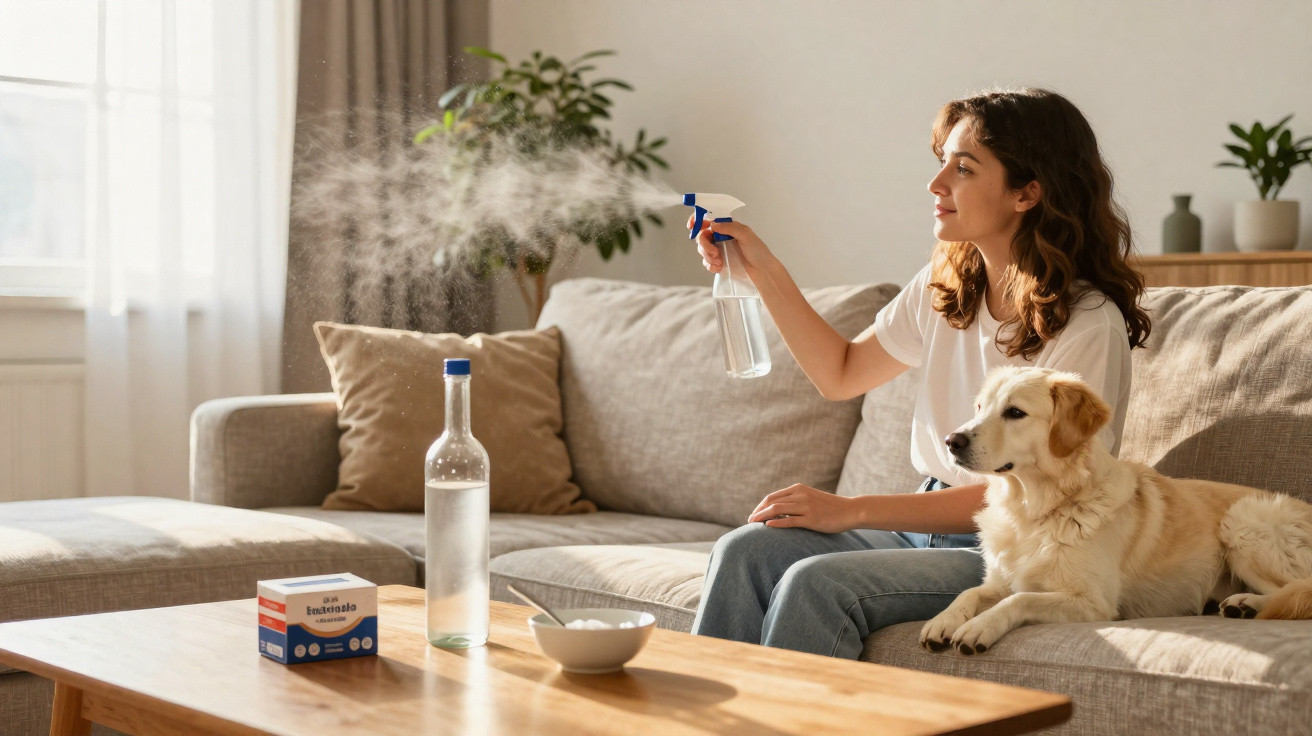
Pets can complicate things. Cats and dogs sometimes mark near toilets because an existing odour signals a “bathroom area”. If there’s a pet accident near the loo, use an enzyme cleaner the same day and keep pets away until the spot is fully dry. Standard bathroom sprays can set pet urine stains and trap the odour.
Costs, time, and what “clean” really means here
Part of the appeal is the cost as well as the smell control. A typical 950 ml bottle of 3% hydrogen peroxide is inexpensive and, once mixed into a spray, can last for several weeks. A quality enzyme cleaner can last for months because it’s reserved for problem areas rather than used across the whole floor.
Charcoal refills can cost pennies per day, while cloves and cinnamon sticks can be moved into new jars until their scent fades. The daily wipe takes less than two minutes. The twice-weekly soak and brush is roughly a ten-minute task, with most of that time being the waiting period.
Most people managing shared loos now rely on a tiny kit: peroxide mix, mild soap, enzyme cleaner, non-scratch sponge, a brush and a stack of cloths. That pared-back set is enough to keep stains and smell in check.
In offices and shared student houses, some people have made it even more structured by printing a simple rota with named “zones” - bowl, floor, base, bin - so everyone knows what they’re responsible for. A handful even draw a small floor plan and note repeat odour hotspots over a fortnight. That kind of tracking can point to a loose hinge, a failing seal, or a particular “corner” that catches hurried late-night splashes-leading to an actual fix rather than yet another blast of scented spray.

Comments
No comments yet. Be the first to comment!
Leave a Comment