
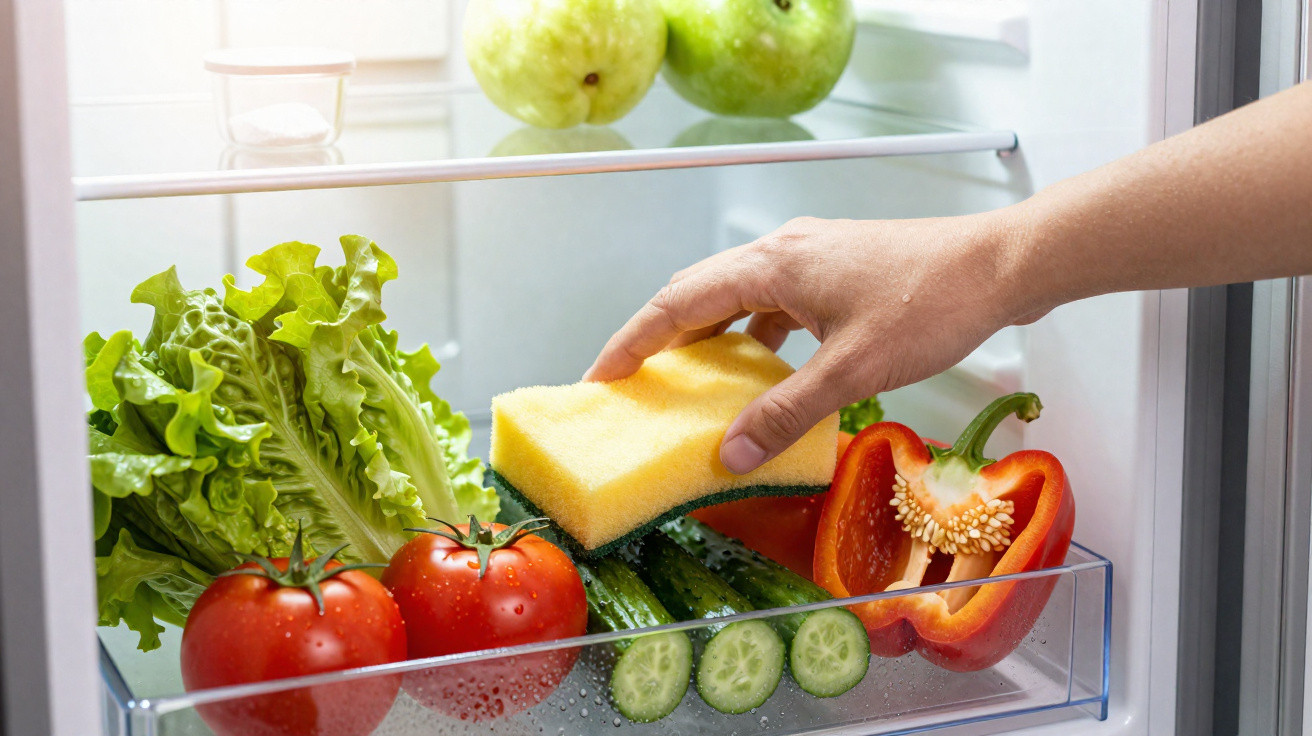
Among the many ways to keep food fresh at home, one simple habit has been gaining attention: placing a dry sponge in the fridge’s vegetable drawer to help manage moisture and cut down on waste of fruit and vegetables.
Why does moisture in the vegetable drawer affect storage so much?
Even after harvest, vegetables and fruit continue to respire, releasing gases and moisture inside the drawer. When water builds up, it can encourage mould, dark patches, a slimy texture and unpleasant smells-especially when the drawer is packed with lots of items.
At the other extreme, if conditions are too dry, produce can dehydrate and wilt more quickly, particularly delicate leaves. Guidance from bodies such as the USDA indicates that different vegetables do best at different humidity levels, which helps explain why some items spoil faster when everything is stored together in the same space.
How can a dry sponge in the vegetable drawer help in practice?
Putting a dry sponge in the drawer works like a small moisture absorber, taking up some of the water that gathers as droplets on the sides and at the bottom. This helps keep the environment less waterlogged, lowering the chance of fungal growth and slowing the rapid rotting that affects certain vegetables.
It is not a replacement for good storage habits, but it can support everyday care-particularly in older fridges or models without humidity controls. It can also help when the drawer is very full, as it reduces the excess water trapped between packaging, leaves and skins.
How to use a dry sponge in the drawer safely and hygienically
For the sponge to be helpful rather than a source of contamination, basic hygiene matters. The sponge should be used only for the fridge, kept clean and free from odours, and replaced or washed regularly to prevent micro-organisms from multiplying.
A few straightforward steps make the method work better day to day:
- Choose a new sponge or one that has been thoroughly cleaned, with no traces of washing-up liquid or chemical products.
- Place it dry in a corner of the drawer, avoiding direct contact with cut or peeled foods.
- Check weekly whether it is soaked; if it is, wash it, dry it completely, or replace it.
- Keep the drawer itself clean, removing loose leaves, peels, liquids and food remnants.
- Dispose of items showing signs of spoilage quickly so they do not contaminate the rest.
What other simple habits help keep fruit and vegetables for longer?
A sponge is only an extra tool within a broader routine of fridge organisation. A steady temperature, frequent cleaning, good ventilation and proper separation of foods are all essential to extend the usable life of fresh produce.
It is also worth paying attention to how each item behaves: some foods, such as apples, release more ethylene and can speed up the ripening of others; meanwhile leafy greens such as lettuce benefit from higher humidity and may last longer when stored in closed containers or wrapped in clean, slightly damp cloths. Tweaking these details to suit each household’s shopping habits makes the sponge trick a practical, easy addition that can genuinely help reduce waste.



Comments
No comments yet. Be the first to comment!
Leave a Comment