
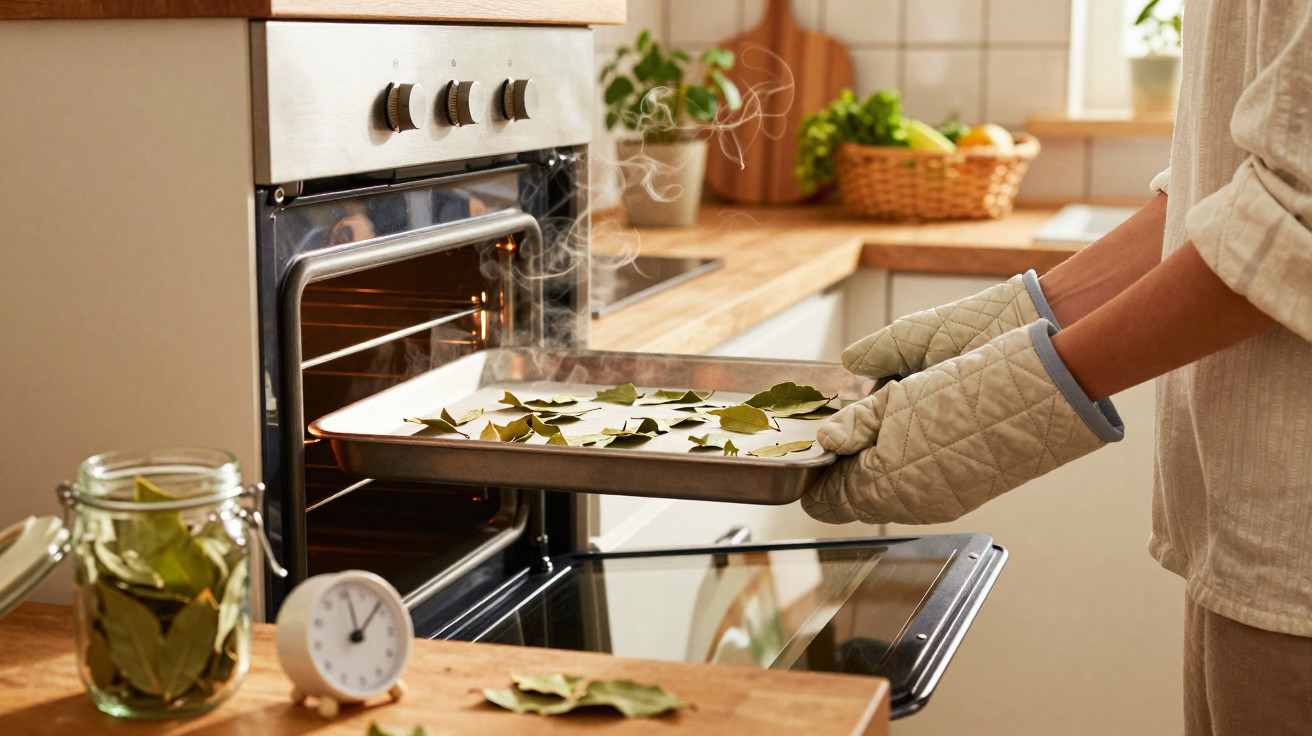
Cleaning products keep getting more expensive and more households are trying to cut down on harsher chemicals, so an old kitchen staple is being put to work in a new way. With a little gentle heat and a few bay leaves, your oven can smell noticeably different in minutes. The tip has taken off because it’s inexpensive, straightforward, and easy to fit into a normal routine.
Why a bay leaf in your oven is catching on
In France and beyond, low-impact cleaning is becoming the default for plenty of families. Many people are keen to avoid strong chemical fumes indoors.
Just as importantly, they want something that doesn’t require an hour of scrubbing after a long day. Warming bay leaves hits that balance.
Bay leaves have a bold, resinous fragrance due to compounds such as 1,8‑cineole and eugenol, which are used in flavourings and perfumery. When gently heated, those oils become airborne. In the enclosed space of an oven, the aroma spreads quickly and helps counter stale, fatty smells.
This won’t replace a proper deep clean. What it does do is freshen the oven between roasts, reduce the chance of lingering odours carrying over to your next bake, and leave a light herbal note that feels clean without being sweet or synthetic. Many readers say it even encourages more midweek fish and roasted veg, simply because the after-smell doesn’t linger.
Quick reset: a handful of bay leaves and 20 minutes of low heat can lift greasy odors and give your oven a neutral, herbal scent.
How to try it at home
- Line a baking tray with baking parchment.
- Spread 6–10 bay leaves (dried or fresh) in a single layer.
- Set the oven to about 150 °C (300 °F).
- Put the tray in for 15–20 minutes, keeping the door shut.
- Turn the oven off, leave the tray inside for a further 5 minutes, then open the door to air it out.
Fresh leaves tend to smell greener and a touch stronger. Dried leaves are more woody and warm. Either option works. If your oven has a fan, the fragrance circulates more quickly. If you notice smoke even at low temperatures, wipe away obvious grease first, or do a brief warm-up to burn off residues before adding the leaves.
Safety notes you should not skip
- Do not go above 170 °C (340 °F). Leaves can singe near heating elements.
- Keep the leaves on a tray. Don’t place them near exposed elements or any flame.
- Don’t do this during self-clean cycles.
- Check the source of your bay: use only true bay laurel (Laurus nobilis). Do not use cherry laurel (Prunus laurocerasus), which is toxic.
- After the cycle, ventilate the kitchen if anyone at home is sensitive to fragrances.
Stick with true culinary bay (Laurus nobilis). Avoid garden look‑alikes like cherry laurel, which can be toxic when heated.
What happens inside the oven
At low heat, bay leaves warm up and release volatile oils. Those aromatic compounds interact with odour molecules that cling to the oven cavity and racks. You won’t ‘sterilise’ an oven this way, but you can change how it smells when you open the door-which matters because many unpleasant odours sit in grease films and porous surfaces. A quick wipe with warm water and a teaspoon of washing-up liquid before running the bay cycle often makes a big difference: less grease means fewer stubborn smells.
Bay has been researched for antimicrobial activity on foods and surfaces, with results depending on concentration and the type of extract. Your oven isn’t a lab bench, so it’s best to treat this as a deodorising trick first-plus the bonus of a fresher feel when you preheat.
Beyond the oven: small wins around the house
If your main aim is managing smells, bay leaves can be useful elsewhere too. Pop a few into a linen drawer. Drop two into a simmer pot with lemon peel to help clear kitchen odours after frying. Some people also place leaves near windows and along skirting boards to discourage insects; reports vary, but the scent can make a room feel more ‘put together’.
What the evidence says
In laboratory settings, bay’s main compounds can show antiseptic activity. That doesn’t mean you should skip proper cleaning, and it doesn’t mean a few warmed leaves will deliver medical effects.
Any claims about blood sugar or joint pain sit in the realm of diet and clinical care, not heated leaves used for scent control. If you use bay in cooking or as a tea for wellbeing, speak to a professional-particularly if you take diabetes medication or anticoagulants.
Think of bay leaves in the oven as a scent and mood tool. Keep soap, water, and periodic deep cleans in the plan.
How it compares to other low‑cost fixes
| Method | Best for | Cost per use | Effort | Precautions |
|---|---|---|---|---|
| Bay leaves, low heat | Neutralizing stale, fatty odors | Very low | Minimal | Keep under 170 °C; use culinary bay only |
| Baking soda paste | Breaking down baked‑on grease | Low | Medium | Rinse well; avoid aluminum discoloration |
| Vinegar steam bowl | Loosening grime, cutting odors | Low | Low | Avoid hot splash; ventilate for sensitive noses |
| Lemon water steam | Fresh citrus scent, light degreasing | Low | Low | Watch seeds; clean spills |
| Activated charcoal tray | Continuous odor adsorption | Medium | Minimal | Replace when saturated; keep away from food |
Questions people keep asking
Fresh or dried?
Dried leaves are handy and predictable. Fresh leaves give a greener hit and, if you dry any extras, can be a good way to stock your cupboard. If you have a bay tree, cut a small branch, wash it, pat it dry, and hang it for a week. Then store the leaves in a jar away from heat and light.
Will the scent affect food later?
Not in any noticeable way. Once you’ve aired the oven, the aroma fades. If you’re about to bake meringues or other delicate pastries straight away, run the oven empty for 10 minutes after the bay cycle to clear the air.
Can I reuse the leaves?
After heating, most of the oils will have dissipated. Compost the leaves or add them to a dry potpourri. If you want a stronger result next time, combine bay with a strip of orange peel or a cinnamon stick.
A practical routine that actually sticks
To make it a habit, build the bay cycle into your week: after a Sunday roast, scrape away the big drips, wipe with warm soapy water, then do a 15-minute bay run on Monday evening. That simple rhythm keeps odours down and usually means you can leave deep cleans longer. It can also reduce the temptation to use self-clean mode, which draws a lot of power and heats up the kitchen.
For a more structured approach, combine bay leaves with a quarterly deep clean using a bicarbonate of soda paste. If grease is heavy, a plastic scraper can speed things up. Replace cracked door seals, as they can trap odours and let heat escape. Small practical fixes like these often outperform pricey sprays.
Who should skip this trick
If anyone in your household is sensitive to fragrances, you may prefer odour absorbers such as activated charcoal rather than scented methods. If your oven has a known electrical issue, address that first. And if you keep birds as pets, avoid scented heat cycles near them-their respiratory systems are particularly delicate.
Short on time, short on budget: bay leaves give you a cleaner‑smelling oven in a single, calm step.
Extra ideas worth trying
For a more thorough refresh, start with a “steam-soften” step: place a pan of hot water with a splash of vinegar in the oven at 120 °C (250 °F) for 20 minutes, let it cool, wipe down the surfaces, and then finish with the bay cycle. That two-stage approach tackles grime and resets the scent.
If you entertain often, keep a small jar of bay leaves near the oven as a visual reminder-small cues help habits stick. In terms of cost, a supermarket packet of bay leaves can last for months of refreshes. If you have a sunny balcony and do light pruning, a bay tree can supply leaves for years. Label the plant clearly to avoid mixing up species, especially if neighbours swap cuttings.



Comments
No comments yet. Be the first to comment!
Leave a Comment