
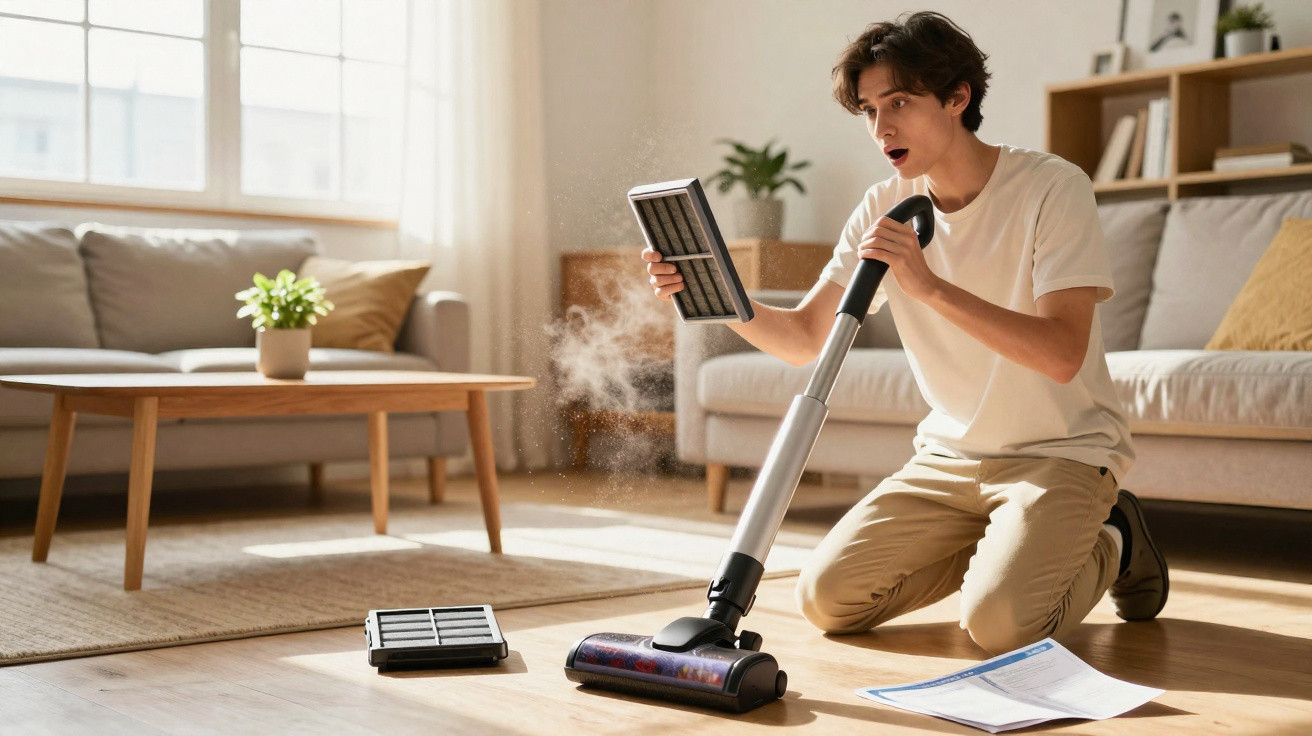
The carpet looks clean-at least at first glance. You run the vacuum cleaner over it, hear that familiar hum, a few crumbs rattle into the tube, and it feels like a small win against everyday chaos. Then, five minutes later, sunlight cuts through the window-and suddenly tiny dust clouds hang in the air like a snow globe someone has just shaken. It’s one of those moments that makes you think: what’s the point of all this?
Maybe the issue isn’t your floor at all. Maybe it’s a mistake that almost everyone makes with their vacuum cleaner-one that doesn’t remove dirt so much as quietly spread it around. And that’s where things get uncomfortably interesting.
The invisible mistake almost everyone makes when vacuuming
Watch people vacuum for a moment and you’ll spot the pattern straight away: pull the machine out, plug it in, get on with it, one quick lap of the room, job done. The vacuum cleaner is treated like some kind of magic mouth that swallows whatever you push towards the nozzle.
Hardly anyone stops to check whether the thing is still “breathing” properly-whether the airflow is strong enough, or whether the filter has long since clogged up. And that’s exactly where the mess we create with our own hands begins.
Picture a vacuum with an overstuffed bag. Or a bagless cyclone bin where dust has been compressed for weeks until it’s practically grey concrete. You switch it on: the motor roars, the floor head grips the carpet-on the surface, it all looks powerful. In reality, the air is struggling to force its way through blocked filters. Fine particles-dust, mite debris, pollen-aren’t being trapped properly any more; they’re being blown back out of the exhaust.
A room that should feel fresher after cleaning turns into a quiet dust mister. Many people only notice when their nose starts itching or their eyes begin to water.
The mechanics are simple, and unforgiving. A vacuum cleaner relies on negative pressure and airflow. When the bag is too full or the filter is choked, the airflow drops sharply. Bigger crumbs still get picked up, but fine particles need speed to stay captured inside the system. Without that speed, dirt builds up in the hose and floor head, and clings to seals and joints. Next time you vacuum, some of it loosens and gets redistributed around the room. The very dirt you’re trying to get rid of ends up secretly taking a second lap of your living room.
How to vacuum without turning your home into a dust cloud
The most important fix is also the least exciting: empty it in time, clean it in time. It sounds obvious, but in day-to-day life it’s routinely ignored.
Ideally, a vacuum bag should be replaced when it’s around two thirds full. With bagless models, the bin shouldn’t just be emptied-you should also wipe the inside with a damp cloth so fine dust isn’t whipped back into the air. And yes, that still applies when you’re only doing a “quick” clean. Those quick sessions, again and again with a half-blocked system, can make the air in your home worse over the long term.
A lot of people leave filters in place until the vacuum starts rattling, losing power, or smelling odd. Everyone knows that moment when you open the flap and pull out a grey, dusty felt creature that used to be a filter. Let’s be honest: hardly anyone truly makes time every week to check filters, knock them out, or wash them.
But the longer you leave it, the more your vacuum works against an invisible wall. The motor runs hotter, the airflow gets weaker, and what comes out of the exhaust is far less “cleaned” than you’re hoping. For allergy sufferers, the effect can be noticeable.
“A poorly maintained vacuum cleaner is like an air purifier in reverse – it makes the air worse while you think you’re improving it,” says a building services expert I spoke to about this exact topic.
- Change the bag before it bulges and feels hard
- Check fine dust and HEPA filters every few weeks, and clean or replace them regularly according to the manufacturer
- Clear hair and threads from the floor head and brush roll so dirt can’t back up
- Don’t just empty the vacuum bin-wipe the inside with a damp cloth
- After vacuuming, open a window briefly so loosened particles can leave the room
What looks clean-and what actually cleans
It gets interesting once you ask what “clean” really means in everyday life. For many people, a quick glance is enough: no crumbs, no visible dust bunnies, the carpet looks neat again, done.
But the real story is in the fine dust-pollen, skin flakes, the particles you can’t see but that still irritate your airways. A vacuum with an overfilled bag does the exact opposite of what you want in that invisible zone. It removes the obvious bits and flings the fine stuff into the air. The room may feel tidier for a moment, while the air quality quietly shifts in the wrong direction.
Once you understand the mechanism, you start looking at your vacuum cleaner differently. Not as a silent appliance in the cupboard that comes out when needed, but as a small air system with an intake and an exhaust-filters that wear out, and a motor with limits.
That might sound technical, but it touches very human moments: children playing on the carpet. Pets that start coughing again. The tiredness after cleaning that you’d normally blame on stress, even though part of it could be the air in the room.
You could say the real test doesn’t come right after vacuuming, when everything looks orderly. It comes later, when sunlight hits the room-when you glance at shelves, at the television, at the glass top of the coffee table. If there’s already a fine film sitting there a few hours after you’ve vacuumed, you haven’t just removed dirt-you’ve given it rounds two and three as well.
That mistake-an overfull bag or a dead filter-then feels like a quiet voice-over: “Your intentions are good. Your vacuum cleaner just isn’t playing along.”
| Key point | Detail | Benefit for the reader |
|---|---|---|
| Overfilled bag / bin | Less airflow, more fine dust redistributed back into the room | Understands why the vacuum can look powerful yet still spread dirt |
| Neglected filters | Filters clog; the motor and exhaust end up working against a “dust wall” | Sees how routine filter care can noticeably improve indoor air quality |
| Regular mini-maintenance | Empty, clean, check brushes, then air the room briefly | Gains a simple routine to get genuinely clean, not just “tidy” |
FAQ:
- Question 1 How often should I change the vacuum cleaner bag so no dirt gets spread around? Ideally as soon as it’s about two thirds full, or when it clearly feels hard. Don’t wait until it’s packed to the top-airflow suffers massively.
- Question 2 Do I need to clean a bagless vacuum cleaner just as often? Yes, because fine dust stays in the bin and clings to the filters. Empty the bin regularly, wipe it out, and wash or replace the filters according to the manufacturer.
- Question 3 How can I tell my vacuum is spreading more than it’s picking up? Typical signs are weaker suction, a musty smell, surfaces getting dusty again quickly after cleaning, and more sneezing or coughing in the room.
- Question 4 Are HEPA filters genuinely necessary, or just marketing? HEPA filters trap very fine particles, such as pollen and house dust mites. Especially for allergy sufferers or households with children, it can make a noticeable difference to indoor air.
- Question 5 Does it help to air the room after vacuuming every time? Yes-brief, wide-open ventilation after vacuuming lets loosened particles escape outside and significantly reduces the dust concentration in the air.

Comments
No comments yet. Be the first to comment!
Leave a Comment