
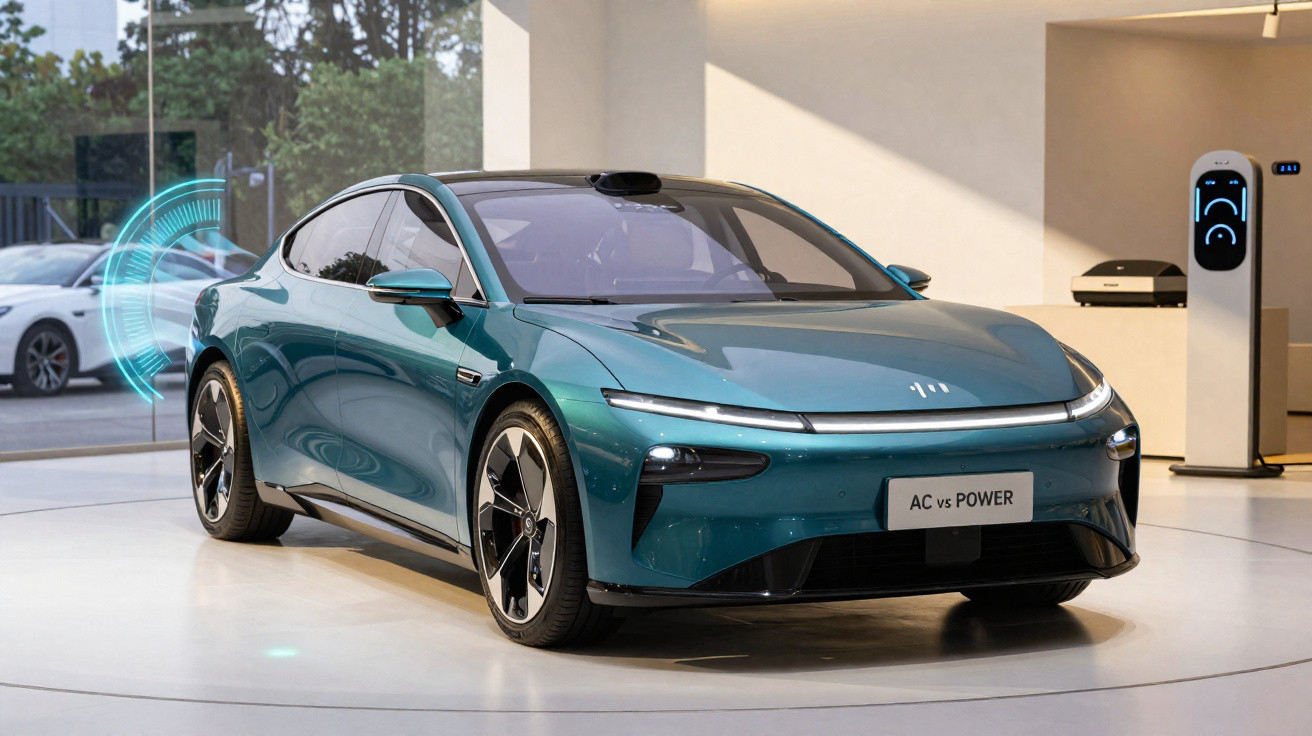
It is one of the best-known myths in the automotive world and, in this case, there is a technical reason behind it. Switching on the air conditioning can indeed reduce the power available from a vehicle, but the effect is far from identical across all cars.
Everything comes down to how the climate control compressor is driven. In cars with internal combustion engines, the compressor takes a portion of the energy produced by the engine directly. In hybrids and electric cars, the approach is different, and the impact is felt mainly in fuel or energy use and driving range.
Why can air conditioning reduce power?
In purely combustion-powered cars, the energy needed to run the compressor is supplied by the engine itself. In practical terms, a small slice of the power that could be used to propel the car is diverted to operate the climate control system.
This is most noticeable when cold air is required, because that is when the compressor has to run. To heat the cabin, the system typically uses waste heat generated by the engine, which limits the need for additional energy.
Even so, in most modern cars-especially more powerful ones-this loss is virtually impossible to detect. It is usually only in less powerful models that the difference may be felt, where acceleration can become slightly less responsive and the driver may need to use the gearbox more often.
What changes in hybrids and electric cars?
In hybrids and 100% electric cars, the air conditioning compressor is generally electric. In hybrids, it no longer relies directly on the combustion engine; in electric cars, since there is no engine, the required energy is supplied by the high-voltage battery.
As a result, the compressor does not mechanically take power away from the motor. Performance impact should therefore be imperceptible. The trade-off is that climate control increases energy consumption and reduces the available range.
In electric cars and plug-in hybrids, this applies both to cooling and heating the cabin. In the case of heating, consumption depends on the solution used. Models fitted with a heat pump are generally more efficient than those that rely only on electric resistance heaters.
Outside temperature also matters. The bigger the difference between the cabin temperature and the temperature you set, the harder the system has to work and, consequently, the more energy it uses.
Is it worth turning off the air conditioning?
It depends on the type of car, but in most situations the gains are limited. In modern cars with combustion engines, the drop in performance is so small that it will hardly be noticeable in everyday driving.
In hybrids and electric cars, turning off the air conditioning does not deliver meaningful performance gains either. The main advantage is lower energy consumption, which may translate into a few extra kilometres of range.
However, driving with the windows open also increases aerodynamic drag, particularly at higher speeds. For that reason, on the motorway, switching off the air conditioning and opening the windows is not always the most efficient option.






Comments
No comments yet. Be the first to comment!
Leave a Comment