
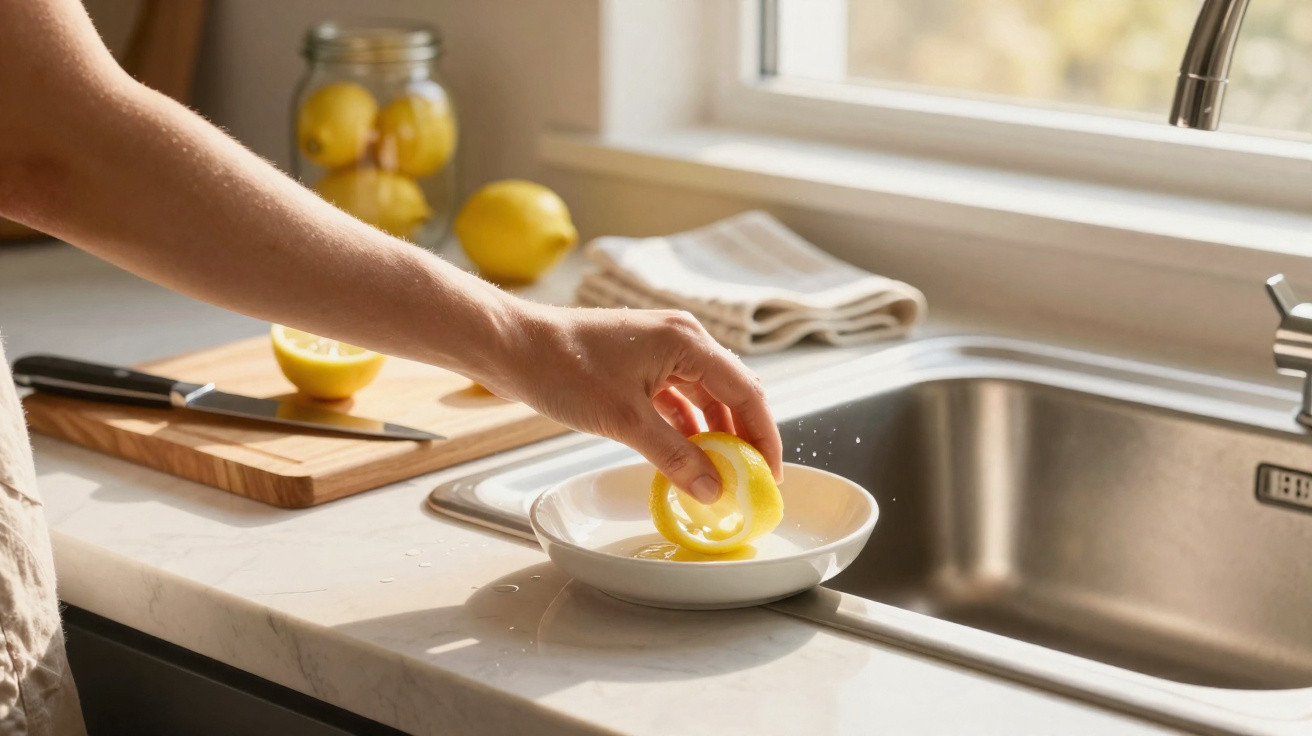
Putting lemon peel near the kitchen sink is a straightforward habit that can make the area smell fresher and more pleasant. The peel holds naturally fragrant oils that can soften mild smells coming from food scraps, the bin, a damp sponge or the drain-without replacing regular cleaning.
What do lemon peels help with near the sink?
The sink area often picks up odours because of leftover food, grease, dirty dishes, damp cloths and poorly ventilated drains. Lemon peels help to scent this part of the kitchen in a natural way, giving a cleaner feel between proper cleans.
This works mainly thanks to the citrus aroma in the coloured outer layer of the peel. When left exposed to the air, it releases its scent gradually and can help neutralise light odours-especially in small kitchens or spaces with limited ventilation.
How to place the peels correctly
It is best to use fresh, clean peels with little to no pulp left on them. They should sit in a small, open, dry container-never tossed directly on a wet worktop or pushed into the drain.
- Near the sink: place them in a small pot beside the bowl, away from any standing water.
- Close to the bin: helps to soften light smells from organic waste.
- On a saucer: avoids direct contact with stone, stainless steel or wood.
- In a ventilated spot: improves the release of the citrus scent.
- Avoid leaving peels anywhere they might develop mould.
How often should you replace the peels?
The peels need replacing regularly because they lose their fragrance and can dry out or go mouldy if left too long in a damp environment. In most cases, it is best to refresh them every 24 or 48 hours.
- Replace sooner if you notice an unpleasant smell or a darker appearance.
- Do not allow wet peels to build up over several days.
- Use small amounts to avoid waste.
- Wash the container before adding fresh peels.
- Dispose of them in the food waste bin or in a compost caddy, where available.
Other ways to use lemon peel around the home
The peels can also be used to freshen the fridge, scent the bin area and leave cupboards smelling cleaner. For this, place small pieces in open containers or breathable sachets, always keeping an eye on them to prevent mould.
Another option is to boil water, turn off the heat, and add lemon peels for a few minutes to fragrance the kitchen. This should be done carefully: do not leave a pan heating unattended, and never combine this with bleach, chlorine or other cleaning products.
Do peels replace cleaning the sink?
Lemon peels improve the smell, but they do not remove built-up grease, bacteria, or dirt trapped in the drain. The sink still needs washing with mild washing-up liquid, a suitable sponge and frequent drying-especially after preparing food.
They work best as a simple add-on to your routine. With a clean sink, a dry cloth, a closed bin and peels replaced at the right time, the kitchen feels more pleasant without relying on artificial air fresheners or harsh products.





Comments
No comments yet. Be the first to comment!
Leave a Comment