
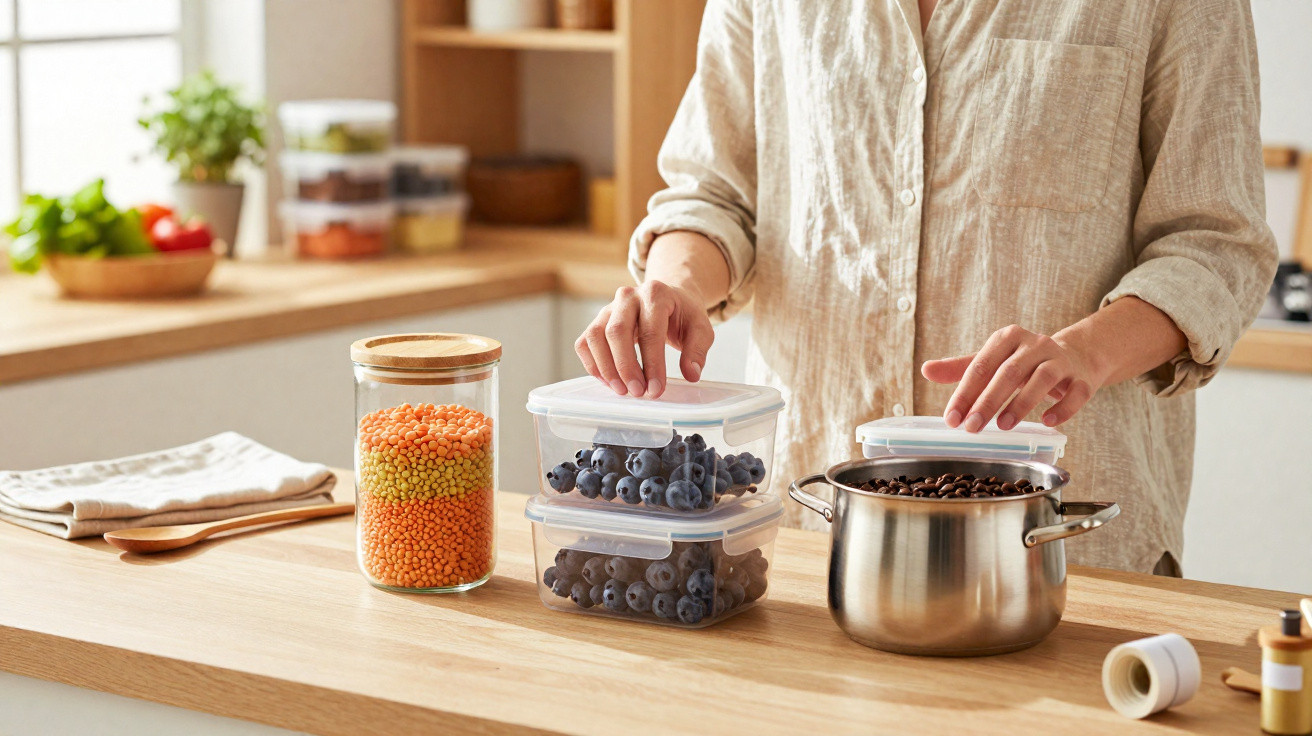
Choosing the right storage container makes it easier to keep food fresh, prevent lingering smells and keep your kitchen more organised. Glass, plastic and stainless steel can all work well, but each material comes with its own strengths and drawbacks. The best option depends on what you’re storing, how you use containers day to day, and whether the container will be washed, heated or carried around.
What’s the difference between a glass, plastic and stainless steel storage container?
Glass containers are usually the most neutral: they don’t hold on to odours easily and you can see what’s inside at a glance. They suit leftovers, sauces, chopped fruit and dishes that go straight from the fridge to the table.
Plastic containers are light, affordable and handy for taking food out, but over time they can stain, scratch and start to absorb smells. Stainless steel is tough, long-lasting and works well for dry foods or cold packed meals, although you can’t view the contents and it must not go in the microwave.
Which storage container keeps each type of food freshest?
Foods with sauce, fat, strong seasonings or vivid colour tend to do better in glass, because the material is far less likely to take on odours or pigments. For dry foods, snacks and lightweight transport, plastic can be perfectly adequate as long as it’s still in good condition.
- Glass: best for sauces, beans, meat, chopped fruit and ready-to-eat meals.
- Plastic: useful for snacks, dry salads, biscuits and quick transport.
- Stainless steel: good for cold packed meals, nuts, whole fruit and dry foods.
- Containers with a tightly fitting lid help reduce air exposure and leaks.
- Let hot food cool a little before sealing and refrigerating.
What precautions stop food flavour from being affected?
Flavour can change when a container holds on to old odours, isn’t cleaned properly, or is filled with very hot food in the wrong way. This is more common with scratched plastic containers, because the marks trap grease and residue.
- Avoid storing hot tomato sauce in heavily used plastic.
- Clean lids thoroughly, especially any rubber sealing rings.
- Don’t use containers that are cracked, warped or have a smell that won’t go away.
- Choose glass for garlic, onions, fish and highly seasoned dishes.
- Check the manufacturer’s symbol before putting any container in the microwave, freezer or dishwasher.
What are the pros and cons of each material?
Glass is hygienic, attractive and flexible, but it’s heavier and can break. Plastic is light and inexpensive, though it wears out sooner and needs closer monitoring for damage. Stainless steel lasts a long time and stands up well to daily use, but it isn’t transparent and restricts reheating.
In reality, many kitchens work best with a mix of all three. Glass suits ready meals and moist foods; plastic covers quick jobs and carrying food around; and stainless steel is ideal if you want durability and prefer to avoid fragile containers.
How do you choose the best storage container for your routine?
If you regularly store leftovers and reheat them in the microwave, glass is often the most convenient and safest choice-provided it’s designed for that purpose. If you need something light for a bag or to put together a portable lunch, a good-quality plastic container may be the better fit.
When durability and toughness matter most, stainless steel is a strong option, particularly for dry foods or meals that don’t need reheating in the container. The best storage container is the one that balances preservation, safety, ease of cleaning and what you genuinely do in your kitchen.



Comments
No comments yet. Be the first to comment!
Leave a Comment