
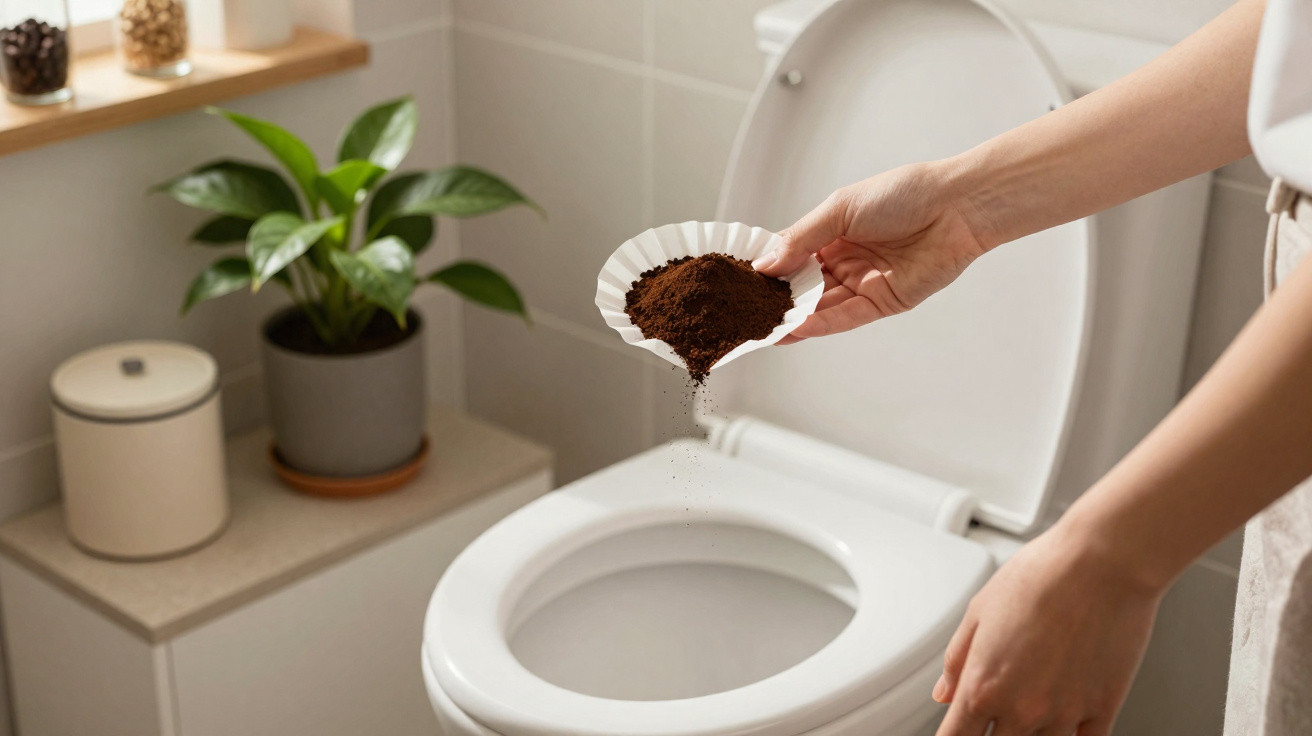
Using coffee grounds in the toilet has become a popular tip for taking the edge off unpleasant bathroom smells while reusing a common kitchen waste. Coffee’s strong scent can briefly cover mild odours for a few minutes, but it should be used sparingly. Because grounds do not dissolve in water, tipping large amounts into the pan can raise the risk of build-up in the pipework.
What is the point of putting coffee grounds in the toilet?
Coffee grounds are used mainly to temporarily reduce bad smells. Their aromatic compounds remain even after the drink has been brewed and can compete with light odours lingering on the porcelain, near the adjacent drain, or in bathrooms with poor ventilation.
That said, this effect should not be mistaken for disinfection. Grounds do not replace bleach, a proper bathroom disinfectant, or scrubbing with a toilet brush. They may help with smell, but they do not remove microorganisms, slime, or heavy dirt that has built up in the toilet.
When might this trick make sense?
This approach is most sensible in occasional situations, when the bathroom is already clean but has picked up a mild odour after being shut up for a long time. In that case, a small amount can be used as a scent boost, always followed by plenty of water.
- Guest bathrooms that stay closed for many days.
- Toilets that are clean, but have a faint smell coming from the porcelain.
- Occasional use, without repeating it several times a week.
- A small amount of grounds, never a large portion.
- A full flush soon after the contact time.
If the bad smell returns every day, the issue is probably not only the toilet. It may be a dry drain trap, a faulty trap, poor ventilation, compromised seals, or grime built up in places the grounds cannot reach.
Why is it not a good idea to use coffee grounds frequently?
The main risk is to the plumbing. Coffee grounds are gritty, heavy, and do not break down in water. When they are repeatedly sent down the toilet, they can catch in bends, combine with other debris, and form deposits that restrict water flow.
This matters even more in older homes, flats with narrow pipework, or properties with a history of blockages. A toilet is designed to handle human waste and suitable toilet paper, not kitchen leftovers used as a routine cleaning method.
- Avoid putting grounds down the toilet every day.
- Do not tip an entire filter’s worth into the pan.
- Do not mix with oil, grease, or food scraps.
- Do not use it if the toilet already drains slowly.
- Stop if you notice gurgling or the smell returning.
How can you use it more safely if you want to try it?
If you want to test it without overdoing it, use at most one small spoonful of damp grounds in a toilet that is already clean. Leave it for just a few minutes, scrub the porcelain with a toilet brush, and then flush with plenty of water. The aim is to make use of the aroma, not to turn grounds into your main cleaning product.
Afterwards, pay attention to how it drains. If the water drops more slowly, if there are unusual noises, or if the toilet has a history of blockages, it is best to stop. In those cases, it is safer to dispose of the grounds in food waste, add them to compost, or use them for other tasks away from the pipework.
The best use for coffee grounds is away from the plumbing
Coffee grounds can still be useful around the home, but they work far better outside the toilet. They can help reduce odours in containers, dry bins, and well-ventilated receptacles, as long as they are removed afterwards. In the garden, they can also be added to compost when used in moderation and mixed with other organic materials.
For bathrooms, the safest routine remains a toilet brush, an appropriate cleaner, good ventilation, and keeping an eye on drains. Grounds may mask a mild smell when used occasionally, but they do not fix the underlying cause of bad odours. Protecting the plumbing keeps the bathroom clean without turning a household tip into a costly plumbing headache.



Comments
No comments yet. Be the first to comment!
Leave a Comment