
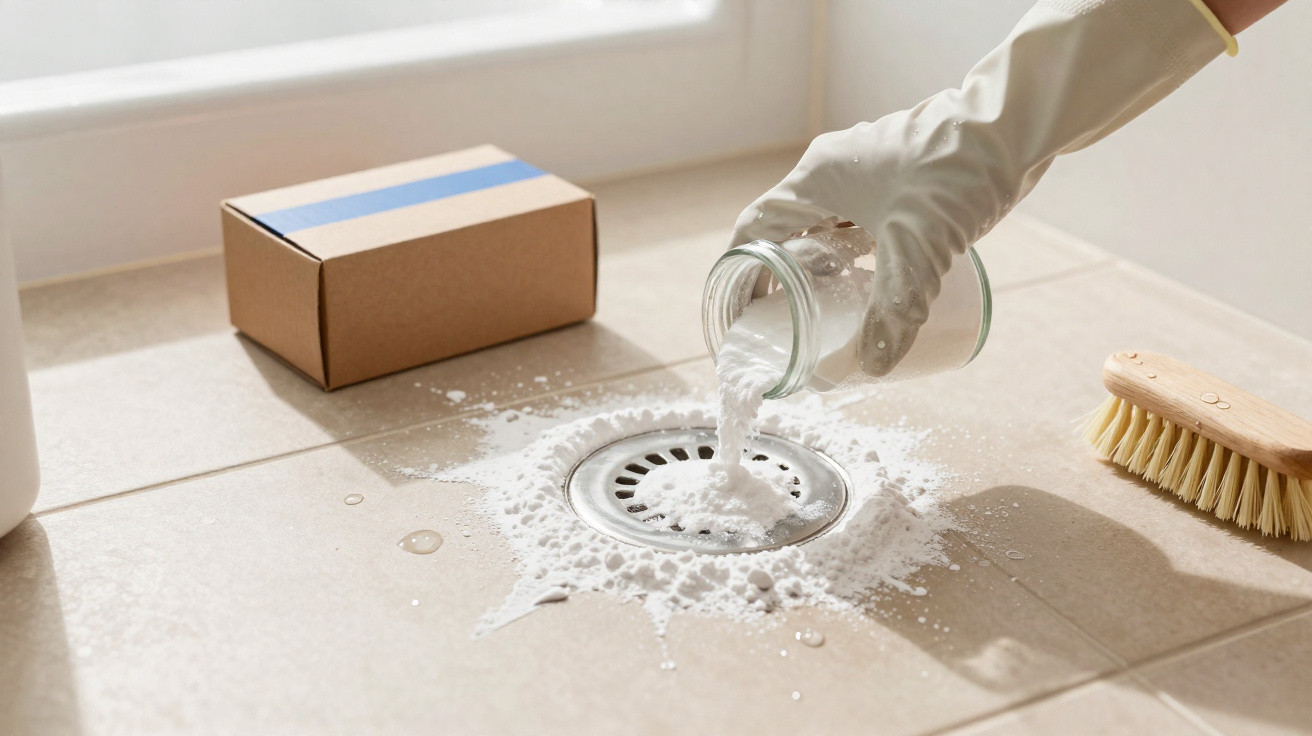
Keeping bicarbonate of soda around the bathroom drain has become a go-to step in many household cleaning routines. It’s an easy, inexpensive habit that fits neatly into quick clean-ups, helping to keep smells in check and to limit the build-up of greasy residue, cosmetic remnants and early slime in small, high-traffic areas.
How does dissolved bicarbonate of soda around the drain help with cleaning?
When you combine bicarbonate of soda with warm water, it spreads more evenly across the floor and into tiny gaps, reaching soap scum, body oils, toothpaste and fine grime that gather around the drain. Over time, this build-up can lead to staining, a slippery feel underfoot and unpleasant bathroom odours.
Because it is mildly abrasive and alkaline, bicarbonate of soda helps lift the film created by cosmetic oils and leftover shampoo and conditioner, making it easier to wash away during rinsing. If you use it alongside vinegar, the fizzing reaction can shift light debris at the surface of the drain, helping to reduce smells-without replacing deeper cleans when they’re needed.
How to prepare and apply a bicarbonate of soda solution for the bathroom drain
Making a bicarbonate of soda solution for the drain is straightforward and uses items most people already have at home. You can use it during or after a shower, taking advantage of a damp floor and warm water to boost cleaning and odour-neutralising.
Once the ingredients are mixed, it’s best to apply the solution directly around the drain, allowing it time to work before you rinse. This step-by-step helps keep things organised:
- Mix about 1 tablespoon of bicarbonate of soda into 200 ml of warm water, stirring until fully dissolved;
- Pour the solution around the drain, focusing on the edges and any grout lines or small gaps;
- Leave it for 10 to 15 minutes, avoiding stepping on the area during this time;
- If you can see stains or early slime, gently scrub with a soft-bristled brush;
- Rinse with running water, ideally warm;
- If you want extra help, pour a little vinegar directly into the drain, let it fizz, then rinse again.
Where to use bicarbonate of soda in the bathroom and how often to apply it
Using dissolved bicarbonate of soda works best when you target the bathroom spots that tend to hold onto grime and odours. Around the drain, the main focus is where water runs away-this includes grout, small gaps in the trim and the drain cover itself, which often discolours and can develop slime.
To make it easier to maintain, it helps to know which areas benefit most and to choose a schedule that matches how heavily the bathroom is used:
- The join between the floor and the drain base, where residue collects quickly;
- Grout lines close to the drain, which can darken from constant contact with water and products;
- The removable drain cover, if it can be taken off for more detailed cleaning;
- Areas of flooring where water often sits and doesn’t drain away immediately.
Which bathroom problems bicarbonate of soda can help prevent and reduce
Bicarbonate of soda has become popular because it helps with common bathroom annoyances, such as stronger drain smells, a greasy film on the floor and the first signs of mould around the cover. It does not replace dedicated unblocking products, but it works well as light upkeep between more thorough cleans.
Its most useful benefits include neutralising odours coming from the upper part of the pipework, making soap and cosmetic residues easier to remove, and leaving the floor feeling less slippery. When combined with good habits-such as ventilating regularly, rinsing the area after showering and cleaning inside the drain from time to time-it helps the bathroom look well cared for with relatively little day-to-day effort.



Comments
No comments yet. Be the first to comment!
Leave a Comment