
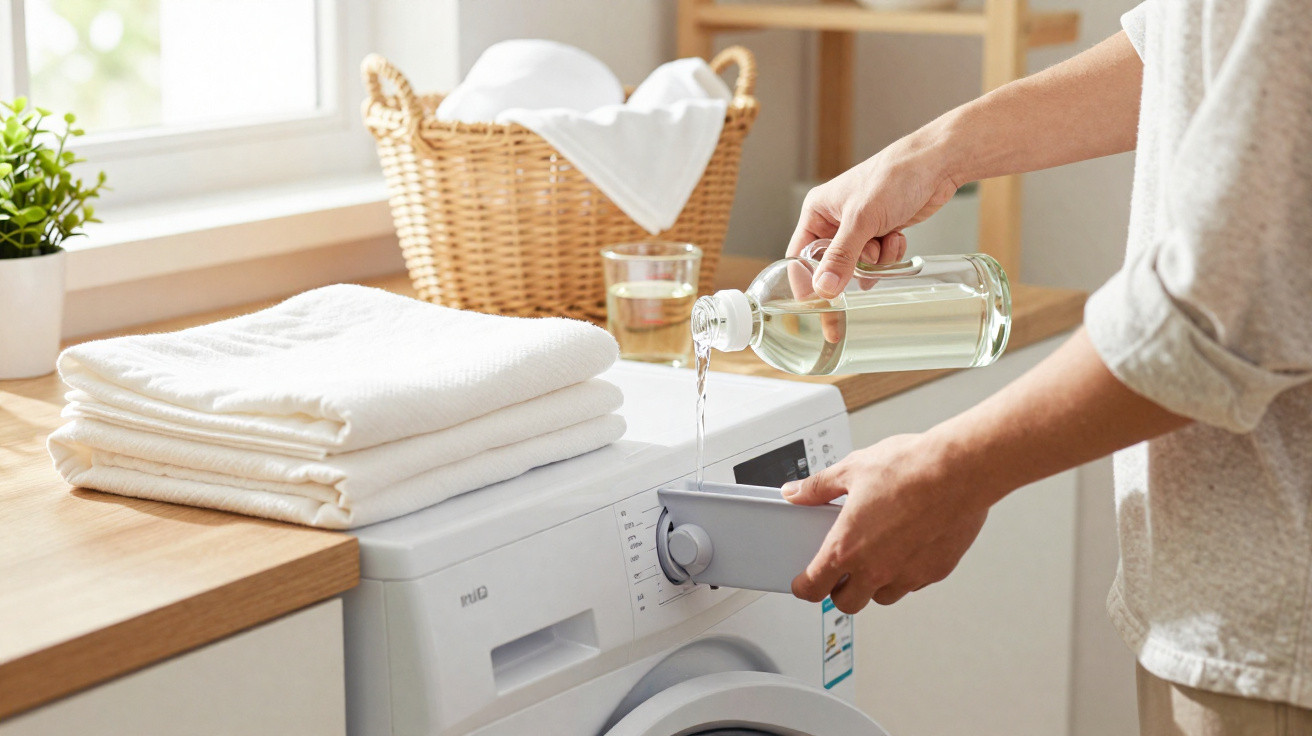
Using white vinegar on sheets has become a popular step in home laundry routines as a straightforward way to cut down on product build-up, stubborn smells and fabric stiffness. Rather than replacing detergent altogether, it is typically used alongside your usual wash to boost the “just-cleaned” feel and help bedding stay comfortable over time.
What benefits does white vinegar bring to sheets?
The key reason people use white vinegar on sheets is its mild acidity. This helps loosen traces of detergent and fabric conditioner that can cling to the fibres, so the material sits more freely and feels less rough to the touch. Over time, that can bring back some of the original softness and reduce the dull, flat look that can appear with regular use.
It can also help tackle odours from sweat, damp and light mildew, because acetic acid helps neutralise the compounds responsible for unpleasant smells. On light-coloured fabrics, white vinegar for sheets may also help limit yellowing that develops over time, while on coloured items it is often gentler than some bleaching products.
How to use white vinegar on sheets safely
To use distilled vinegar on sheets, the safest approach is to add it during the rinse stage instead of fabric conditioner. If your washing machine has a designated compartment, use roughly 60–120 ml for a standard load; if it does not, you can add it directly into the drum during the final part of the wash.
This timing matters because most of the detergent has already been flushed away, allowing the vinegar to work on what remains. Where the fabric allows, warm-water cycles can enhance the effect, but you should always check the care label first to avoid damaging delicate fibres.
Which practical precautions help when using white vinegar in the wash?
A few simple habits can improve results when adding vinegar to your sheet wash, while also helping look after the washing machine. They reduce the chances of lingering odours, excess damp and unnecessary wear on the fabric over the months.
- Remove items from the machine as soon as the cycle finishes, so they are not left sitting damp.
- Dry in a well-ventilated space or use a tumble dryer, following the care label guidance.
- Avoid using large amounts of fabric conditioner in the same routine when vinegar is being used.
- Try the method first on a small amount of bedding to see how the fabric responds.
How often to use white vinegar and what risks to watch for
Using white vinegar on sheets is usually best kept as an occasional “deeper clean” for the fibres-around once a month. During very hot spells, extended use of the same bedding, or when odours are stronger, an extra application can help restore a fresher feel.
Using it in every wash is less advisable, as the acidity can contribute to gradual wear on the machine’s rubber seals and hoses over the years. It is also essential to avoid any contact with chlorine bleach, not to mix it with ammonia-based products, and to take extra care with very delicate fabrics-always following the instructions on the care label.





Comments
No comments yet. Be the first to comment!
Leave a Comment