
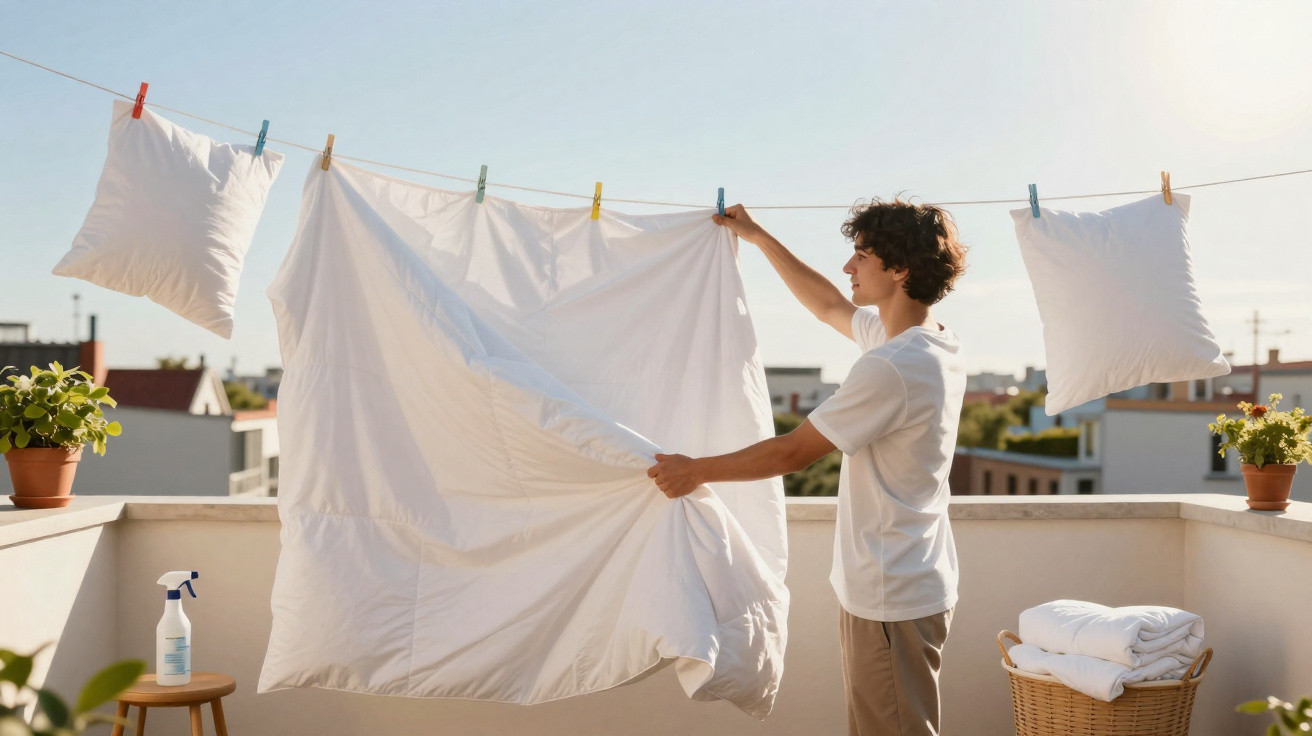
Keeping duvets and pillows clean often means long wash cycles, lots of water, and slow drying times. For that reason, many domestic hygiene specialists have been highlighting a straightforward alternative: using sunlight to freshen these bulky items. This approach can cut down how often you need to wash them, help protect the fabrics, and support control of dust mites and lingering smells.
Why does the hygiene of duvets and pillows deserve so much attention?
Duvets and pillows sit against your skin and hair every day, gradually collecting sweat, natural oils, dead skin cells, and dust over the weeks. Those conditions encourage dust mites and other micro-organisms, and they can also lead to unpleasant odours-especially in damp homes.
If you live with respiratory allergies, rhinitis, or asthma, poor hygiene of duvets and pillows may show up as morning sneezing, a blocked nose, and irritated eyes. Even without any allergy history, a build-up of dust and moisture in bedding can reduce comfort and disturb sleep quality.
How does hygiene of duvets and pillows in the sun work?
Carefully exposing bedding to the sun is a useful extra cleaning step that brings together light, gentle warmth, and fresh airflow. Sunlight can help reduce certain micro-organisms on the surface of fabrics, while mild heat supports the evaporation of moisture trapped in the fibres, leaving items drier and better aired.
Sleep and bedding-care specialists suggest putting these pieces outside for a few hours on dry days, ideally at times when the sun is not at its strongest. Used this way, hygiene of duvets and pillows in the sun becomes a practical in-between measure between deeper washes, and it can also help the filling stay in better condition.
- Helps to reduce odours that build up with regular use.
- Helps keep the filling looser and better ventilated.
- Lowers the damp feeling in the fabric and inner lining.
- Supports the usual washing routine rather than replacing it.
Watch a video on the YouTube channel Dicas da Kel about how to sanitise, remove stains, and eliminate odours from pillows and heavy blankets using dry-cleaning-style methods:
https://www.youtube.com/watch?v=bFw0vN-G3oI
How should you hang duvets and pillows to make the most of the sun?
Before taking any item outdoors, it helps to prep it so sun and air can move through the fibres properly. Giving a duvet or pillow a good shake clears away surface dust, redistributes the filling, and prevents internal clumps that make drying and ventilation harder.
After shaking, gently pat the surface with your hands to spread the filling more evenly. Then choose a washing line, raised frame, or clean railing for hanging. Aim to keep the duvet as flat and stretched as possible, and rest pillows on their side-while avoiding rust, dust, or any residue that could leave marks.
How often should you reinforce the hygiene of duvets and pillows?
The best frequency for sun exposure depends on how much the bedding is used, local weather, and the type of filling. In warmer or more humid places, where sweating is more likely, you might do this weekly or every fortnight; in colder, drier regions, once a month is often enough.
Pairing occasional washing, protective covers, and sun exposure on suitable days creates a simple, effective set of habits. This routine helps maintain loft, extends the lifespan of the items, and keeps the bedroom feeling tidier-making duvet and pillow upkeep an easy part of everyday home care.




Comments
No comments yet. Be the first to comment!
Leave a Comment