
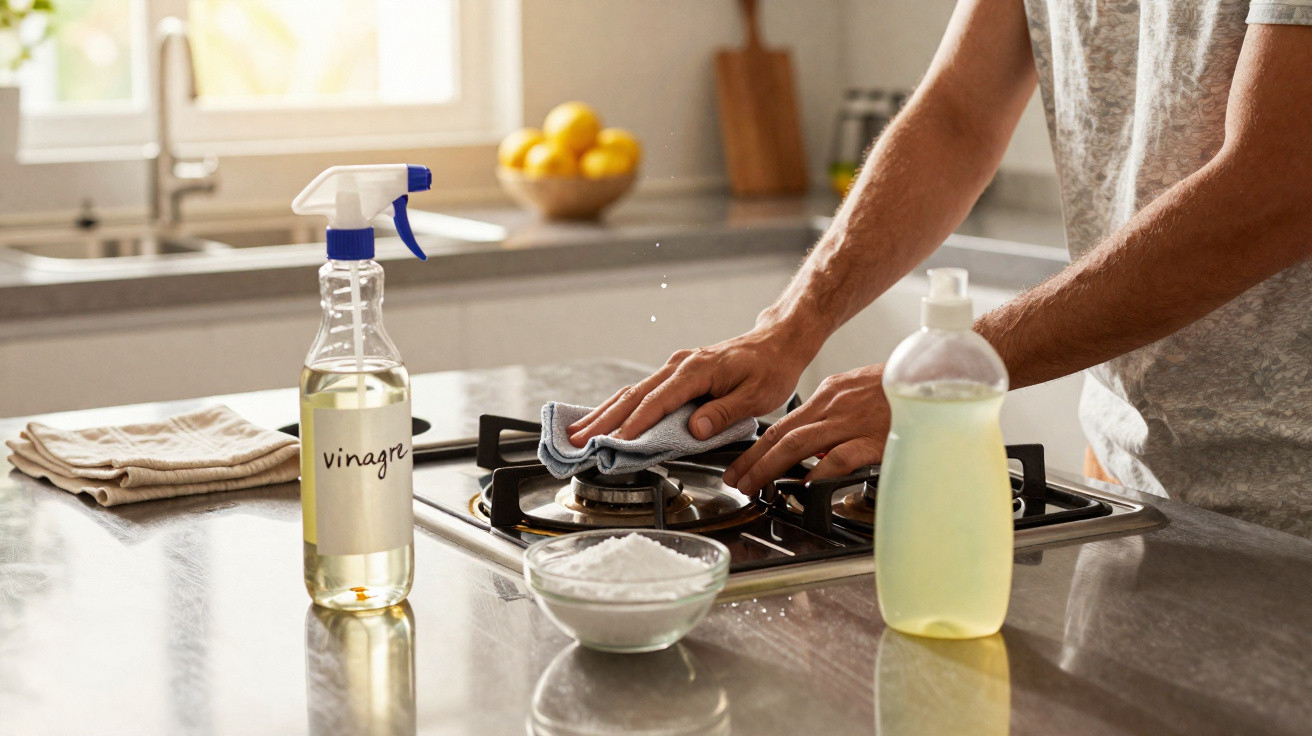
Keeping your home tidy after everyday meals calls for smart ways to tackle heavy grime. Using the right solutions regularly brings the shine back, turning kitchen cleaning into a straightforward and truly efficient routine.
How does vinegar help remove grease?
White vinegar is an excellent natural degreaser thanks to its distinctive acidity. That chemical trait helps break down oil molecules that cling to surfaces after cooking, supporting thorough sanitisation in a more sustainable way.
As well as lifting visible residue, it also helps reduce invisible microorganisms. Using it neat on the affected areas loosens built-up dirt with ease, making day-to-day upkeep simpler for anyone who wants the hob left spotless and fully disinfected.
Which quick mix makes the whole kitchen smell lovely?
This strong blend can dissolve even the toughest baked-on crust on your appliance and leaves an impressive fragrance that lingers… Read more.
Why add bicarbonate of soda to your cleaning?
Bicarbonate of soda provides gentle abrasion that helps shift stubborn, set-in marks without scratching the surface. Because it can neutralise acids, this powder becomes an essential helper for restoring the look of your worktop in a practical and economical way.
When combined with the right components, it reacts and releases bubbles that help lift heavy particles of debris. This fizzing action reaches deep into awkward corners, removing unwanted odours and refreshing the overall appearance of your kitchen.
Below is a video from the Doc. BACTERIA YouTube channel that explores the points discussed in this topic in more detail:
What role does neutral washing-up liquid play in this routine?
Neutral washing-up liquid works by suspending grease particles so they can be carried away easily by water during rinsing. Its mild formula is kinder to hands and helps protect the finish on cupboards and furniture, making sanitising far more safe and highly productive.
Using it alongside the other ingredients strengthens the end result by breaking down the resistance of older grime that has built up in the cooking area. This simple combination saves time and effort, turning dull surfaces into ones with real shine and complete cleanliness.
Essential Cleaning Kit
Indispensable items for day-to-day use
Gather these basics to get started with efficient cleaning:
- Concentrated white vinegar;
- Shop-bought bicarbonate of soda;
- Good-quality neutral washing-up liquid.
How can you get rid of food smells in the room?
Strong smells from frying or slow-cooked dishes can hang in the air and seep into cupboards long after you’ve eaten. Using natural absorbent options helps neutralise these unpleasant aroma molecules quickly, bringing back the freshness needed for a more pleasant and welcoming space.
Follow the key steps below to get excellent results in your daily sanitising routine:
- Apply the solution directly onto the grease on the hob;
- Leave it to work for a few minutes before removing it;
- Gently scrub with a soft sponge to restore shine.
What are the benefits of keeping a regular cleaning routine?
Sticking to consistent kitchen care prevents extreme build-up of heavy grime, dramatically cutting the time needed for later deep cleans. Keeping things in order like this makes modern life easier, supporting a more practical and well-balanced routine.
On top of that, a sanitised space helps extend the lifespan of appliances and furniture, creating real long-term savings. Putting in a few minutes each day keeps your home feeling refreshed, attractive, cosy, and completely free from contamination or grease.


Comments
No comments yet. Be the first to comment!
Leave a Comment