
A new cleaning hack is doing the rounds in household groups, on TikTok and across advice blogs: instead of reaching straight for a toilet cleaner, some people stir the coffee pot in the morning and tip a spoonful of fresh coffee grounds into the loo. Supposedly it tackles smells, cleans the bowl and even reduces waste. It sounds tempting - but what actually happens when coffee grounds disappear down the drain?
Why coffee grounds end up in the toilet
At first glance, the method feels almost brilliantly simple. You take a small amount of coffee grounds, drop it into the toilet bowl, run the brush around the rim, then flush. The gritty particles are meant to act like very fine sandpaper, lifting light deposits without relying on harsh cleaners.
At the same time, many posts claim the grounds “soak up” unpleasant odours. The tip is especially popular before longer trips: spoon in the grounds, don’t flush, close the door - and, supposedly, the toilet stays fresher for longer.
"In some households, a spoonful of coffee grounds is said to deliver three things at once: odour neutralisation, light cleaning and a satisfying zero-waste feeling."
That’s exactly why the trend lands so well: less chemical use, fewer disposable products and more everyday re-use. If you’re making coffee each morning anyway, it’s an easy sell. Rather than putting the grounds straight in the bin, they appear to get a “second career” as a cleaning aid.
The promised effect: a cleaner loo, a smaller footprint
In the bowl itself, you can sometimes see why people believe it works. The fine grain of coffee grounds can shift light staining, behaving a bit like a very gentle scouring powder. If you already clean the toilet regularly, the rim may genuinely feel smoother afterwards.
There’s also the smell factor. Fresh, slightly damp grounds have a strong aroma many people find pleasant and associate with the morning routine. While the grounds float in the water, they can form a brown film across the surface that masks other odours.
- mild abrasive action from the grains
- short-term masking of odours
- a subjective sense of being “naturally clean”
- re-use of an everyday waste product
That combination is enough to spread rapidly on social media. A before-and-after clip, one spoon of coffee, a bit of foamy water - and the “cleaning hack” is ready to share.
What really happens to coffee grounds in the drain
Most videos stop at the waterline. Engineers, plumbers and wastewater teams look further - into the pipework. Coffee grounds have an awkward property there: they don’t dissolve. Unlike toilet paper, the particles may swell slightly, but they remain solid.
For that reason, wastewater operators regularly list coffee grounds among the items that shouldn’t go down the toilet. In practice, it behaves more like sand or fine silt. In pipes that are already a little narrowed, the grains can settle, snag on bends or combine with other substances.
"Combined with fat, limescale and paper, coffee grounds can form very hard plugs that narrow pipes or block them completely."
Plumbers often describe a familiar pattern. At first, everything seems to drain normally. Over months or years, however, a stubborn mixture builds up from:
- coffee-ground particles
- grease and soap residues
- limescale deposits
- paper fibres
This mass clings to rough sections - for example in older cast-iron pipes or at joins between internal pipework and vertical stacks. The bore slowly tightens, then the problem accelerates. Eventually toilet paper and other solids start catching, and a blockage appears.
Risks in certain buildings and systems
The following tend to be particularly vulnerable:
- older properties with porous or narrow pipes
- blocks of flats with long, winding soil stacks
- homes with a septic tank or small domestic treatment system
In septic tanks, coffee grounds sink as a heavy material. Even a few extra kilograms a year can be enough to shorten emptying intervals. That can create costs that easily exceed the price of a standard toilet cleaner.
How to use the trend more safely - or replace it
If you’re determined to try it anyway, caution matters. DIY-style guides often suggest conditions that at least reduce the risk:
- use no more than 1 tablespoon of coffee grounds
- do it only rarely, never daily
- flush immediately with plenty of water
- don’t use grounds in a toilet that already drains “slowly”
If the flush starts gurgling more often, or water sits in the bowl unusually long, no more coffee grounds should go in. And in homes known to have fragile pipework, the trend simply isn’t worth it.
"The safest option is: keep coffee grounds and drains separate - the bowl can be cleaned, and the pipes stay clear."
There are practical alternatives that better match the aim of using fewer harsh chemicals. Many people switch to citric acid, vinegar essence or dedicated eco cleaners that fully dissolve in water. Paired with a sturdy brush, that will remove most build-up - without leaving solid residue behind in the pipes.
Using coffee grounds cleverly without burdening the toilet
Rather than sending them into the drainage system, coffee grounds are more useful where their properties genuinely help. A few examples show how versatile the brown powder can be.
Odour absorber in the room, not in the water
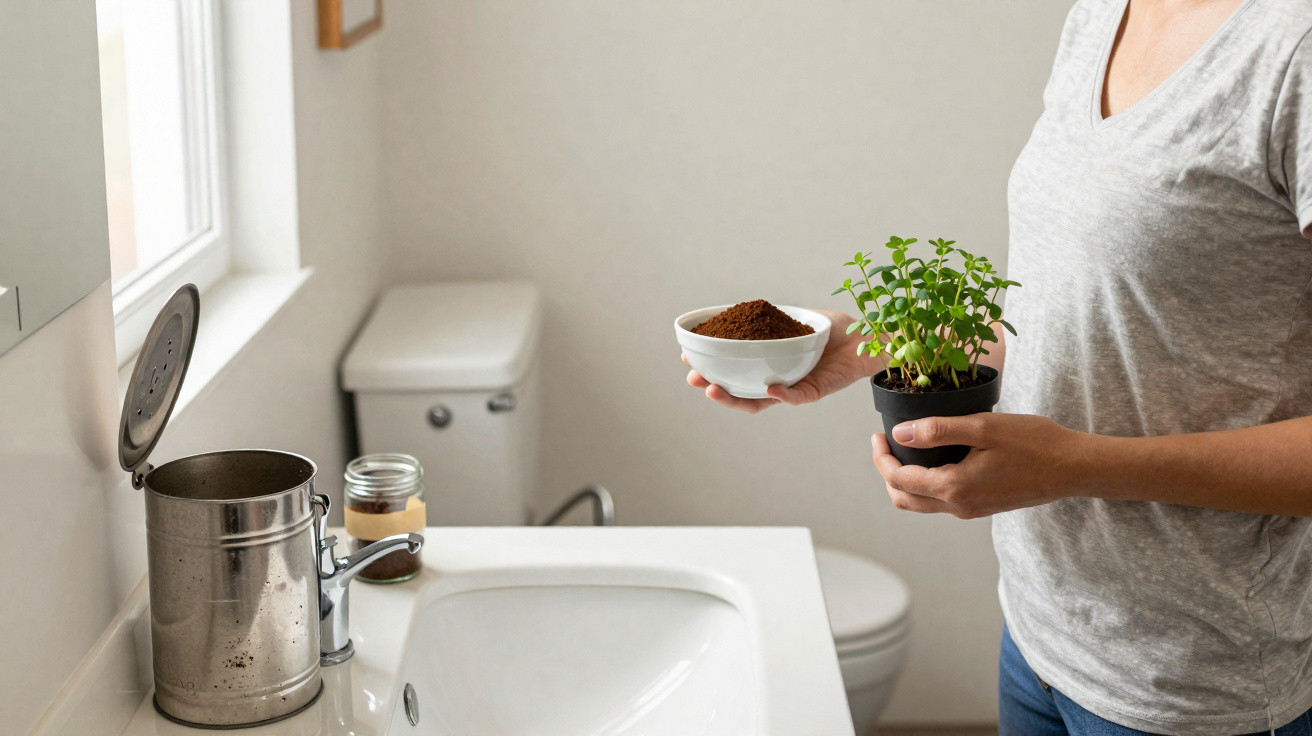
Dried coffee grounds can be put in a small bowl and left in the bathroom. This can bind odours in the air without ending up in the pipes. If you like, add a few drops of essential oil and replace the mix every few days.
Cleaning jobs in the kitchen
Does a wooden chopping board smell of onion or garlic? Sprinkle a little coffee grounds onto the damp board, rub gently, then rinse thoroughly. The grounds act like a mild scourer and can help reduce smells. They can also help with a first pass on greasy pans - as long as the wash water is poured through a sieve afterwards rather than straight into the trap.
Fertiliser and soil improver in the garden
In a flower bed or on the compost heap, coffee grounds tend to shine far more than they do in the loo:
- provides organic material for earthworms and micro-organisms
- can support slightly acidic soils, for example for hydrangeas or blueberries
- helps loosen compacted soil when worked in properly
Quantity still matters. Too much at once forms a dense layer that water struggles to penetrate. A thin scatter, or mixing it into other compost, is much better for plants.
Why bathroom trends spread so quickly
The popularity of the coffee-grounds trick follows a pattern that shows up again and again with household “hacks”. Three factors usually drive it:
| Factor | Effect |
|---|---|
| Everyday availability | Everyone has coffee grounds, so trying it feels easy and spontaneous. |
| Visible impact | After scrubbing, the bowl can look cleaner in the short term, and odours seem different. |
| Eco image | Re-use feels good, and it appears to avoid chemicals. |
That mix is often enough to drown out the technical reality in the background. Soil pipes, stacks and treatment works feel far away. The bill comes later - often only when the water won’t drain and an emergency call-out is needed.
Everyday scenarios: when the trick backfires
Looking at typical situations makes the potential consequences easier to picture. In a period flat with awkward, hard-to-access pipework, it can be enough for several residents to adopt the same habit. One spoon per household each week quickly adds up to kilograms over a year.
In detached houses with a sewage lifting station or a small treatment system, a different issue arises. The equipment is designed for a particular type of waste. Solid particles such as coffee grounds can collect on pump impellers or in corners. Maintenance firms repeatedly report units that need cleaning sooner, or components that require replacement earlier, because foreign material accumulates.
Given that coffee grounds already exist as a kitchen waste product, routing them through the pipes is hard to justify. Putting them straight into food-waste collection or onto the compost heap keeps unnecessary solids out of the wastewater system - and helps avoid unpleasant surprises for your wallet.
What sits behind the “natural is always better” assumption
The coffee-grounds-in-the-toilet trend also highlights a common misconception: that “natural” automatically means harmless. Coffee is grown on plants, ends up in your cup and smells pleasant - so surely the leftovers can’t do much damage.
In reality, pipework doesn’t care where a substance comes from. What matters is density, solubility and how it behaves in water. Sand is also “natural”, and it still blocks pipes very effectively. Coffee grounds behave in much the same way.
If you want to rethink household routines, a better rule is this: not everything that seems biological belongs down a drain. And not every chemical cleaner is automatically more dangerous than a supposedly clever hack.
In practice, one simple question helps: does the substance dissolve fully and quickly in water? If not, it usually doesn’t belong in the toilet. Coffee grounds clearly fall into that category - even if the aroma with your morning coffee is hard to resist.



Comments
No comments yet. Be the first to comment!
Leave a Comment