
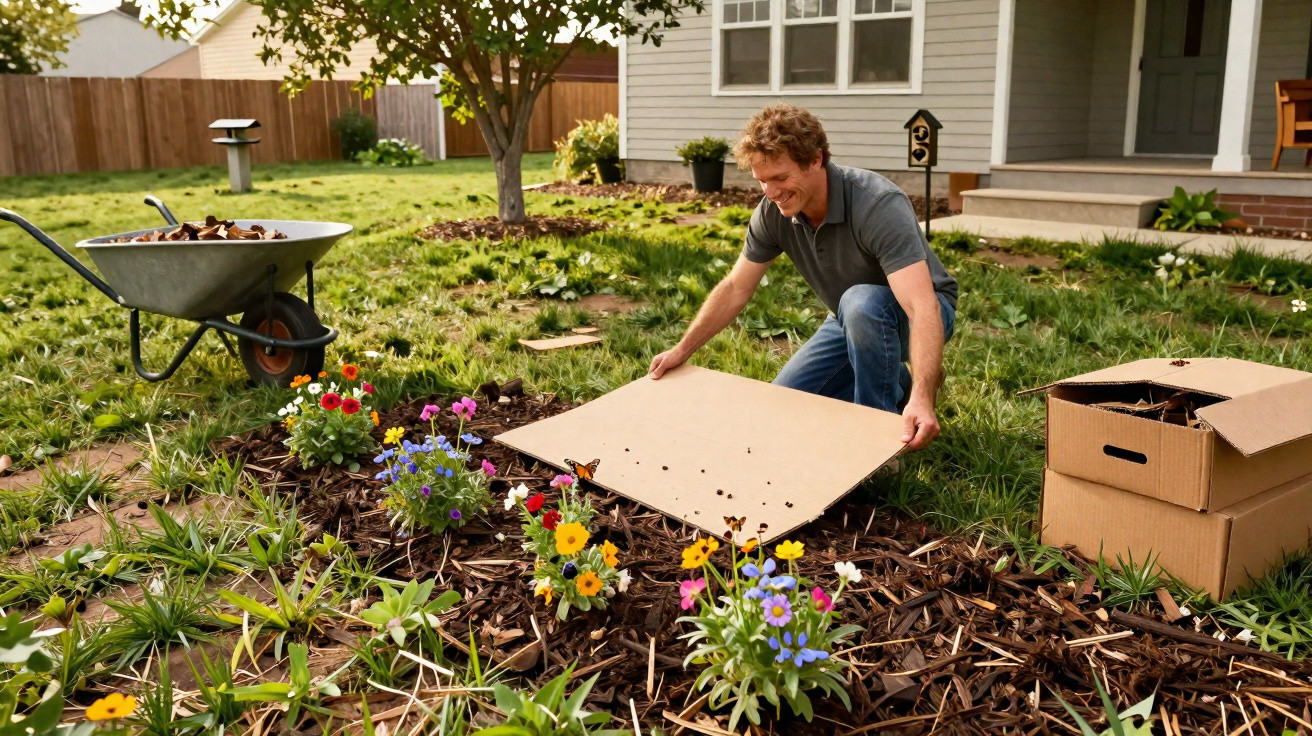
Replacing large residential lawns with ecological beds marks an important shift in modern gardening. Placing cardboard over existing vegetation forms natural barriers that suppress unwanted weeds and enrich the soil without any digging.
How does cardboard help transform a lawn?
The sheet mulching method prevents the sunlight that conventional grass needs to survive from reaching it. As this biodegradable barrier gradually breaks down with moisture, it turns organic matter into valuable nutrients while stopping unwanted weeds from emerging.
Watering the cardboard layers properly speeds up their natural decomposition and draws in beneficial organisms. This straightforward approach avoids harsh chemical products, efficiently preparing the ground for planting new plants.
How does an ecological garden save water and protect bees?
Replacing grass with native species lowers water use and produces flowers that feed vital species such as… Read more
What are the environmental benefits of sheet mulching?
By reusing discarded boxes, householders keep tonnes of waste out of urban landfill sites. This organic mulching technique improves moisture retention in the ground and supports the development of a healthy ecological habitat.
What is more, creating this sustainable ecosystem dramatically reduces the need for daily watering and continual mowing. The renewed space attracts beneficial insects, encouraging biological balance in the bed without complex maintenance or expensive synthetic inputs.
Below is a video from the Food Forest Florida YouTube channel that explores the points discussed in this topic in greater depth:
Why do natural features support pollinators?
Introducing native vegetation creates safe feeding spots for local butterflies and small birds. Continuous flowering supplies nectar and pollen across several seasons, ensuring local biodiversity can find shelter and food in the garden.
Suitable candidates for this garden include species that can withstand the area's climatic conditions. Botanical diversity strengthens cross-pollination, turning previously barren spaces into a lively refuge filled with life and multiple vibrant colours.
Essential Sheet Mulching Kit
Materials for Assembly
See the key items required to build the first layer of the new bed:
- Clean sheets of cardboard with no plastic tape;
- A generous layer of compost and organic matter;
- Protective mulch or straw.
How can you maintain a thriving pollinator garden?
Maintaining ecological balance requires conscious management practices in everyday cultivation. Avoiding synthetic pesticides protects bees and allows beneficial wildlife to provide natural control of unwanted pests.
Alongside proper soil care, providing clean water points offers complete support for visiting species. This combination of shelter and food creates a stable ecosystem that develops with sustainable efficiency.
See the main practices for maintaining the balance of the new ecosystem:
- Use only organic fertiliser and natural compost;
- Include shallow water sources so bees can drink;
- Maintain plants at different heights to create shelter.
What is the impact of replacing a traditional lawn?
Moving from conventional lawns to biodiverse spaces significantly reduces the ecological footprint of urban homes. Less frequent mowing and watering saves time and financial resources, demonstrating the practical viability of modern ecological gardening.
Small changes in urban gardens inspire neighbours and strengthen local networks for community environmental preservation. The mindful reuse of simple materials shows that sustainable actions enrich the soil, welcome pollinators and transform the landscape with unique beauty.





Comments
No comments yet. Be the first to comment!
Leave a Comment