
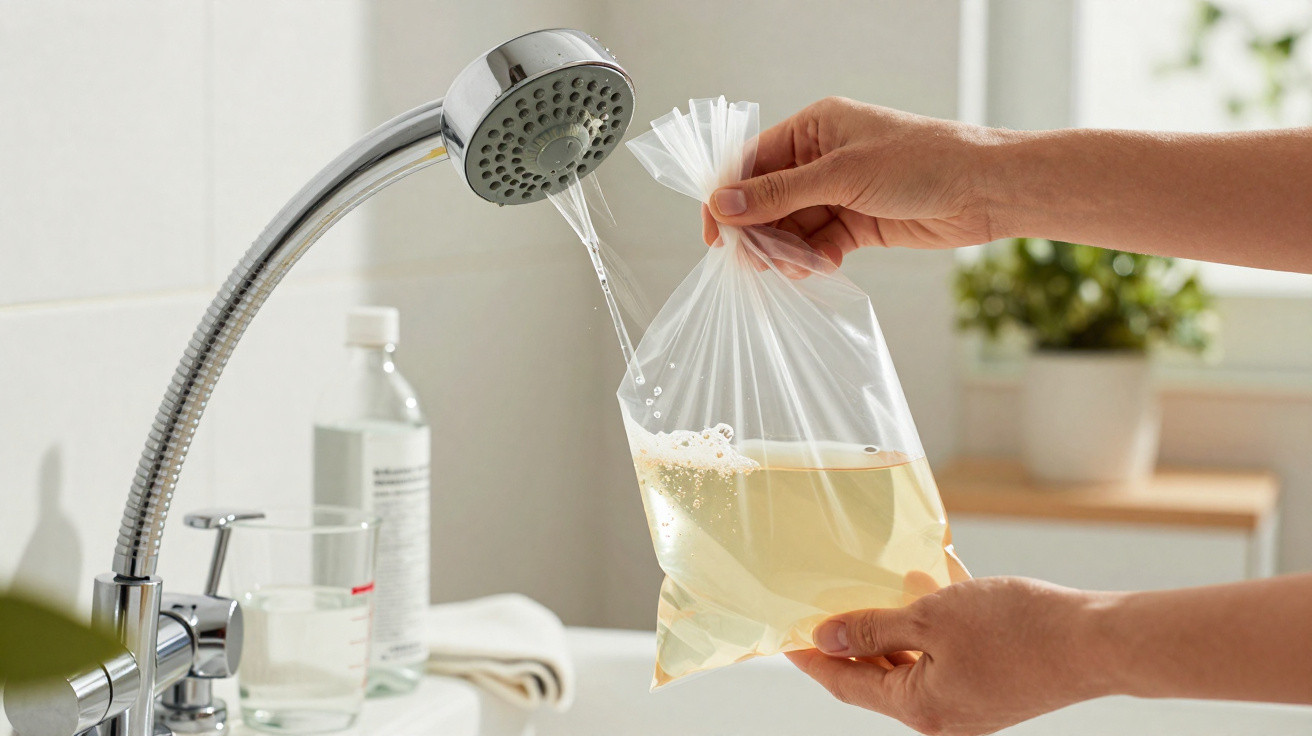
Mineral residue left behind by water can block the showerhead’s tiny nozzles and change the spray pattern. For tougher build-up, Delta advises removing the part and soaking it for 30 minutes in a solution of 50% distilled white vinegar and 50% water, then gently cleaning and rinsing.
Why can minerals disrupt the shower spray?
As water repeatedly evaporates on the showerhead, minerals can be left on the surface and gradually gather around the small holes where water exits. Over time, this build-up may distort how the spray is distributed and reduce flow in certain areas.
This tends to be more noticeable in places where the water contains higher levels of particular minerals. That is why cleaning the showerhead regularly can be easier than waiting until the nozzles become completely blocked.
Why does a vinegar-and-water mix help?
Distilled white vinegar contains acetic acid, which helps dissolve mineral deposits. For that reason, Delta recommends a solution made with equal parts white vinegar and water to tackle this type of build-up without using harsher cleaning products.
The manufacturer also advises that, on showerheads with more stubborn deposits, the component should be soaked and then lightly scrubbed with a soft cloth or a toothbrush. If residue remains, the process can be repeated.
How to clean a showerhead with vinegar
If your model allows it, remove the showerhead from the shower arm and place it in a container filled with 50% distilled white vinegar and 50% water. According to Delta’s guidance, a 30-minute soak is enough to begin loosening mineral deposits.
After soaking, gently scrub the surface and the nozzles with a soft cloth or a toothbrush. Rinse thoroughly with water and refit the part. On models with rubber nozzles designed for easy cleaning-such as some Touch-Clean systems-the manufacturer recommends first trying to remove debris using your fingers, without soaking.
Who should be cautious with this method?
Before soaking any showerhead, it is important to check the manufacturer’s specific instructions, particularly for models with specialised finishes or components. Delta also recommends avoiding abrasive products and certain chemical agents that may damage the finish.
There is also no need to take apart parts that were not designed to be disassembled. If the showerhead still has an uneven flow after cleaning, there may be internal debris or another issue that requires a more specific assessment. In that case, cleaning the showerhead with vinegar can be a straightforward option for mineral deposits, provided the method is suitable for the model.




Comments
No comments yet. Be the first to comment!
Leave a Comment