
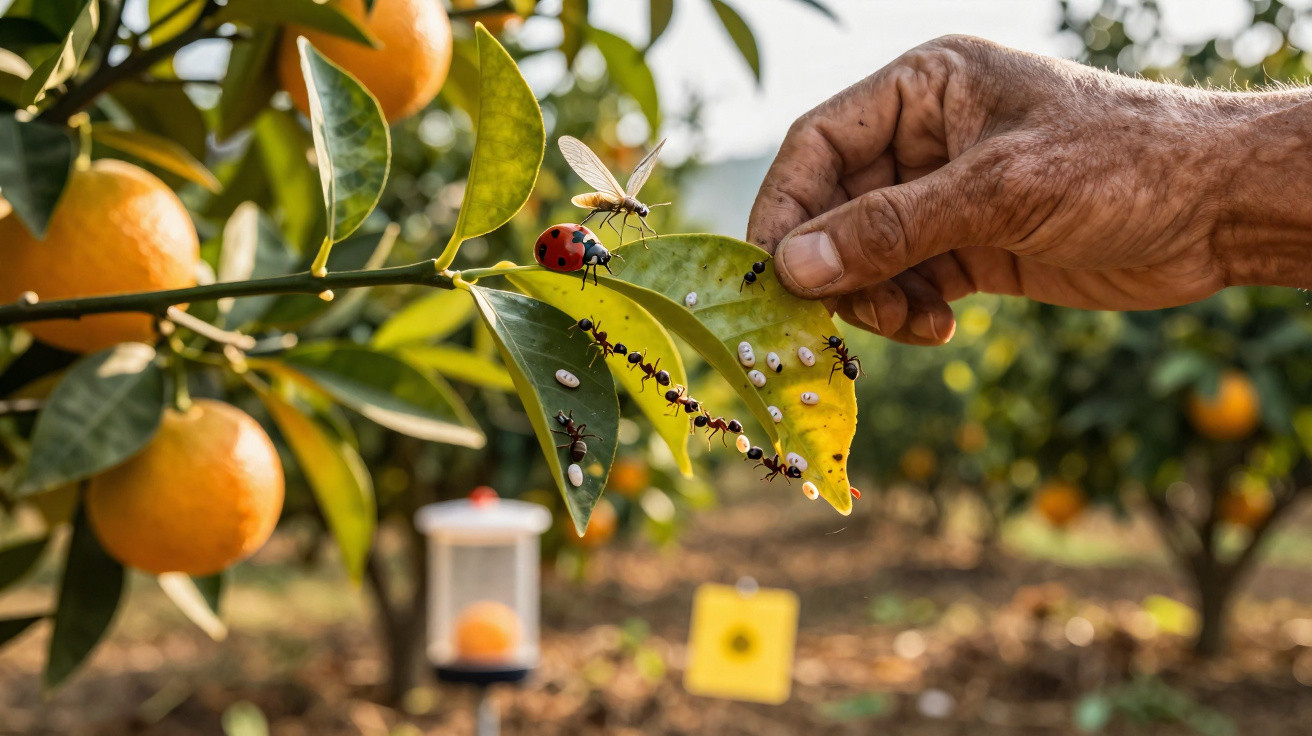
The biological invasion caused by the Argentine ant inflicts major losses on productive orchards worldwide. By forming alliances with sap-sucking insects to obtain sugary secretions, this species hampers the work of natural enemies and spreads serious diseases through fruit crops.
Why do Argentine ants protect pests?
In citrus orchards, these insects form a complex partnership with aphids and psyllids. In exchange for the sweet liquid excreted by the pests, workers provide continual defence against voracious predators, ensuring colony survival and encouraging the multiplication of these sap-feeding insects.
This armed protection prevents ladybird larvae and beneficial fly larvae, which would normally control harmful populations, from getting close. With this strengthened security, sap-sucking pests quickly flourish on branches, drawing out plant sap and steadily weakening the trees.
How can you quickly keep ants away from the garden?
An affordable homemade formula can safely drive away entire colonies, preventing invasive insects from attacking… Read more
What danger does the citrus psyllid pose to citrus crops?
The citrus psyllid transmits harmful bacteria responsible for the feared greening disease, a devastating condition that yellows leaves and makes fruit bitter and misshapen. This infection completely undermines agricultural productivity, causing immeasurable losses for commercial growers and small-scale farmers.
Because ants drive away parasitoid wasps that would naturally eliminate psyllids, the pest is transmitted extremely easily. The constant presence of these protective insects disrupts ecological balance, requiring precise action to limit the advance of contamination in orchards.
Below is a video from the PBS Eons / Deep Look YouTube channel, which explores the points discussed in this subject in greater depth:
Why do ordinary insecticides often fail?
Broad spraying with conventional chemical products kills beneficial predators, leaving plants without any protection when pests return. Furthermore, most ants stay sheltered in underground nests, avoiding the poison and swiftly resuming their patrolling in the canopy.
This damaging cycle shows how indiscriminate use of crop protection products worsens the imbalance in affected orchards. By destroying allied organisms while sparing underground colonies, growers ultimately create a scenario that favours the spread of invasive populations across plantations.
Sustainable management
Allied natural enemies
Biological agents that help with control once the ants have been neutralised:
- Parasitoid wasps that attack nymphs;
- Ladybird larvae that prey on sap-sucking insects;
- Fly larvae that consume aphids.
How has science developed targeted baits?
Researchers found that Argentine ants use irrigation tubes as veritable motorways, moving easily between trees. By mapping these routes with optical sensors, scientists were able to place small biodegradable spheres soaked in water containing sugar and a slow-acting insecticide.
Workers consume the toxic liquid and carry it back to the nest, where they share the food with queens and larvae. This strategy drastically reduces the use of chemicals in the environment, weakening the colony's structure without harming pollinators or other useful orchard organisms.
The main benefits of this targeted approach include decisive factors:
- A substantial reduction in the overall amount of chemical crop protection products applied.
- Full preservation of natural predators and pollinating insects.
- Effective elimination of underground nests through food sharing.
What is the impact of restored biological control?
Without the watchfulness of protective ants, psyllids and aphids become entirely vulnerable to their natural predators in the orchard. Small wasps can lay their eggs inside sap-sucking insects, interrupting the pests' reproductive cycle and restoring natural balance with high biological efficiency.
Combining science with ecological dynamics protects crops from severe losses without degrading productive soil. Understanding the behaviour of invasive species makes it possible to develop sustainable solutions that conserve agricultural resources and strengthen biodiversity in cultivated orchards.






Comments
No comments yet. Be the first to comment!
Leave a Comment