
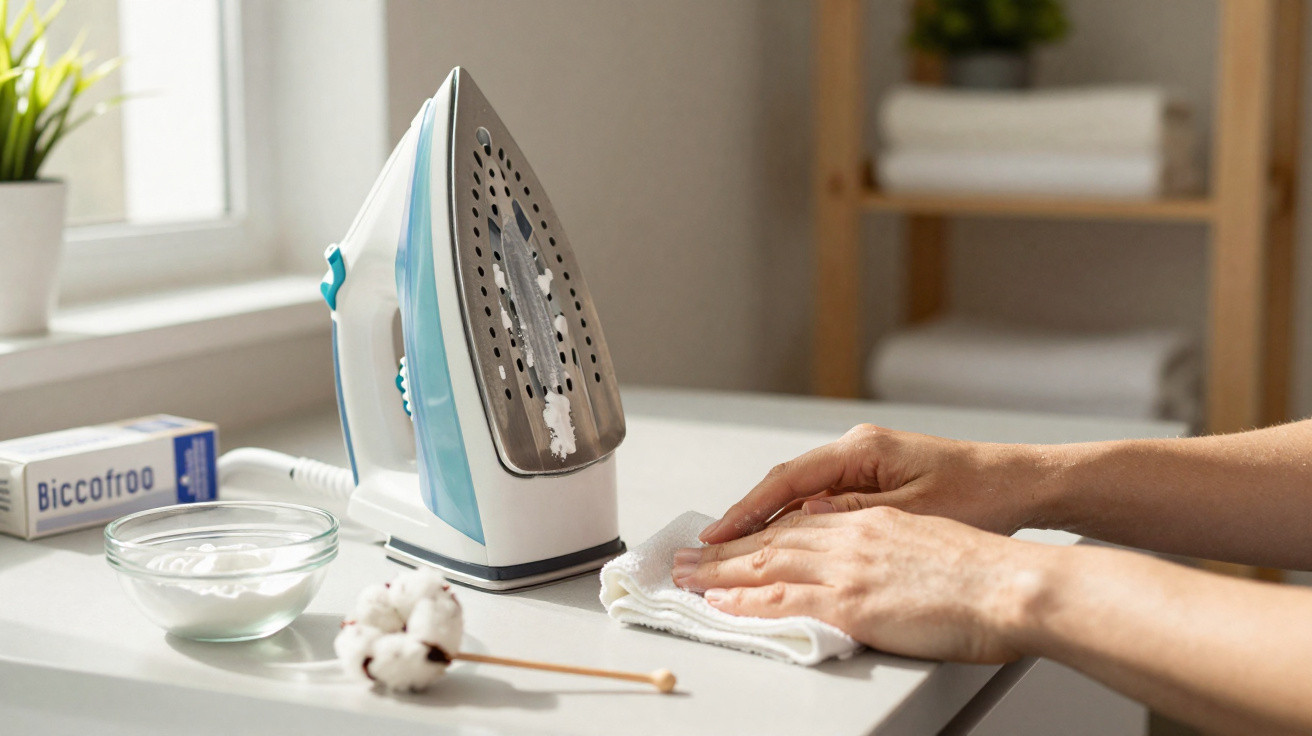
Dark marks on the iron soleplate can make it harder for the iron to glide and may even stain light-coloured garments. A widely used household remedy is a paste made from bicarbonate of soda and a small amount of water, applied only when the appliance is cold and unplugged. The key precaution is to avoid scrubbing with harsh materials: some soleplates have special coatings and, according to the manufacturer's guidance, should only be cleaned with a damp cloth.
Why does the iron soleplate turn black?
Darkening generally occurs when synthetic fibres, residue from laundry products, starch or dirt come into contact with the hot soleplate. Each time the iron is used again, this material may be reheated and become even more firmly attached to the surface.
Ironing in this condition raises the risk of transferring residue to pale fabrics. The following signs suggest that it is time to clean the iron:
- Visible brown or black marks on the soleplate;
- The iron does not glide easily across the fabric;
- Stuck-on residue around the steam vents;
- Marks appearing on clothes while ironing;
- A burnt-material smell when the soleplate heats up.
How can you clean an iron with bicarbonate of soda without damaging the surface?
With the iron completely cold and unplugged, combine bicarbonate of soda with a small quantity of water to make a thick paste. Put a little of the mixture onto a soft cloth and gently wipe the dirty areas, keeping clear of the steam holes. Then remove every trace of the paste using another slightly damp cloth, and dry the soleplate thoroughly.
Why should bleach and abrasive sponges be kept away from the soleplate?
Bleach is not designed for cleaning the heated soleplate of a household appliance, and it may react with the iron's materials or coatings. Rough sponges, wire wool and metal objects create a different risk: they can leave permanent scratches.
Once the soleplate coating has been damaged, the iron may glide less smoothly and start collecting dirt precisely in the scratched areas. For that reason, use as little pressure as possible when cleaning it.
- Do not use wire wool;
- Avoid the abrasive side of sponges;
- Do not scrape residue away with a knife or another metal object;
- Do not apply bleach to the soleplate;
- Check the manual before using bicarbonate of soda on ceramic or non-stick soleplates.
What about the small holes where steam comes out?
The steam vents can collect mineral deposits, particularly when the appliance is used with water containing a higher concentration of salts. Bicarbonate of soda must not be pushed into these openings. For the internal parts, the correct process depends on the model: many irons have a dedicated self-cleaning or Calc-Clean function intended specifically to force deposits out through the holes.
- Keep the cleaning paste away from the steam vents;
- Do not insert metal objects into the holes;
- Use the self-cleaning function if the appliance has one;
- Do not put vinegar in the reservoir unless the manufacturer permits it;
- Use the type of water specified in the iron's manual.
The safest method for each iron depends on its coating
A paste of bicarbonate of soda and water can help lift stuck-on residue from compatible surfaces, but there is no universal household recipe for every iron. Some manufacturers advise using only a soft, damp cloth because abrasive compounds, even mild ones, may damage particular ceramic, non-stick or self-cleaning coatings.
The safest rule, therefore, is to begin with the least aggressive approach: keep the iron unplugged, the soleplate cold, and use a damp cloth. If the manual allows further cleaning, apply the paste gently and remove it completely. The aim is not to scrape off a mark at any cost, but to remove the residue without turning a dirty soleplate into a permanently scratched surface.




Comments
No comments yet. Be the first to comment!
Leave a Comment