
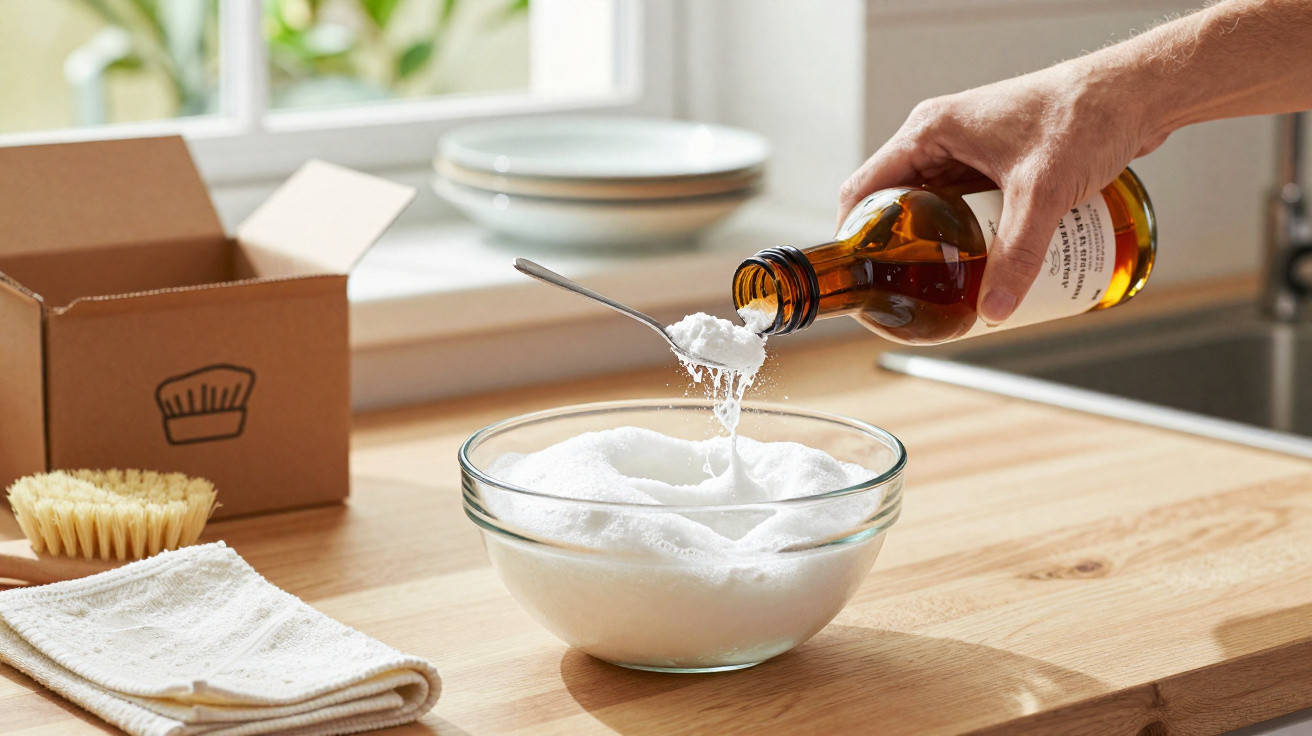
Mixing bicarbonate of soda with vinegar creates a froth that can look like a stronger clean, but the showy effect mainly comes from a chemical reaction between a base and an acid. Bicarbonate of soda reacts with the acetic acid in vinegar, producing carbon dioxide, water and sodium acetate.
Why do bicarbonate of soda and vinegar foam so much?
Bicarbonate of soda is alkaline, while vinegar contains acetic acid. When they meet, an acid–base reaction takes place and briefly forms carbonic acid as an intermediate. Because this compound is unstable, it quickly breaks down into water and carbon dioxide - the gas that creates the bubbles you see.
A simplified equation is NaHCO₃ + CH₃COOH → CH₃COONa + H₂O + CO₂. So the foam is not a sign the ingredients have become “more powerful”; it is simply visible proof that they are reacting with each other.
Does mixing the two really increase cleaning power?
Not necessarily. When an acidic substance is combined with a basic one, neutralisation occurs. That process reduces the very chemical traits that can make each ingredient useful on its own for certain cleaning jobs.
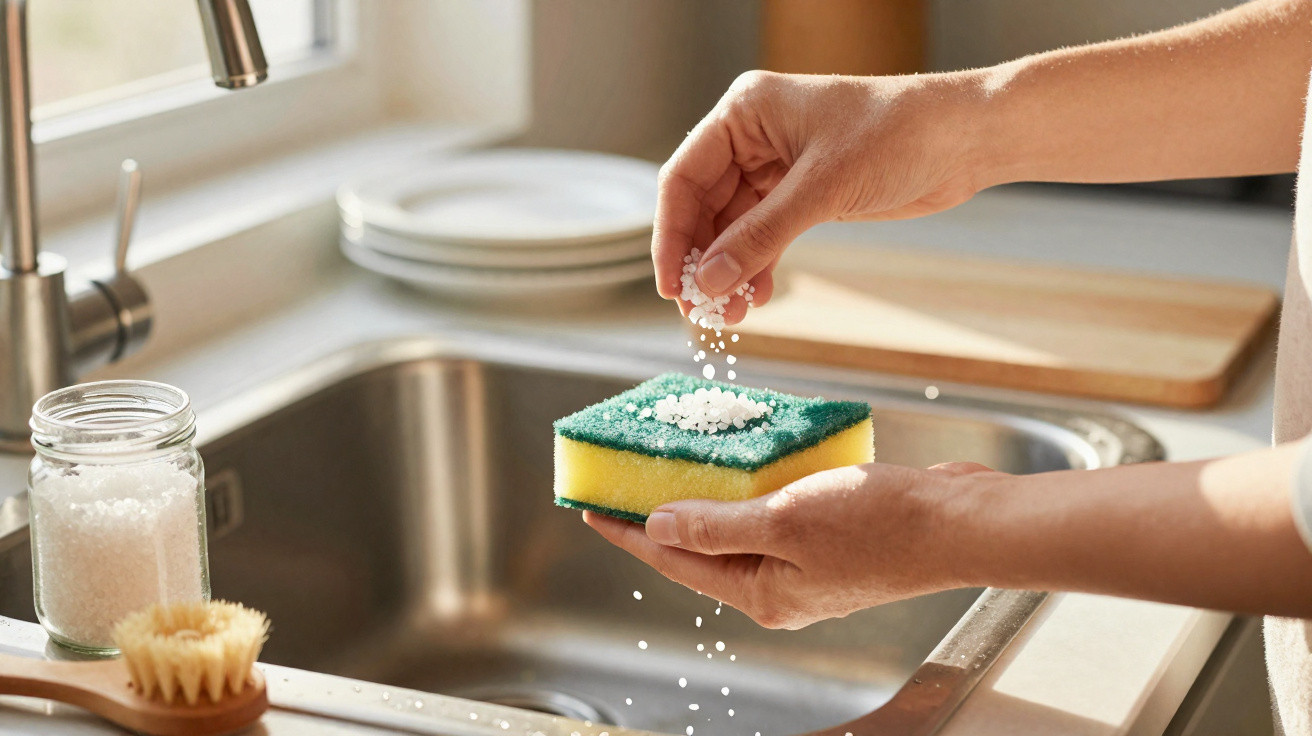
Used separately, bicarbonate of soda can work as a mild cleaning agent and help neutralise some odours. Vinegar, because it is acidic, can be helpful on mineral deposits and other grime that responds to acidic products. For that reason, using them one at a time usually makes more sense when you need those specific properties.
When can the foam be mistaken for cleaning?
The fizzing is attention-grabbing because it is fast and easy to see. That can give the impression the mixture is “dissolving” dirt more aggressively, when a major part of what is happening is simply the production and release of carbon dioxide gas.
The reaction can be useful in specific situations, such as certain chemistry demonstrations and some mechanical uses in drains, but that does not mean the combination is a universal cleaner. For any particular household task, it is better to think about the type of dirt involved and whether the product is compatible with the surface.
How to use bicarbonate of soda and vinegar more efficiently
Rather than automatically combining them, pick the ingredient that matches the job. Use bicarbonate of soda on its own when you want gentle abrasion or odour neutralisation. Use vinegar when you are dealing with mineral residue that suits an acidic solution.
It is also important to check the material before applying anything. Not every surface tolerates acidic or abrasive products, and a homemade recipe is not automatically safe just because the ingredients are common. So, next time bicarbonate of soda with vinegar produces that familiar foam, remember the spectacle is mainly chemistry - not proof of double the cleaning.



Comments
No comments yet. Be the first to comment!
Leave a Comment