
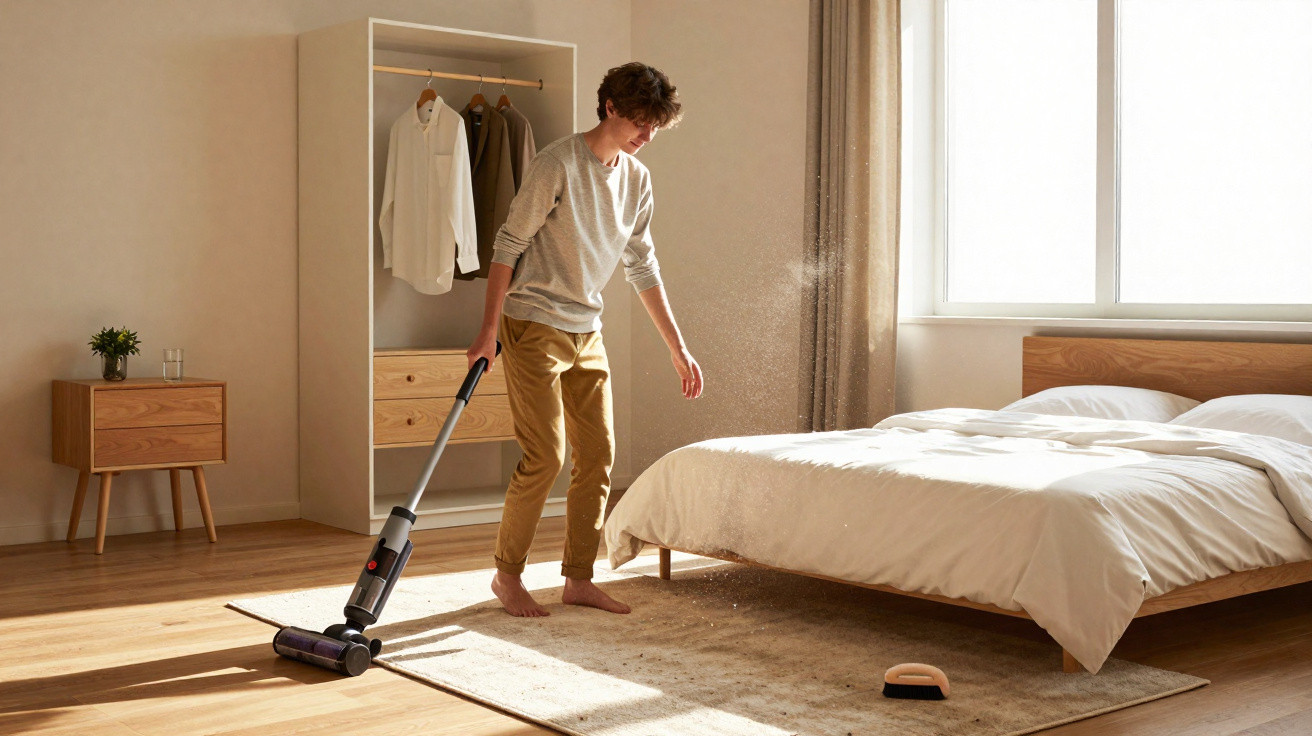
If your bedroom collects a lot of dust even after cleaning, one possible culprit may be beneath your feet: the rug. Fabrics of this kind trap particles, fibres, pet hair and debris circulating around the room and, when they are partly concealed beneath the bed, they can go for weeks without being thoroughly vacuumed. Removing the rug or opting for a smaller washable version will not get rid of all dust, but it does reduce a significant surface where it can build up.
Why can a bedroom rug collect so much dust?
Its fibres create a large trapping area for particles that settle from the air or are brought in on people's feet. Unlike a smooth floor, where dust stays visible and can be quickly removed, some dirt works its way between the rug fibres and can only be lifted out through vacuuming or washing.
The issue becomes greater when much of the rug sits underneath the bed or other heavy furniture.
- Dust settles between the fibres;
- Pet hair and human hair become caught in the fabric;
- Areas beneath the bed are vacuumed less often;
- Moving the rug can release particles back into the air;
- Large rugs are harder to wash thoroughly.
Does removing the rug really make a bedroom dust-free?
No. Household dust also comes from clothing and bedding fibres, particles brought in from outside, skin, hair and other materials already present in the home. Taking away the rug simply reduces one surface that can hold large quantities of these particles, while making the floor easier to clean.
What can you do if you do not want to give up your rug?
One option is to replace a large rug with a smaller one that can be moved easily. Washable rugs also make upkeep easier, as they can be cleaned more deeply than by only vacuuming the visible area.
The required frequency will depend on how the room is used, whether there are pets, the amount of foot traffic and how dusty the home is.
- Choose rugs that are easy to remove;
- Vacuum the area underneath the bed as well;
- Clean the floor beneath the rug too;
- Wash the rug when the care instructions allow it;
- Avoid allowing dirt to gather around the edges and beneath furniture.
Which other bedroom fabrics also collect particles?
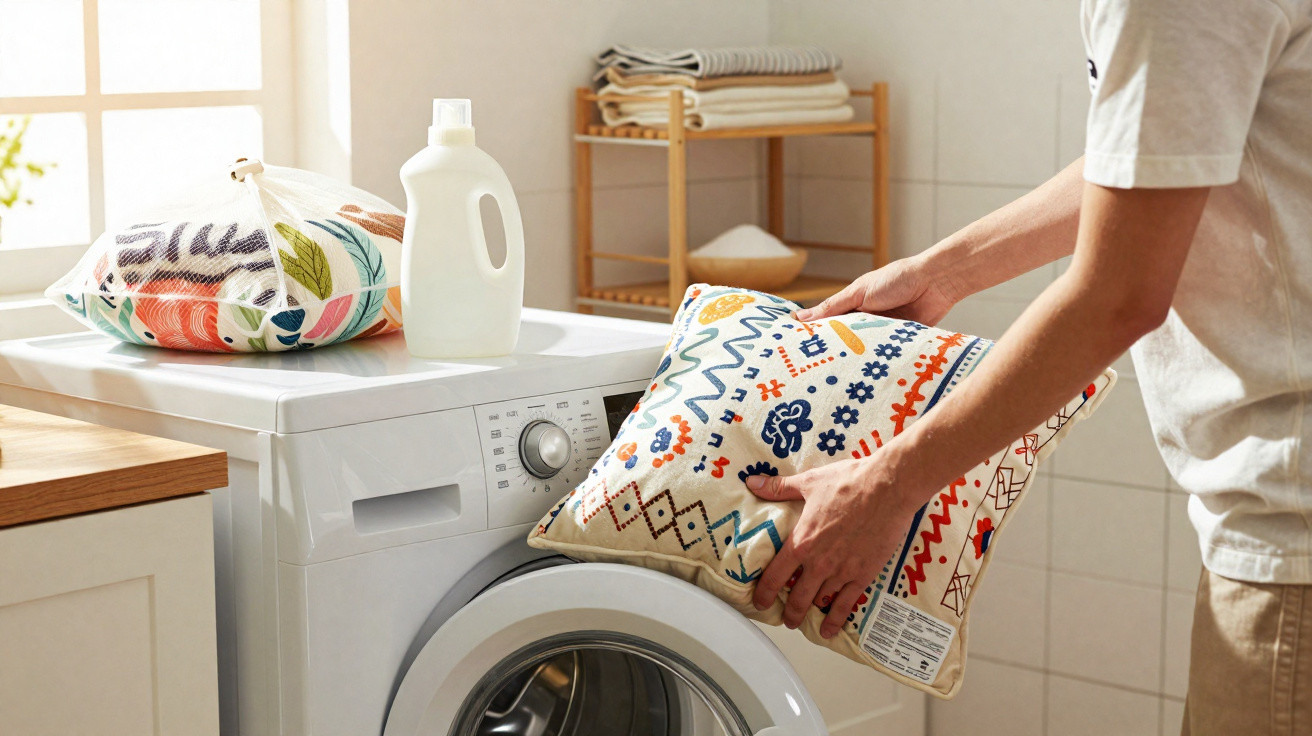
Curtains, throws, decorative cushions, upholstered headboards and the mattress itself also provide surfaces where dust can settle. The more fabrics and difficult-to-move items there are, the more work is usually needed to keep the room clean.
- Wash bedding regularly;
- Clean curtains according to their fabric type;
- Vacuum upholstered headboards where possible;
- Remember to clean the mattress surface;
- Reduce decorative objects that stay in place for months without being moved.
A simpler bedroom is often easier to keep clean
Removing the bedroom rug is particularly worthwhile when it covers a large area, is trapped beneath the bed or rarely receives a full clean. An exposed smooth floor lets you spot build-up quickly and makes it easier to use a vacuum cleaner or damp cloth, reducing the places where dust can remain hidden.
That does not mean every bedroom must be without rugs. A small, washable rug that is cleaned regularly can still be part of the décor. The benefit lies in recognising that decorative fabrics are not passive items: the more fibrous surfaces there are in a room, the more places dust has to settle and the more attention is needed to remove it.




Comments
No comments yet. Be the first to comment!
Leave a Comment