
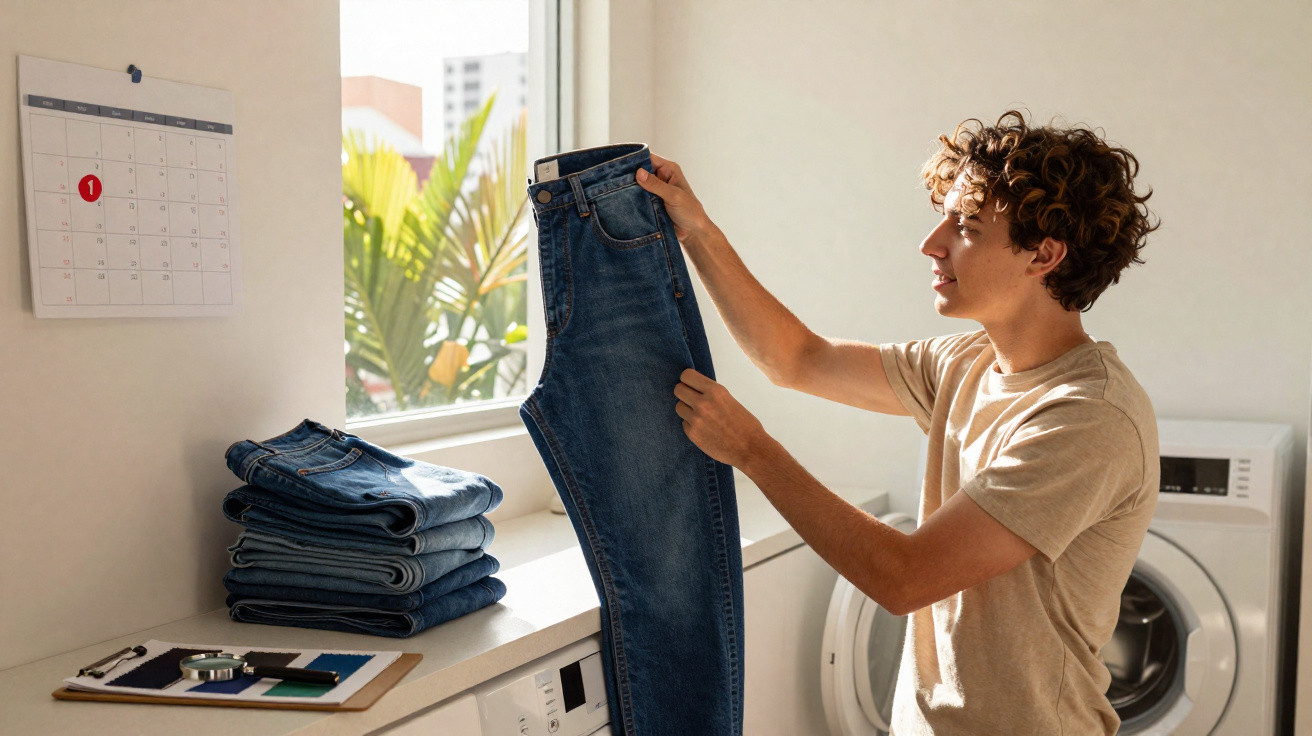
It’s a straightforward question that still feels slightly forbidden: do you genuinely need to wash jeans every week, or can you leave it to once a month without the pong, the fading, or the judgemental looks? According to British denim makers, a monthly wash is not only acceptable - it’s the more sensible approach. And they can back it up.
It started on a rainy London Sunday - the sort where the washing machine becomes the flat’s background noise. A pair of selvedge jeans was slung over a chair, rigid with the week’s evidence: a coffee-run mark, a bit of shine from a bus seat, and that damp Tube hint you don’t want to name. A mate who does denim repairs in Walthamstow glanced over and simply said, “Don’t wash them yet.” He walked me through brushing the cloth, hanging them up by a window, and letting moving air do its job. By morning there was no smell at all - just fabric and fresh air. Later, at a workshop in Hackney, Blackhorse Lane Ateliers spoke about giving denim time between washes so it settles to your body instead of being reset by a drum. And then someone challenged me: four weeks.
What actually changes when you wash jeans monthly, not weekly
For a start, the fabric responds differently. A weekly cycle knocks cotton about - swelling, shrinking, and scraping off dye you paid good money for. With a monthly cadence, high-contrast wear marks - the whiskers and honeycombs - develop where your body bends the cloth, not where a washing machine scuffs it. After four weeks, my jeans felt more personal and less off-the-peg. They didn’t droop into a sorry, baggy shape; they kept their form, and the surface looked cleaner in the way well-worn denim should.
There’s also a benefit you can see in hard numbers. A typical UK 40°C cotton wash uses roughly 50 litres of water and around half a kilowatt-hour of electricity. Cut denim washes in half - or down to a quarter over the month - and you save meaningful resources and a few quid on energy at today’s prices. A barista in Manchester told me he wore raw denim for 30 days, aired the jeans each night, and dealt with a latte splash using a damp cloth. No fuss, no stink, and no customers giving him the “are you alright?” look.
Then there’s the part you don’t notice. Cotton fibres take the most punishment when they’re wet and being tumbled against other fabrics, so fewer washes means less abrasion, fewer microfibres shed, and a slower bleed of colour. The yarn holds on to more indigo - that rich, inky depth everyone chases on Instagram. Natural skin oils spread out and help the warp threads settle. And yes, odour bacteria can appear, but most of what you actually smell is volatile - with time and decent airflow, it dissipates. A Canadian lab famously compared jeans worn for months with jeans worn for a day and reported similar bacterial counts; British makers took that same idea and ran with it via wear trials and open-studio sniff tests. It’s not glamorous. It works far better than you’d expect.
How to make the monthly-wash routine work (and how the Brits tested it)
This is the routine London and Welsh denim obsessives tend to follow. Set up a straightforward “off-day” habit: brush the outside with a clean clothes brush to lift dust, then hang the jeans by the belt loops overnight somewhere airy - near a slightly open window, not in a steamy bathroom. Treat spills with cool water and a drop of gentle soap; blot rather than scrub. Every seven to ten wears, either give them a 20-minute blast with a garment steamer or hang them in the bathroom while you have a hot shower. That mix - air, brush, spot-clean, steam - covers most of what a weekly wash used to achieve.
The biggest slip-ups usually come from overreacting and believing the freezer myth. Freezing doesn’t kill the bacteria that cause odour; it merely slows them down, and the smell can return as soon as the jeans warm up again. Don’t bother. Also be cautious with heavily fragranced sprays: they can leave residue and trap grime in the fibres. When wash day finally arrives, keep it uneventful: turn the jeans inside out, use a cool cycle, a short spin, and a mild liquid detergent - and skip fabric softener. Dry them on a line, laid flat or on a hanger, rather than cooking them over a scorching radiator that can distort the waistband. Realistically, nobody nails perfect care every time. Aim for “good enough, most days”. Denim is forgiving.
British denim makers haven’t merely made claims - they’ve tested this in the real world. Hiut Denim Co in Cardigan built a community around washing less and has documented month-long wear diaries, complete with photos showing creases getting sharper rather than the jeans collapsing. Blackhorse Lane Ateliers run care workshops where customers compare week-one and week-four pairs side by side and - yes - sniff-test them after airing. The conclusion is consistent: monthly washing works when you add airflow and a bit of steam. As one London repairer likes to say:
“Most smells are just passengers. Give them a draft and a little time, and they get off at the next stop.”
- First-week habit: brush, hang, and rotate what you wear on hot days.
- Emergency clean: dab marks early with cool water, then air for a day.
- Wash trigger: visible grime, a sticky feel, skin irritation, or after festivals.
- Skip list: freezer cures, heavy softener, daily machine cycles.
- Upgrade: a simple clothes brush and a travel steamer solve 80% of issues.
Monthly vs weekly: what you’re really choosing
A weekly wash gives you the reassurance of routine. Washing once a month gives you fabric character and a lighter footprint. In effect, it’s the difference between constantly resetting the cloth and letting shape build slowly over time - a bit like leather that gradually moulds to your hand. Choosing monthly isn’t about treating jeans like museum pieces; it’s about working with the fabric so it does more for you and lasts much longer.
Most people know the moment: you catch a whiff and think, “Right - straight in the wash.” Consider a different order: air them first, then steam them, and only then decide. Plenty of Londoners who moved to a monthly schedule say they reclaimed their Sunday time, trimmed their utility costs a little, and ended up with better-looking denim almost by accident. It shifted how I think about laundry. It might suit you, or it might not - and either way is fine. The main thing is to see what your jeans do when you let them breathe. Everything else is just routine.
| Key point | Detail | Why it matters to you |
|---|---|---|
| Colour and fade | Fewer washes keep indigo in the yarn, so whiskers and honeycombs pop naturally | Better-looking jeans over time without special tricks |
| Odour control | Airflow, brushing, and occasional steam disperse volatiles and freshen fabric | Confidence to stretch the wash cycle without social risk |
| Cost and footprint | Each skipped wash saves ~50 litres of water and ~0.5 kWh of energy | Lower bills and a gentler impact with zero hassle |
FAQ:
- Will my jeans smell if I only wash them once a month? Most odour is volatile and lifts with air and time. Brush and hang overnight; add a light steam if needed. If they still smell after that, it’s wash day.
- Is monthly washing hygienic? For everyday wear, yes. Spot-clean stains, let the fabric dry fully between wears, and wash after sweat-heavy days. If you have skin sensitivities, shorten the cycle to what feels right.
- What about stretch denim with elastane? Stretch blends benefit even more from gentle care. Cool cycles and monthly washes reduce fibre fatigue and wavy knees. Inside-out laundering keeps the surface tidy.
- Does the freezer trick work? No. Skip the freezer. It pauses bacteria but doesn’t remove odour. Airflow and a quick steam are more effective and kinder to the fabric.
- How do British experts “prove” the monthly routine? Through open wear trials, side-by-side comparisons, and community demos. Makers like Hiut and Blackhorse Lane show that jeans aired and steamed between washes stay presentable, hold shape, and age better than weekly-washed pairs.
Comments
No comments yet. Be the first to comment!
Leave a Comment