
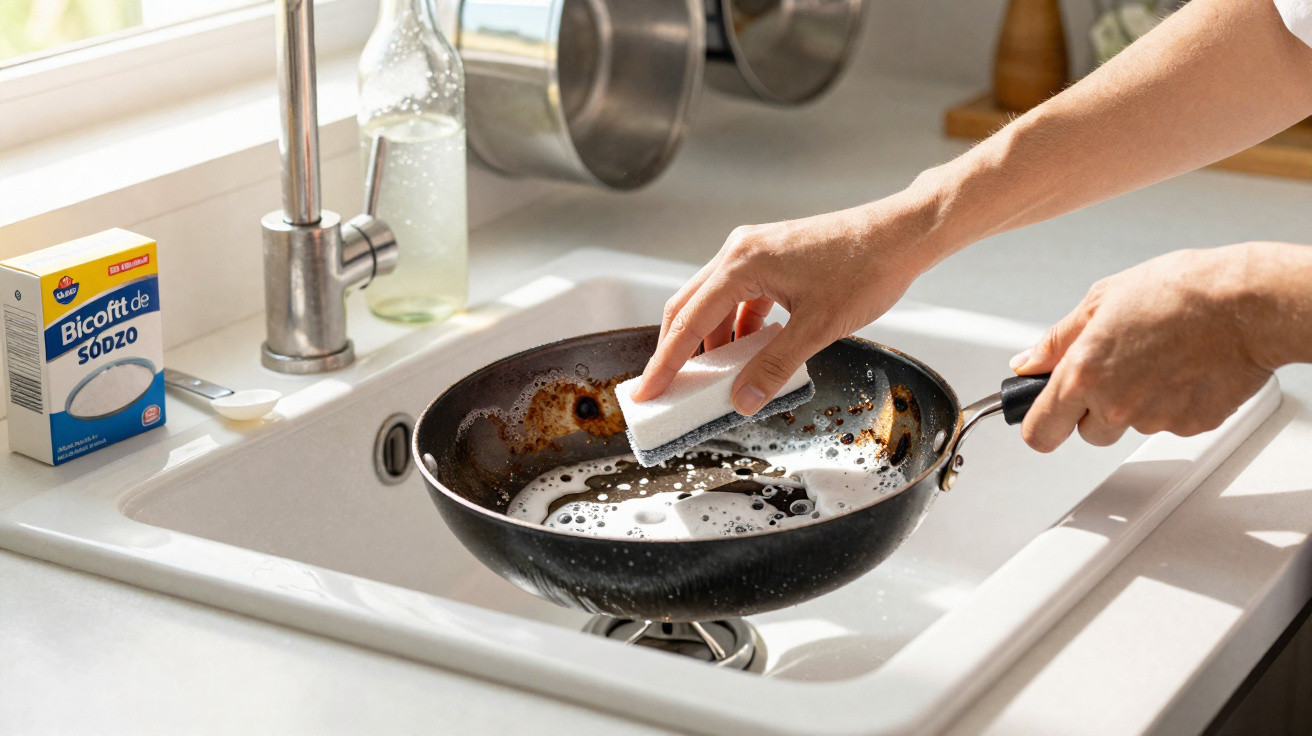
Cleaning a pan is one of those chores nobody really enjoys, but everyone has to do. And when food burns and leaves that thick, stubborn crust on the bottom… it can feel like punishment, can’t it? At times like that, just water and washing-up liquid rarely cut it. That’s where simple home mixes using everyday cupboard items come in, making the job easier without spending much.
What is the best homemade mixture for cleaning very dirty pans?
The most common combination for lifting heavy burnt-on build-up uses three main ingredients: bicarbonate of soda, white vinegar and a small amount of mild (neutral) washing-up liquid. The bicarbonate of soda acts as a gentle abrasive, the vinegar helps loosen grease, and the washing-up liquid helps shift the grime and makes rinsing easier.
For a medium-sized pan, you can use 2 to 3 tablespoons of bicarbonate of soda, about 100 ml of white vinegar and a few drops of washing-up liquid. You can keep it more runny for soaking inside the pan, or make it thicker to target specific areas such as the outside base-always making sure the dirty area is fully coated.
How do you prepare and apply the bicarbonate of soda and vinegar mixture to pans?
Making it is straightforward: put the bicarbonate of soda in a small bowl and slowly add the vinegar, giving the fizz time to settle. Then add the mild washing-up liquid and stir until you get either a thin solution or a creamy paste, depending on how you plan to use it.
In practice, many people find it easiest to use the mixture in stages, adjusting it for the inside, the outside base and older marks. That way, you get the best cleaning effect for each situation.
- Inside of the pan: spread the mixture over the burnt area, add a little water if needed, and leave it to work for a few minutes.
- Outside base: apply a thicker paste using a sponge or brush, covering any darkened areas well.
- Older stains: repeat the application, or gently warm the solution in the pan for a few minutes.
How long should the mixture be left to work on each type of pan?
Leaving it to sit makes a difference to both results and protecting the material. On stainless-steel pans, it’s best to leave it for 15 to 30 minutes, always using a soft sponge. On aluminium pans, keep it to around 10 to 20 minutes, to reduce the risk of the vinegar dulling the metal.
With non-stick pans, the mix should be gentler-less bicarbonate of soda and more water-left for a maximum of 10 to 15 minutes, and never scrubbed with anything abrasive. For cast-iron pans, use it quickly: up to 10 minutes, then rinse and dry thoroughly straight away. If you like, finish by wiping on a thin layer of oil for protection.
How can you stop dirt building up on pans again?
As well as turning to the mixture when things get tough, a few everyday habits help prevent crusts from forming and keep pans looking bright for longer. Small changes make a noticeable difference and save effort at the sink later on.
Washing the pan soon after use, avoiding keeping oil at very high heat for too long, and using suitable utensils so you don’t scratch the base all help with longevity. Many people also do a quick weekly clean with bicarbonate of soda diluted in warm water, just to keep everything under control without letting grease build up too much.

Comments
No comments yet. Be the first to comment!
Leave a Comment