
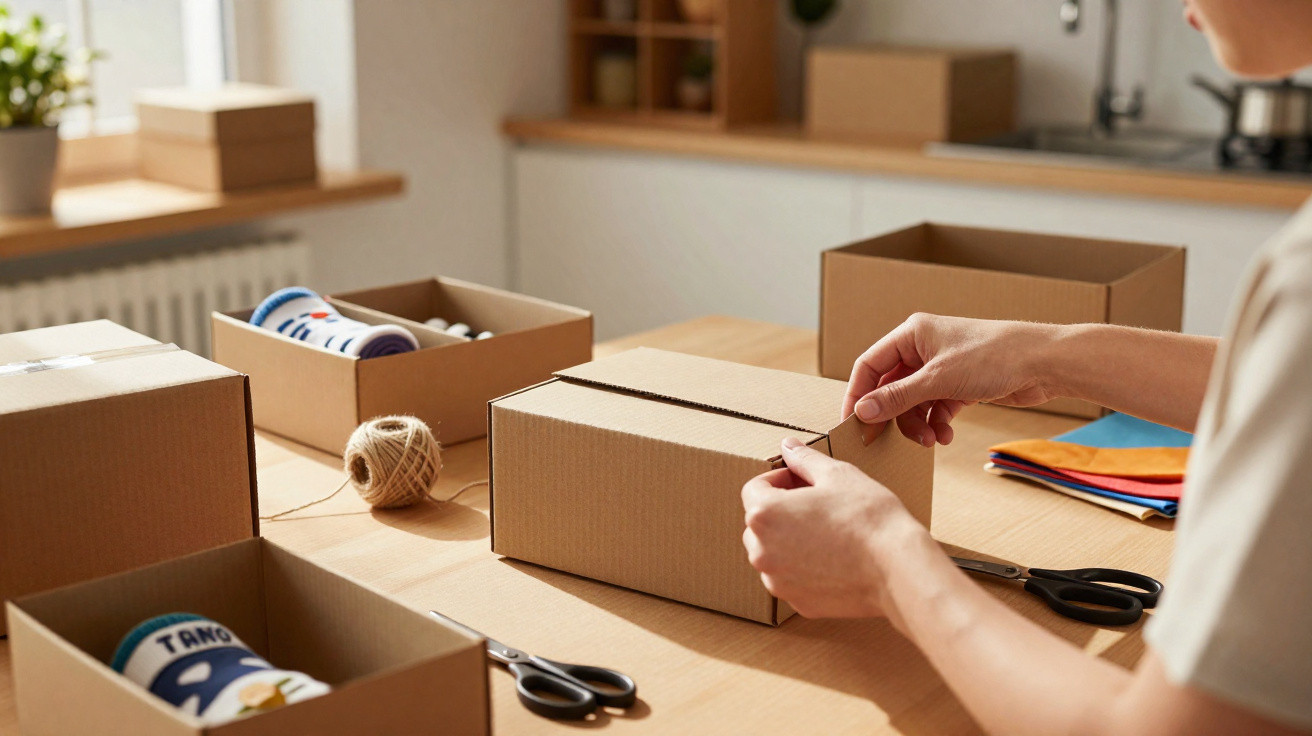
Before that cardboard box from your latest delivery goes straight into the bin, it can become a genuinely helpful extra around the house. In just a few minutes-no glue, no scissors and absolutely no crafting talent required-you can turn this everyday material into organisers, protectors and even useful decorative pieces, freeing up space, keeping things tidier and cutting down on waste.
Why is it worth reusing cardboard boxes in everyday life?
When you repurpose cardboard boxes, you are not simply stashing clutter away: you are reducing how much rubbish ends up on the bin lorry and avoiding spending money on brand-new organisers. Very often, changing the way you fold the sides is enough to give the box a completely different purpose, turning something headed for disposal into something handy in several parts of the home.
Another advantage is how easily a box can be adapted to whatever you need to store or protect, creating made-to-measure solutions. By shifting the position of the flaps, you can make internal dividers, firmer lids or flatter surfaces to rest items on-using only the structure the box already has. That way, you can try lower, taller or narrower shapes until you land on what suits your routine best.
How can you make practical organisers from cardboard boxes without glue?
A single package can be turned into different types of organisers for drawers, cupboards and shelves, simply by following where the box naturally creases and noticing how the flaps slot together. The goal is to create sturdy compartments that stay in place, relying only on crisp folds pressed in firmly with your hands.
To convert a medium box into a drawer organiser, the method is straightforward and quick-ideal when you want to get things in order in minutes:
- Open the box out fully, leaving all the flaps loose and flattening the cardboard well.
- Fold the base section inwards, pressing the corners firmly to strengthen the edges.
- Bring two opposite sides in towards the centre, overlapping them until you form a rectangle that fits your drawer.
- Tuck the smaller flaps into the structure to create a “lock” without using tape.
- Repeat with another piece of box to make internal dividers in a cross shape.
This style of organiser works well for socks, underwear, accessories, cleaning cloths, sachet seasonings, school supplies, make-up and costume jewellery. The same approach also works for open shelf boxes: simply keep the edges a bit taller by folding the sides less, leaving a small “wall” all the way round.
What creative ideas are there for reusing cardboard boxes?
Beyond organisers, a reused cardboard box can be turned into a wide range of household helpers that fit day-to-day needs. With a few easy tweaks, it can protect flooring, support equipment, sort paperwork and even make cleaning easier-without any tools.
Here are a few quick uses that keep the box intact and rely only on folds and slots:
- Floor protector for furniture: open low boxes and place them under chairs, tables or shelving during moves or cleaning, helping to prevent scratches on the floor.
- Shoe base for the utility area: use a shallow box with the sides folded inwards as a tray for wet shoes or footwear muddy from outdoors.
- Stand for a laptop or books: fold and slot the box into a triangular shape-using a diagonal fold-to create an angled support on a desk.
- Document separator: use the existing creases to fold the cardboard like an accordion, forming sections for bills, letters and receipts.
How can you turn cardboard boxes into simple, useful décor?
Even without any craft supplies, you can still use a bit of imagination to make discreet, attractive decorative items from cardboard boxes. The look changes noticeably depending on whether you leave the smooth side or the corrugated side facing outwards, creating either a more rustic feel or a more minimalist one.
By flipping the box and playing with its texture, you can produce pieces such as tall, slim magazine holders, notice boards that lean against the wall and trays for keys, a wallet and remote controls. You can also combine two or more boxes by sliding one inside another in opposite directions to create small stackable cubbies-ideal for separating books, toys, cosmetics or office items before finally sending the cardboard on for recycling.
Comments
No comments yet. Be the first to comment!
Leave a Comment