
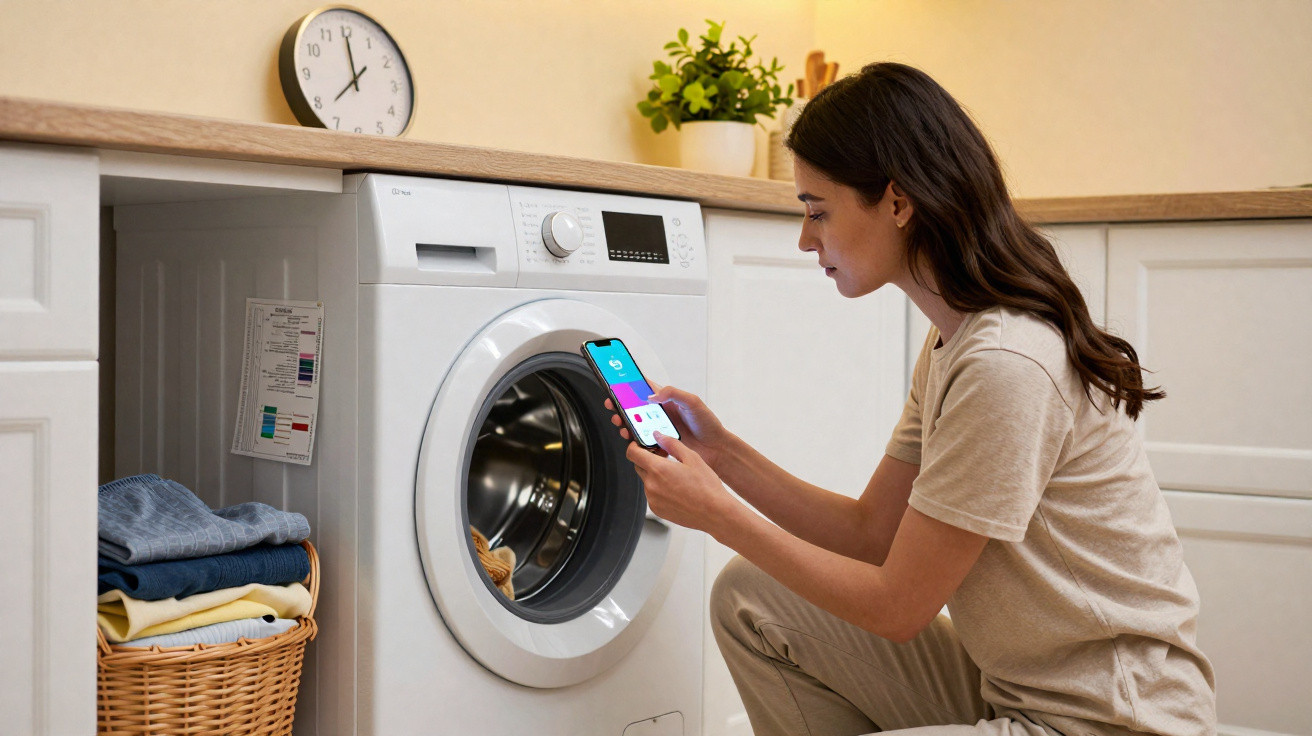
If you want to bring your electricity bill down, it pays to be strategic about when you run your washing machine. Here’s the time to start a wash so you can make real savings.
With energy efficiency no longer a “nice to have” but a genuine necessity, every household has an interest in taking a fresh look at its electricity habits. Among everyday appliances, the washing machine is far from insignificant: according to EDF, it accounts for around 6% of an average home’s electricity use. That’s exactly why learning to optimise when and how you use it can help cut costs while also reducing your environmental footprint.
What time should you definitely avoid starting your washing machine?
A sensible first step is to understand peak demand periods. Between 18:00 and 22:00, electricity demand is at its highest, which is typically when energy costs are greatest.
This time window often matches the “peak hours” tariff (heures pleines) offered by many electricity suppliers. By avoiding washing machine cycles during these hours, you not only save money, but you also help reduce pressure on the electricity grid.
The best times to run a washing machine
The better option is to use off-peak hours (heures creuses), usually between 22:00 and 06:00, depending on your electricity contract. Because overall demand is lower overnight, the unit price per kWh is commonly reduced. Setting your washing machine to run in this period can therefore bring your bill down.
If you are on an EDF Tempo plan, using the washing machine during off-peak hours is even more worthwhile (except on red days).
On top of the financial benefit, shifting your usage to off-peak times helps smooth demand across the network-an environmentally positive move that is easy to adopt.
Choose the eco mode
To push savings further, most modern washing machines include an eco mode. This setting washes at lower temperatures-below 40°C-which greatly reduces the need for hot water and, in turn, the energy used. If your clothes are not especially dirty, it’s a practical way to wash effectively while spending less. It also tends to be gentler on fabrics.
Also remember to maintain your washing machine regularly. Clean filters and seals keep the appliance working efficiently, helping to avoid unnecessary water and electricity use.


Comments
No comments yet. Be the first to comment!
Leave a Comment