
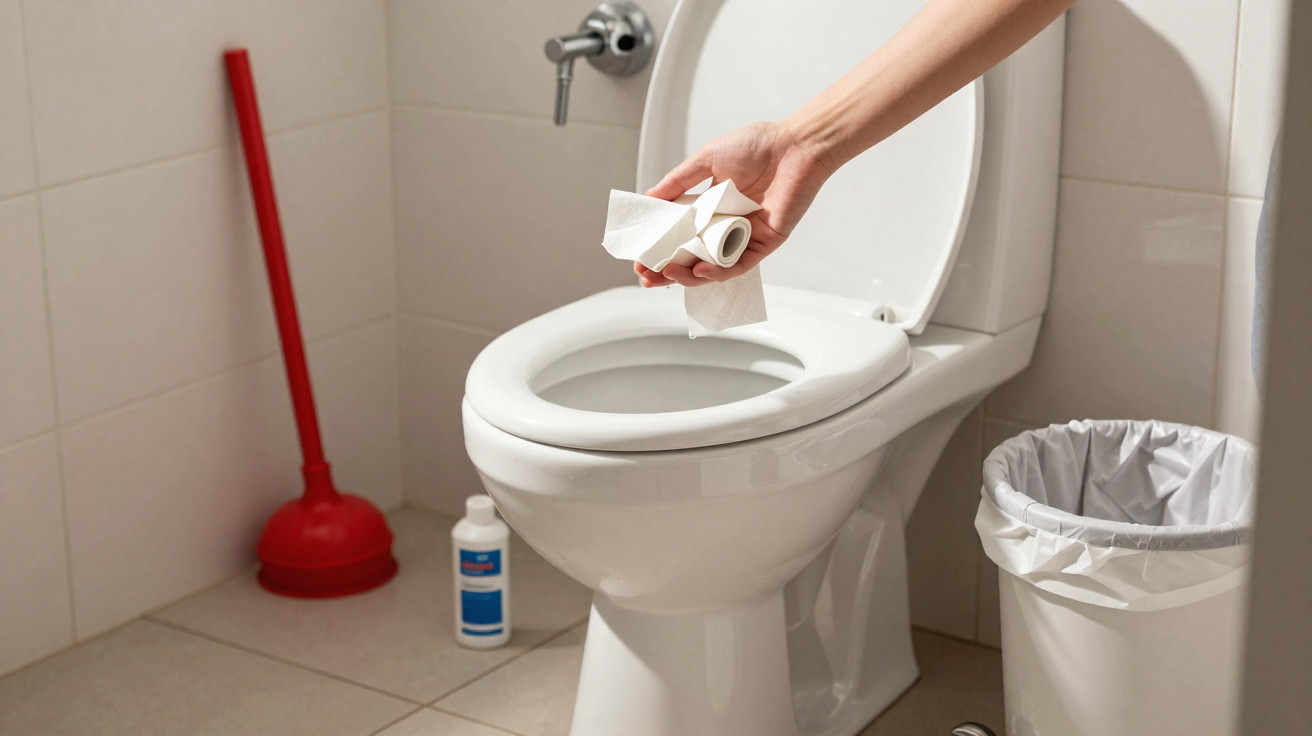
Toilet paper going down the toilet can still feel like an automatic habit in many Brazilian bathrooms, yet the way drainage systems work tells a different story. From the flush and the trap to the pipe bends and the sewer network, that disposal can disrupt flow, raise the likelihood of a blockage, and put extra strain on the plumbing with a residue that does not always behave the way residents expect.
Why does this habit put so much pressure on bathroom plumbing?
A toilet is designed to carry waste away with help from water delivered at a particular volume and speed. When toilet paper is flushed at the same time, it takes up space in the outlet bend, traps particles, and can turn into a damp mass at points where the pipework is already working close to its limit-especially in older properties, cisterns with low flow, and branch runs with too little fall.
In bathrooms, the issue rarely shows up all at once. The first signs are usually a weak flush, water backing up, unpleasant smells, and having to press the flush more than once. Over time, the plumbing loses efficiency, the trap holds on to debris, and the cost rises-whether you reach for a plunger or end up paying for a professional visit.
What changes between daily use and what happens inside the sewer network?
Many people assume the paper “disappears” as soon as it touches water. But dissolving and fully breaking apart are not the same thing. Depending on thickness, the amount used, and the journey to the sewer network or a septic tank, the material can keep enough bulk to snag grease, hair, cotton buds, or any other improper waste already in the system.
This effect is more common in routines such as:
- flushes with a low water volume
- pipework with tight bends or older runs
- repeated use of thicker sheets
- a bathroom shared by more than one resident using the same branch line
- grease or soap entering via irregular connections
Is putting it in a bin an overreaction or basic prevention?
In many properties, placing toilet paper in a lidded bin is not excessive-it is waste handling that matches the installation. The habit reduces the solid load on the plumbing, prevents build-up in the toilet, and lowers the risk of progressive obstruction, which matters in older buildings, homes with only partial renovations, and systems connected to a septic tank.
To keep the bathroom running smoothly without improvising, a few simple habits help more than “miracle” products:
- use a bin with a lid and a liner that is changed frequently
- avoid repeated flushes to force material through
- never combine toilet paper with wet wipes
- watch for signs of slow drainage in the toilet
- arrange preventive maintenance if the plumbing has already backed up before
What signs suggest the toilet is already suffering from this kind of disposal?
If the toilet takes longer to drain, bubbles after flushing, or pushes odours back through the drain, the system may already have a reduced passage. The plumbing does not need to be fully blocked to perform poorly. A film of residue combined with damp toilet paper is enough to change hydraulic scouring and increase the chance of a blockage in the following weeks.
The most common warning signs look like this:
- the water level rises before it drops
- the flush makes a deeper sound than usual
- the bathroom smells of sewage during busy periods
- the toilet needs more than one flush to clear
- nearby points respond slowly too, such as a nearby drain or sink
How can you avoid disruption without making daily life harder?
The safest approach is to treat toilet paper as bathroom waste, not as something that should be part of the flush. That protects the toilet, eases the load on the plumbing, and reduces corrective work on the trap, inspection chamber, and internal pipework. In busy properties, this choice also lowers the risk of backflow and leaks at peak times.
In practical terms, having the right bin, a strong liner, regular cleaning, and paying attention to flush performance is more reliable than assuming water will solve everything. A bathroom works best when flow is limited to what the network was designed to carry-and that small detail affects the lifespan of connectors, branch runs, and drainage points throughout the entire home.






Comments
No comments yet. Be the first to comment!
Leave a Comment