
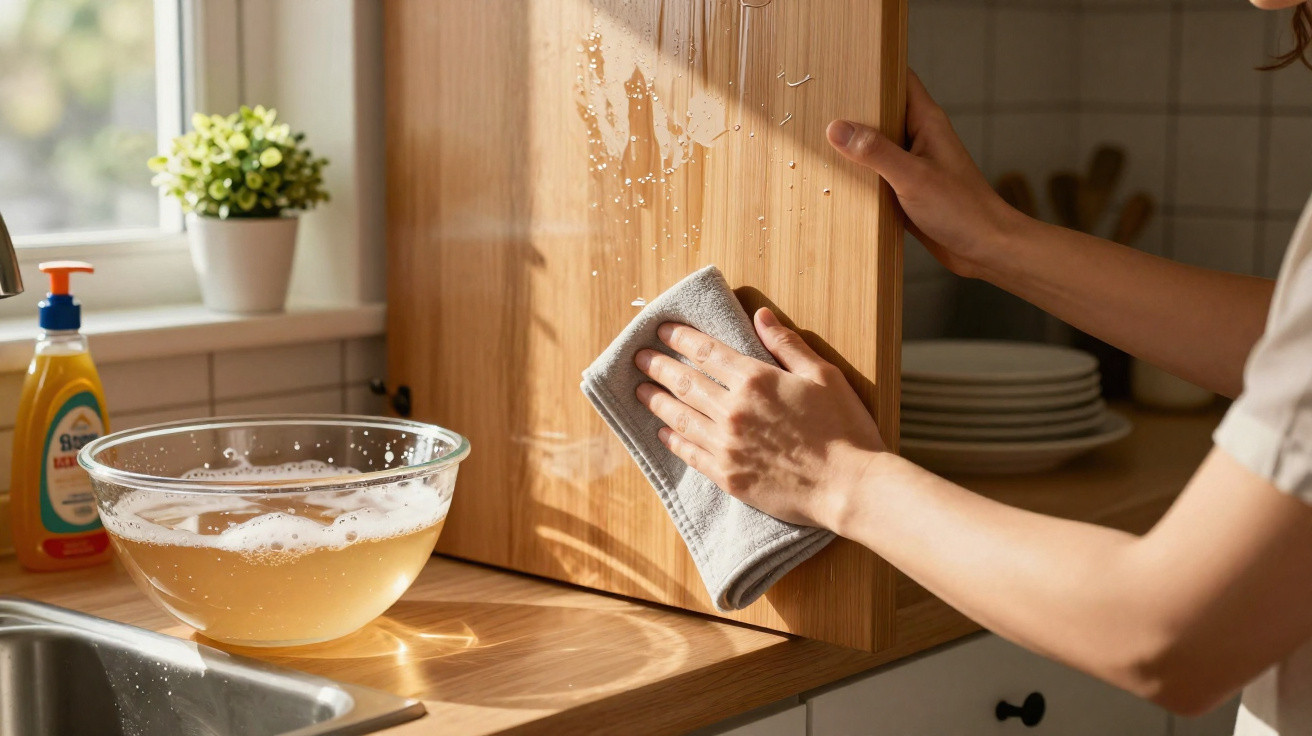
It usually begins with an accidental shaft of sunlight.
You pad into the kitchen holding your coffee, and the light catches the cabinet fronts at precisely the wrong angle. All at once, it’s obvious: the gummy ring around the handles, the smudged greasy marks, the once-warm wood now looking flat and worn. You run a finger along a door and it comes away slightly sticky, a touch yellowed, and you catch yourself thinking, “When did this become so disgusting?”
You tell yourself you’ll sort it out at the weekend. Then Saturday and Sunday get swallowed up, and the cupboards sit there-quietly grubby-while life carries on around them.
But what if the solution is already by the sink, waiting to earn its keep?
The secret hero already sitting by your sink
Nearly every kitchen has one surprisingly overlooked helper for this: plain, decent-quality dish soap. Not a fashionable spray, not a pricey degreasing gel-just the everyday liquid you reach for when you wash up.
When you use it properly, dish soap can lift the greasy film on cabinets faster than many products sold as “cabinet cleaners”, and it can leave the surface feeling smooth and looking almost glossy again. No harsh fumes. No tacky residue. Just warm water, a small amount of soap, and a soft cloth.
It’s so straightforward it feels almost too good to be true-and that simplicity is exactly what makes it so effective.
Imagine a small rented kitchen: beige cupboards that were probably white once, and a worn-out tenant convinced the only answer is repainting the lot. She’s tried an all-purpose spray, scrubbed until her shoulder protested, and the doors still have that faint greasy feel.
Then a friend pops in, takes one look, and says, “Why are you fighting with that spray? Grab your dish soap.” She pours very warm water into a bowl, adds a teaspoon of soap, swirls until it turns slightly cloudy, and dips in a microfibre cloth. Five minutes later, a single door looks transformed: the greasy line above the handle is gone, replaced with a soft, clean sheen.
The tenant runs her palm over it and looks genuinely taken aback. “That’s… it? That’s all you did?”
The “magic” is far less mysterious than it seems. Dish soap is made to break down fats and oils-the same substances that hang in the air whenever you fry food and then slowly settle onto cabinet fronts. Over time, that oily layer traps dust, kitchen steam, and even traces of smoke and perfume, turning into a sticky, light-dulling coating.
Dedicated products often add extra fragrance or shine enhancers that can sit on top of grease rather than removing it. A mild dish-soap solution, by contrast, cuts through the build-up and rinses away cleanly. No residue, no strange haze.
The forgotten trick isn’t a hidden ingredient - it’s using a familiar one with a bit more purpose.
How to use dish soap so your cabinets shine, not streak
Begin with a small batch. Use a bowl or bucket of very warm (not boiling) water, and mix in only a little dish soap-around a teaspoon per litre is plenty. If it looks like a bubble bath, you’ve added too much.
Soak a soft microfibre cloth, then wring it well so it’s damp rather than dripping, and try it on one cabinet door first. Wipe with gentle, straight strokes, following the grain if the doors are wooden. Don’t scour as though you’re dealing with a burnt saucepan; on stubborn greasy patches, let the soapy moisture sit briefly, then wipe again.
Once the door looks clean, do a second pass using another cloth dampened with plain water, then finish by drying with a towel. That quick drying step is what brings out the shine.
Now for the real-life bit: you clean one door and it looks fantastic, then you look at the rest and your motivation evaporates. Most people know that feeling-the job suddenly seems bigger than your energy.
Make it manageable by splitting it into zones: today the upper cupboards near the hob, tomorrow the lower ones by the bin, next week the pantry door. Five to ten minutes at a time can dramatically change how the kitchen feels. And honestly, nobody keeps up with this daily.
The biggest errors tend to be using water that’s too hot, over-wetting wooden doors, or reaching for abrasive sponges. Excess heat and moisture can warp timber and cause veneer to blister. Aggressive scrubbing can take the finish dull and leave cloudy marks that don’t go away.
“Once I stopped attacking my cabinets with abrasive cleaners and just used diluted dish soap, they went from ‘old rental’ to ‘cozy home’ in one evening,” laughs Léa, a home organiser who swears by the trick for quick kitchen makeovers.
- Use lukewarm to warm water
Very hot water can soften finishes and harm some painted surfaces. - Work from top to bottom
Any drips land on sections you still need to clean, rather than on doors you’ve just finished. - Swap cloths as they get dirty
If your cloth turns grey or starts to feel greasy, rinse it thoroughly or switch to a clean one. - Don’t miss the plain-water wipe
That soap-free pass removes any remaining film and restores the clean, smooth feel. - Dry handles and edges with care
These small areas are where the “this is truly clean” look comes from.
Why this tiny habit changes how your whole kitchen feels
There’s something oddly satisfying-almost emotional-about sliding your hand across a cabinet door and finding it properly smooth again. No tacky patch near the handle, no gritty edge you didn’t notice until it was gone. Just clean wood or laminate that catches the light quietly.
Once people realise how quickly warm water and a touch of dish soap can refresh their cabinets, they start noticing other neglected surfaces too: the trim around the fridge, the side panel of the island, the inside face of the pantry door. It stops feeling like a renovation project and becomes more like a 10-minute reset-something you do when you need the kitchen to feel calmer.
Maybe you give it a go one evening while the pasta water comes to the boil, or on a Sunday morning with some music on, tackling one door at a time. That overlooked bottle by the sink stops being just for washing up and becomes a low-effort secret weapon-one that changes your everyday view without demanding an entire weekend.
| Key point | Detail | Value for the reader |
|---|---|---|
| Dish soap cuts cabinet grease | Mild solution dissolves oily film from cooking and fingerprints | Restores smooth, clean surfaces without specialty products |
| Gentle method protects finishes | Soft cloth, warm water, quick dry pass | Reduces risk of damage, streaks, or cloudy patches |
| Small, repeatable routine | Clean a few doors at a time in 5–10 minutes | Makes cabinet maintenance realistic and less overwhelming |
FAQ:
- Question 1 Can I use dish soap on real wood cabinets without ruining them?
Yes-provided it’s well diluted and you don’t soak the wood. Mix a small amount of dish soap into warm water, wring the cloth out thoroughly, wipe gently, then follow with a plain-water wipe and a dry towel.- Question 2 How often should I clean greasy kitchen cabinets?
In a home where you cook a lot, a quick wipe every 2–4 weeks helps prevent build-up. A deeper clean around the hob every couple of months can stop that thick, sticky layer from developing.- Question 3 Isn’t a special “cabinet cleaner” better than dish soap?
Not always. Many cabinet cleaners are basically mild detergents with added fragrance. A gentle dish-soap mix can provide comparable degreasing without extra chemicals or lingering residue.- Question 4 What kind of dish soap works best for this trick?
Choose a basic, non-abrasive liquid dish soap with strong degreasing ability. Avoid anything labelled cream cleanser, scrub, or containing grit, as those can dull finishes.- Question 5 What if my cabinets are already dull and sticky from old products?
Start with the dish-soap approach to break down old build-up; you may need two rounds. If the surface still looks cloudy, gently buff once it’s dry using a soft, dry cloth to bring back some sheen.




Comments
No comments yet. Be the first to comment!
Leave a Comment