
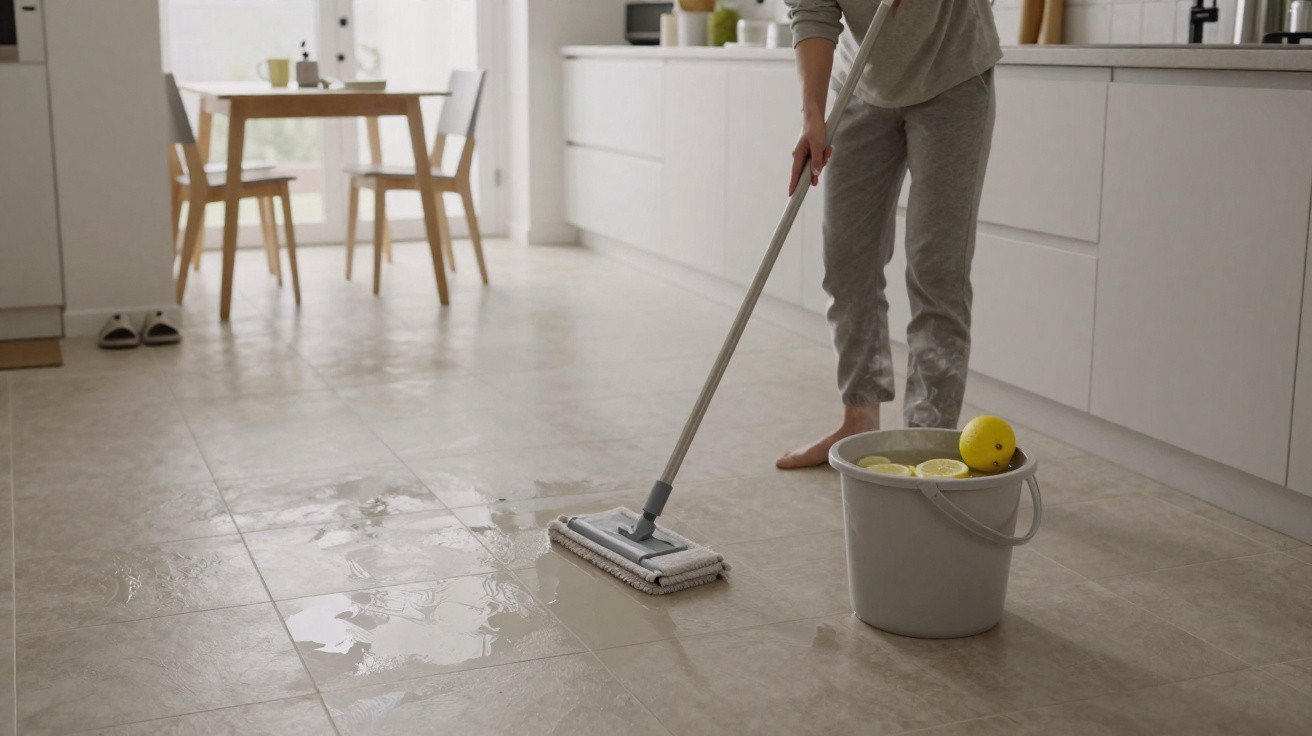
A modest cupboard staple can solve that more quietly than you’d expect.
What begins as the usual weekly clean can feel like a slog: tiles that won’t brighten, laminate that dries in lines, and those puzzling footprints that seem to return by teatime. But a small change to what goes in the bucket can make a noticeable difference, helping floors stay more even, clearer and cleaner for days-without filling the house with an artificial perfume.
Why the state of your floor matters more than you think
The moment anyone steps in from outside, your flooring takes the punishment. Footwear brings in fine grit and oily road dust. Pets track in pollen and bacteria on their paws. And bits of food tumble off plates and cling to faint, almost invisible greasy films.
That combination isn’t only unattractive-it alters the feel of the whole space. When a floor keeps a slightly grey cast even after you mop, the room can look worn-out. If the finish remains hazy or streaky, it’s common to scrub harder or reach for a stronger product.
Often, though, the issue is in the bucket rather than on the tiles. Overdoing the soap, using the wrong pH, or choosing heavily perfumed cleaners can leave a film behind-one that attracts dust and makes every footprint stand out.
Cleaner floors rarely need stronger products. They need the right balance between water, surfactants and acidity.
The quiet star: lemon juice in your mop bucket
Rather than tipping in extra detergent, more and more home-care specialists point to a simpler addition: a small splash of lemon juice. Not a lemon-scented floor liquid and not a complicated citrus mix-just juice from the fruit or bottled pure lemon juice.
It may sound too basic to work, yet it’s grounded in straightforward chemistry. Lemon juice contains citric acid, which nudges the pH of your cleaning water downwards. That change influences three key troublemakers on typical household floors: grease, limescale and odour.
What the acidity actually does on your floor
- Cuts light grease: Slightly acidic water can help loosen thin oily layers from cooking vapours or skin oils that settle on tile and vinyl.
- Loosens mineral haze: In hard-water areas, minute limescale deposits can leave a dull, film-like veil. A mild acid can soften it so the mop can lift it away.
- Tackles smells at the source: Many kitchen-floor odours cling to grease. Once that film breaks up, smells reduce rather than being covered up.
- Helps dirt lift and stay suspended: In gently acidic water, particles can remain suspended more readily, allowing a microfibre mop to trap them instead of smearing them across the surface.
Because lemon water uses far less surfactant than a strong soapy mix, it typically leaves less residue behind. The payoff is fewer streaks and less of that sticky, “draggy” sensation under bare feet.
A bucket of warm water with a squeeze of lemon can leave the surface clean but not squeaky‑soapy, so dust resettles more slowly.
How to use lemon in floor cleaning, step by step
The routine is still straightforward, but a couple of small choices can be the difference between a crisp finish and an annoying one.
The basic ratio that works for most hard floors
For a standard bucket with 5–6 litres of warm water, a simple guide is:
| Bucket size | Lemon amount | Best for |
|---|---|---|
| 5–6 litres | ½–1 fresh lemon, juiced (or 2–3 tbsp pure lemon juice) | Ceramic tiles, sealed vinyl, sealed laminate |
| 8–10 litres | 1–1½ lemons (3–5 tbsp juice) | Larger open‑plan spaces with similar surfaces |
Fill the bucket with warm water first, add the lemon juice, and-if you fancy-drop in a few thin curls of peel. Give it a couple of minutes so oils from the zest lightly scent the water. Then use a microfibre mop, wring it out thoroughly, and keep the floor damp rather than wet.
Mop in an order that avoids spreading grime: start in the cleanest rooms, then move through the hallway, finishing with the kitchen or entryway. This stops you dragging the dirtiest debris over areas you’ve just cleaned.
“Damp, not dripping” remains the golden rule. Excess water leaves streaks and can damage wood‑based floors, no matter what you add to the bucket.
When you still need detergent
Lemon water is helpful for everyday dust and mild grease, but it isn’t a universal replacement for detergent. Where you have sticky splashes, heavy cooking fat, or dirt that’s been ground in, you’ll still need a small dose of a pH‑neutral floor cleaner.
A realistic routine many homes settle into is:
- Deal with obvious spills as they happen, using a cloth with a tiny drop of detergent.
- Use lemon water for the weekly mop, particularly in rooms with lighter footfall.
- If the kitchen floor starts to feel slightly oily, add a capful of gentle cleaner to the lemon water.
Done this way, you keep detergent use lower, minimise residue, and still cope with everyday mess.
Where lemon works – and where it really doesn’t
This trick is excellent on certain materials and a bad idea on others. The deciding factor is usually how sensitive the surface is to acids.
Good matches for lemon water
- Glazed ceramic tiles: The protective glaze means mild acidity can remove films without harming the tile underneath.
- Sealed vinyl and luxury vinyl tiles (LVT): A light acidic wash can brighten the finish, provided you use a well‑wrung mop.
- Most sealed laminates: Water is the bigger threat than lemon-use minimal moisture and wipe up any pooling straight away.
On these surfaces, a weekly lemon boost can keep the finish looking clearer and delay the need for heavy scrubbing sessions.
Floors that should avoid lemon completely
- Marble, travertine, limestone and terrazzo: These materials contain calcium carbonate, which reacts with acids and can etch or dull the surface.
- Cement tiles and raw concrete: Their porous nature can absorb acidic liquid and lead to longer-term damage.
- Unsealed wood or older parquet with a worn finish: Liquid can swell fibres, and acids may weaken already-tired sealers.
On natural stone, even a single cleaning with lemon can leave permanent, cloudy patches that no polish fully hides.
For these floors, professionals typically advise a pH‑neutral, stone-safe cleaner diluted in water, plus frequent dry sweeping or vacuuming.
Health and environmental angles behind the trend
The shift towards simpler cleaning ingredients isn’t only about nostalgia for “grandma’s remedies”. Plenty of families find strong fragrances and aggressive chemicals in multi-purpose products irritating.
Lemon juice doesn’t make cleaning chemical-free-it’s a chemical mixture too. However, swapping it in for one or two synthetic fragrance boosters or harsh degreasers can reduce the overall blend your lungs encounter while you mop.
Fewer ingredients also lower the chance of unsafe combinations. A repeated risk in British and American homes is mixing bleach with acidic cleaners, which can release chlorine gas and irritate or harm airways.
If you add lemon to your bucket, never mix it with bleach. Acids and chlorine products stay strictly separate.
From a cost angle, the change is small but tangible. A bag of fresh lemons or a bottle of pure lemon juice often works out cheaper each month than buying multiple specialised, scented floor products-and any leftovers can go into cooking.
Common mistakes people make with lemon on floors
Even a simple swap can backfire when people assume that “more” must mean “better”. The same problems come up repeatedly in consumer feedback and cleaning forums.
- Overdoing the lemon: An overly acidic mix can leave tiles looking chalky and may slowly wear some sealants.
- Not removing dust first: Mopping over dry grit can grind it into the surface, creating micro-scratches that later hold onto dirt.
- Letting the floor get too wet: Slow drying encourages streaks, and moisture can creep into laminate and engineered-wood joints.
- Treating lemon as a disinfectant: Acidity can make conditions less friendly for some microbes, but it won’t replace proper disinfection where it’s needed-such as after spills from raw meat.
A straightforward rule of thumb from retailers and professional cleaners is: if the floor looks duller after a few weeks, reduce the dose. Many homes get on best with just one or two tablespoons per bucket, rather than using half a lemon.
How often to use the “lemon trick” in real life
Almost nobody mops every day, particularly in busy city households. A more workable approach is to keep a steady rhythm rather than aiming for perfection. In higher-traffic zones-hallways, kitchens and back doors-a light weekly mop with lemon water is usually enough. Rooms that see less action often cope with a fortnightly mop.
Dry care does a lot of the heavy lifting between wet cleans: a quick vacuum, or a pass with a microfibre dust mop two or three times a week, removes the grit that causes scratches and that greyed look. Many people find that after cutting back on soap and introducing lemon, daily dusting takes less time because the floor no longer feels slightly tacky.
Beyond floors: other careful uses and real limits
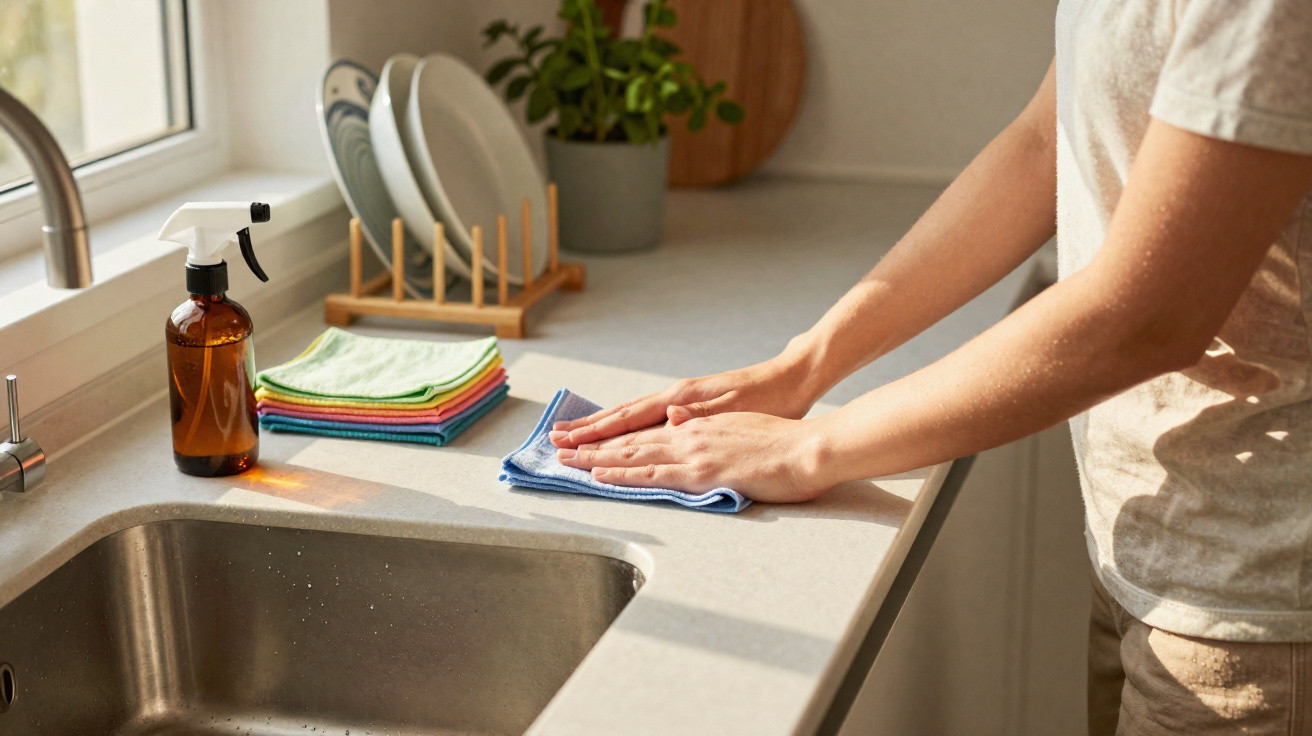
Citric acid’s freshening effect isn’t limited to flooring. Diluted lemon juice can help with descaling a kettle, bringing up the shine on stainless steel, and deodorising a chopping board. On washable worktops, a wipe with lemon and water can lift faint tea marks and reduce cooking smells.
But repeated exposure to acid can still be damaging for certain materials. Natural stone worktops, some enamel finishes and aluminium pans may pit or lose their sheen. Some fabric stains can set more stubbornly if acid is applied at the wrong time. Even with “natural” methods, checking manufacturer guidance is a sensible way to avoid expensive mistakes.
With sensible use, the lemon-in-the-bucket habit sits in a practical middle ground: a small money-saver, a tweak for indoor air, and a subtle morale boost. When floors look clearer and carry a light scent of real citrus rather than a synthetic fog, it can shift how a room feels for the rest of the week. And for many households, that-alongside fewer streaks and a routine that fits into a Saturday morning-matters as much as the shine.


Comments
No comments yet. Be the first to comment!
Leave a Comment