
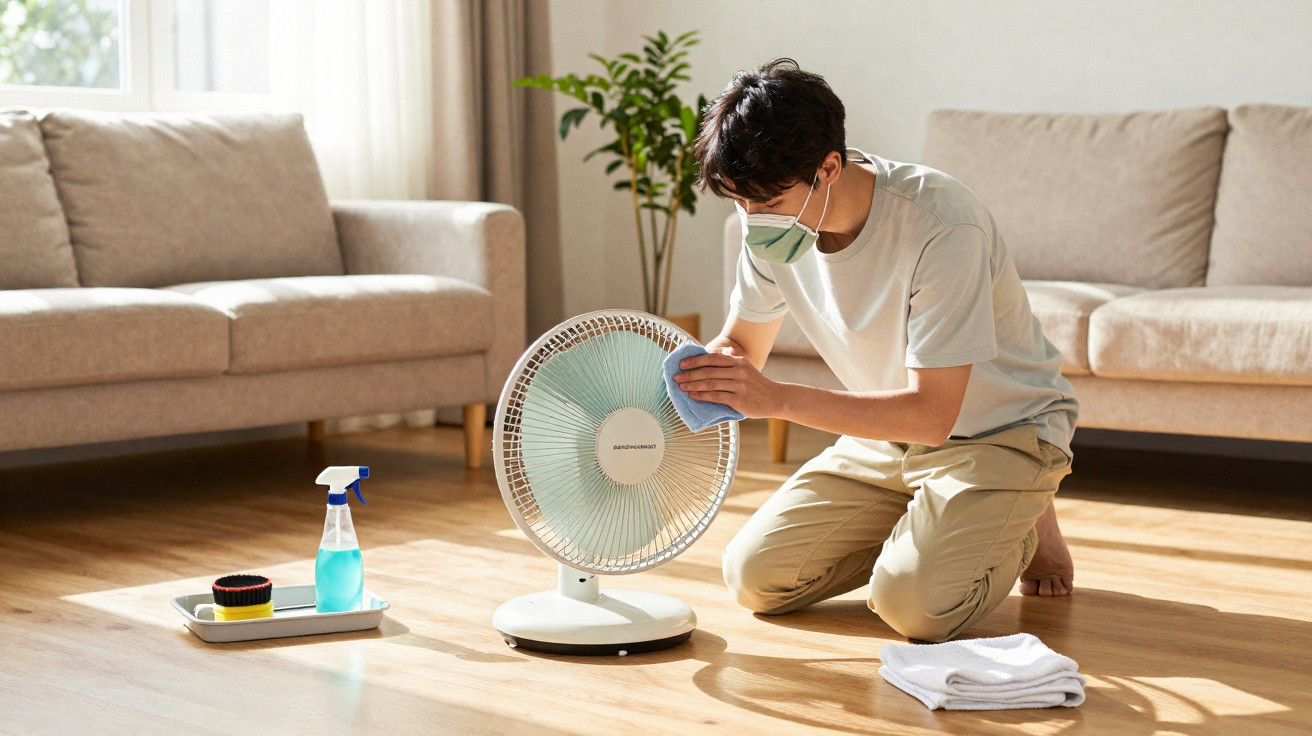
Cleaning household appliances properly stops built-up grime from being blown back into the air during everyday use. Wiping down surfaces first with a lightly damp cloth traps the visible particles, making fan maintenance far safer and more efficient in any home.
Why use a damp cloth before taking the appliance apart?
Dust that collects on plastic and metal surfaces tends to lift off with the slightest touch or movement. If you start cleaning without any precaution, those particles can end up drifting around the room, depositing dirt on furniture and causing discomfort for anyone with respiratory sensitivity.
By wrapping or wiping the outer parts with a cloth that is only slightly damp, the moisture helps capture residue before it spreads. This simple physical barrier holds the top layer of dust, making it easier to handle the protective grilles safely during the next steps of the clean.
How to clean the fan without spreading dust around the house?
Some at-home techniques stop built-up dust from falling to the floor and dirtying furniture during cleaning… Read more
What are the key electrical safety recommendations?
Before you touch the structure at all, the essential first step is to unplug the appliance from the mains. This basic precaution removes the risk of accidental electric shocks and prevents the blades from starting unintentionally, ensuring complete safety throughout the entire home-cleaning process.
Avoid using cloths that are dripping wet, so that water droplets cannot reach the internal motor. A lightly damp cloth has the right balance: it cleans the plastic framework without putting the electrical components of the household appliance at risk.
Below is a YouTube video from the channel A DICA DO DIA COM FLÁVIA FERRARI that explores the points discussed in this topic in more depth:
How do you carry out a detailed clean of the parts?
Once the loose particles have been removed, the protective parts can be taken off for a deeper wash. Using soft sponges with mild washing-up liquid helps break down built-up grease, preserving the original shine of plastic and metal materials.
The rotating blades also need extra care while scrubbing so their aerodynamic angles are not distorted. A soft microfibre cloth removes residue without scratching the smooth surfaces of the parts of the ventilation unit.
Essential kit
Recommended items - essential materials for cleaning:
- Lightly damp microfibre cloth;
- Mild washing-up liquid and a soft sponge;
- Dry towel for thorough drying.
Why is complete drying essential before use?
Any leftover moisture on reassembled parts encourages new dust to stick quickly, even within the first few minutes of operation. What is more, water trapped in gaps can lead to early corrosion and undermine the thermal performance of the electric motor.
Manufacturers advise letting all items dry naturally in the shade or using dry cloths before reassembling the appliance. This protects the materials and ensures genuinely clean, healthy air circulation in the room.
Main precautions during the drying stage:
- Dry each protective grille individually;
- Remove moisture from the central gaps and crevices;
- Visually check the blades before reassembly.
How often should you do this preventive cleaning?
How often you clean depends directly on how heavily the appliance is used and on the level of household pollution. In places where dust builds up more quickly, cleaning every two weeks helps prevent hard-to-remove crusts and makes ongoing preservation of the equipment much easier.
Keeping a simple preventive routine reduces the need for heavy-duty interventions and extends the service life of the home motor. Well-cared-for rooms support restful nights, maintaining a steady flow of clean air and comfort for the whole family.

Comments
No comments yet. Be the first to comment!
Leave a Comment