
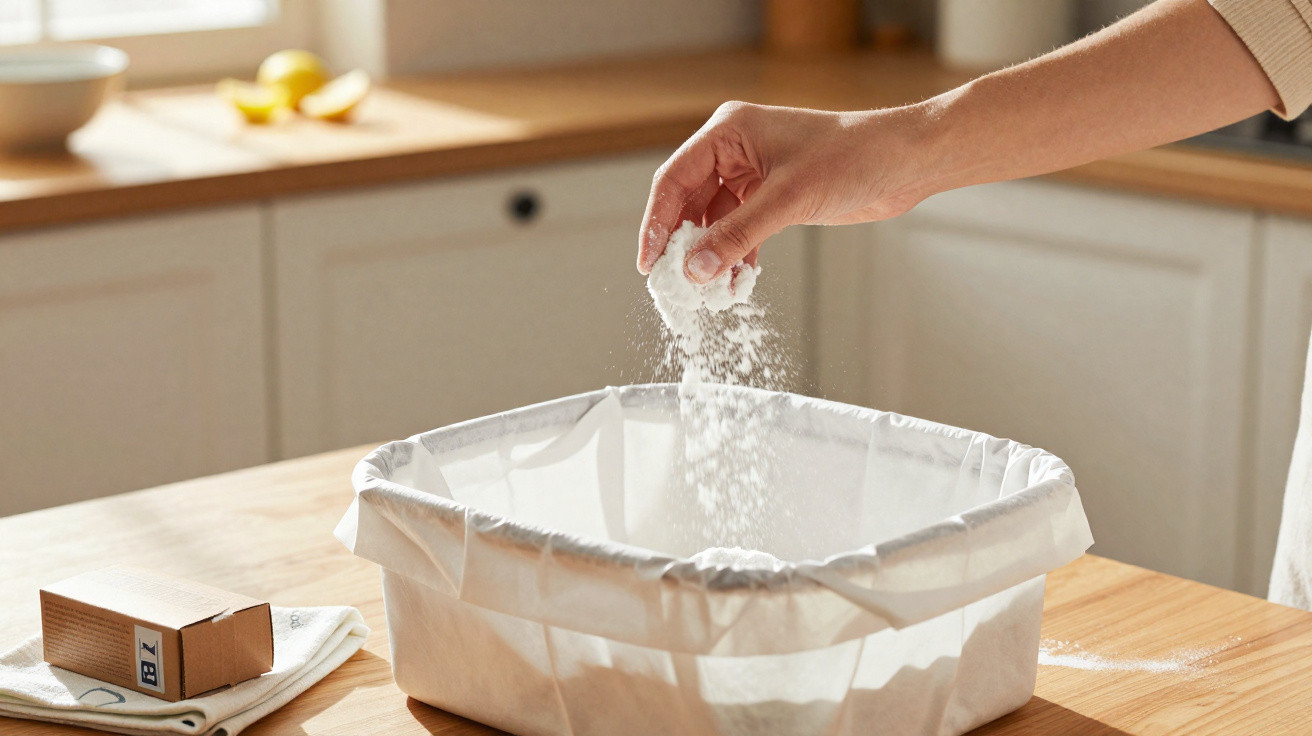
Sprinkling bicarbonate of soda at the bottom of the bin is a straightforward way to cut down on damp and manage some of the odours produced by household waste. The powder is not a fragrance: it can react with certain acidic compounds that cause bad smells and helps keep the base of the container drier-particularly handy in hot weather, when food scraps break down faster.
What is the point of putting bicarbonate of soda at the bottom of the bin?
Bicarbonate of soda is mainly used as a support for odour control. Because it is mildly alkaline, it can neutralise some acidic compounds found in waste and reduce how readily they evaporate into the air. At the same time, the powder can soak up small amounts of moisture that end up at the bottom of the bin through bag leaks or condensation.
That is why it works better as a preventative step than as a way to mask a bin that is already very dirty. Built-up organic waste still needs to be removed, and the bin should be washed whenever there are liquids, grease, or stuck-on residue.
- Helps control some odours;
- Absorbs small amounts of moisture;
- Reduces smells without adding a strong fragrance;
- Can make upkeep easier between washes.
Why does heat make bin smells stronger?
Higher temperatures speed up various chemical reactions and encourage micro-organisms to act on food leftovers. Peels, meat, sauces, fruit, and other organic waste release volatile compounds more quickly, which makes the smell spread through the room. This is why a kitchen bin can start to smell much faster on hot days.
How to use the powder properly without making a mess
After emptying and cleaning the bin, let the inside dry and then scatter a thin layer of bicarbonate of soda directly over the bottom before fitting a fresh liner. There is no need for a thick coating: a small amount is enough to contact any drips that escape the bag and the air sitting at the base of the container.
You can top it up once a week or whenever you wash the bin, but the right schedule depends on how it is used. A household that throws away lots of wet waste may need more frequent cleaning, while bins used only for dry packaging rarely require the same attention.
- Wash the bin when there is liquid or a build-up of dirt;
- Wait for the bottom to dry before adding the powder;
- Use only a thin layer;
- Fit the liner as normal over the bicarbonate;
- Reapply the product after the next clean.
Does bicarbonate of soda replace washing the bin?
No. Bicarbonate of soda can help with smell control, but it will not remove food remnants, biofilm, grease, or liquid that has leaked from the bag. If grime is stuck on, the answer is to wash the container with water and washing-up liquid, rinse it, and dry it before putting in a new bag.
- Empty the bin before it overflows;
- Do not allow liquid to collect at the bottom;
- Keep food waste properly contained;
- Wash the lid, rim, and inner walls when they are dirty;
- Do not mix different cleaning products inside the bin.
Why does this trick work best before the smell gets strong?
The benefit of this method is that it tackles the conditions that lead to bad odours from the start. Sitting at the bottom of the bin, the powder comes into contact with small amounts of moisture and with some smelly compounds before they build up to a level that takes over the kitchen.
The outcome also depends on basic household cleaning habits. Changing the liner regularly, removing organic waste at the end of the day when needed, and keeping the container dry remain more important than any single product. Bicarbonate of soda works as an add-on to that routine, helping manage damp and some of the smell rather than simply covering it with perfume.


Comments
No comments yet. Be the first to comment!
Leave a Comment