
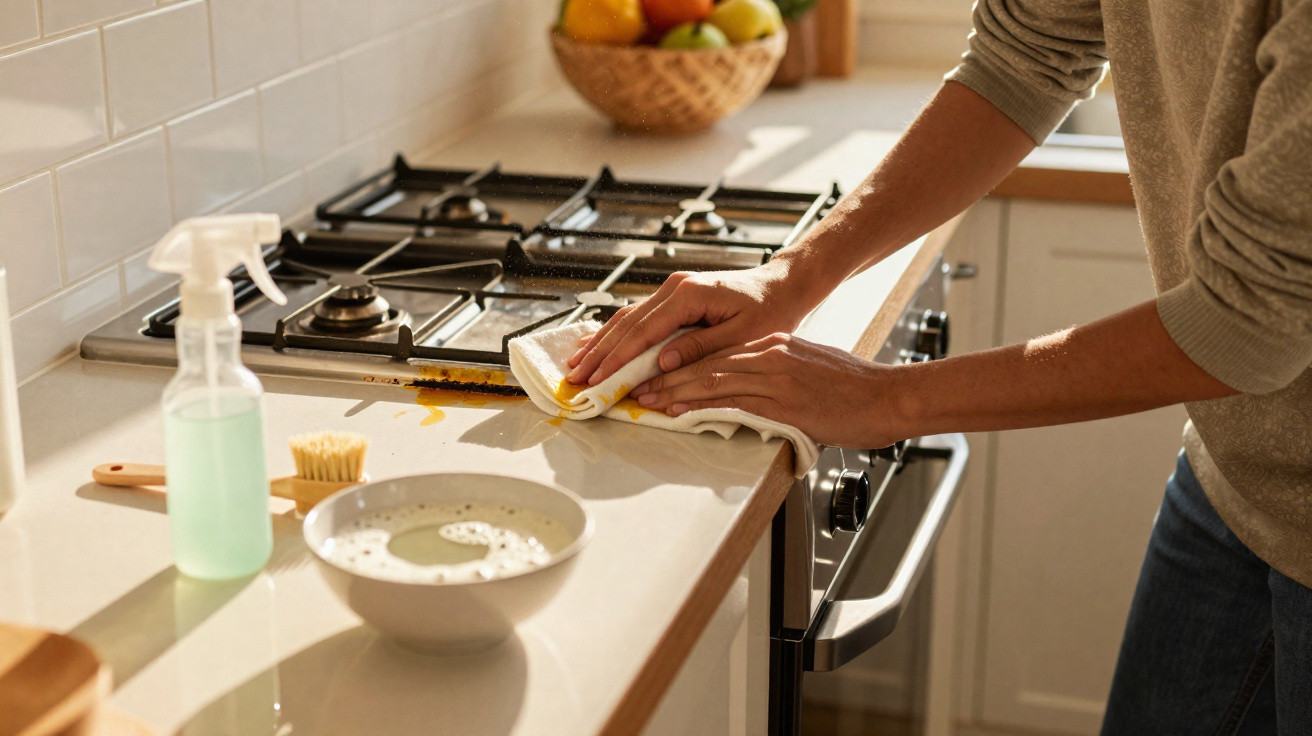
A kitchen nook can build up grease even when the worktops, hob and cupboards look spotless. Narrow gaps behind or beside appliances often catch splashes, steam and airborne grease while you cook, yet they easily fall outside the usual cleaning routine.
Why do these little nooks collect so much grease?
When meals are being prepared, tiny fat particles can travel through the air with steam and then settle on nearby surfaces. If there is a small gap between the hob, the worktop or the wall, this residue can gather there without being immediately obvious.
Over time, grease also traps dust and other particles, creating a sticky film. That is why a patch that seems merely dusty may actually be a blend of food residue, grease and everyday household dirt.
What detail makes these spaces so easy to miss?
Their location is one of the main reasons. Tight, poorly lit areas are hard to spot during routine cleaning, especially when they sit behind appliances or between units that are rarely moved.
Habit plays a part as well. Because this spot is not usually touched while cooking, small amounts of grease can remain there for weeks. Once the residue has aged, it can be tougher to shift than freshly formed dirt.
How to clean this kitchen nook without damaging the surface
Start by removing any items and, where it is safe and possible, gently pull the appliance away so you can reach the area. Use a soft cloth or non-scratch sponge with a cleaning product that is suitable for the surface. Avoid harsh DIY mixtures unless you have checked that the material will not be affected.
After lifting the grease, wipe over with a clean cloth to remove any product residue and leave the area dry. Where you are close to electrical components or gas connections, do not apply liquids directly, and always follow the manufacturer’s guidance.
Who should pay closer attention to these areas, and when?
Kitchens used every day-especially those that involve frequent frying or cooking with oil-tend to collect residue faster. In these settings, it is worth adding the gaps, side panels and the areas behind appliances into the cleaning schedule from time to time.
It is also sensible to watch for surfaces that change colour, feel tacky or develop a lingering smell. A kitchen nook may seem unimportant, but keeping these areas reachable and clean helps reduce grease build-up and makes overall upkeep of the space easier.


Comments
No comments yet. Be the first to comment!
Leave a Comment