
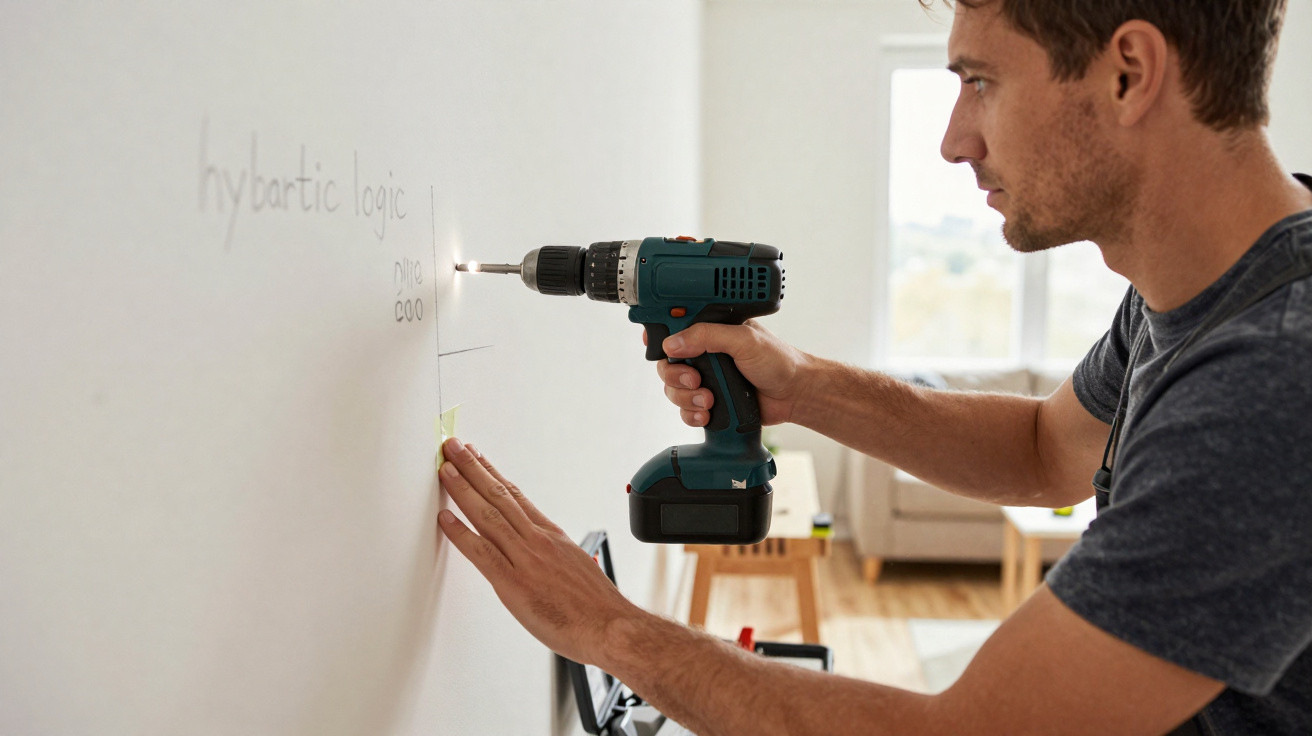
Drilling into a wall without knowing where the pipes run can turn a straightforward home improvement job into leaks, damp ingress and broken tiling. Before you pick up the drill, a few quick checks can help reduce the risk of hitting pipework.
Why is it dangerous to drill without locating the pipes?
Concealed water pipes are hidden behind plaster, tiles or concrete, yet they are still easily damaged by drill bits and fixings. A hole in the wrong place may trigger an immediate leak, a damp patch, reduced water pressure and a costly repair.
Plumbing is the system used to carry fluids through pipes. In houses and flats, that network runs through walls, floors and service risers, so you need to be careful before any drilling or fixing.
Before drilling, look out for these clues:
- Water points: taps, stopcocks and showers suggest where pipes are likely to run.
- Vertical logic: pipework often goes up and down near plumbing fixtures.
- Adjacent room: a bathroom, kitchen or utility room may share the same “wet wall”.
- Sound: gentle tapping can reveal differences between hollow and solid areas.
- Detector: metal and moisture detectors help lower the risk before drilling.
How can you follow the wall’s plumbing logic?
Start by noting where there are taps, showers, stopcocks, filters, washing machines and toilet flush connections. In many installations, pipes follow vertical routes above and below these points, so drilling within that strip can be risky without checking first.
It also helps to consider the other side of the wall. A living room that appears “dry” may share the same masonry with a bathroom, kitchen or utility area; in that situation, the pipework may sit exactly where you were planning to fit a shelf, a picture or a heavy bracket.
How do you use the tapping test before drilling?
Tap the wall lightly with your knuckle and compare several spots around the area you want to drill. Places that sound very hollow, very solid, or where the sound changes suddenly can point to a change in material, the route of a conduit, an old repair or an internal void.
Stop before you drill
The wall often gives you clues before the drill bit goes in.
Map taps, stopcocks and water points before you mark the hole.
If you are unsure, use a detector or call a professional before drilling.
This method will not pinpoint pipes with absolute accuracy, but it can show that the wall is not uniform. For best results, combine it with plumbing logic, a check of neighbouring rooms and-where possible-reference to plans, renovation photos or renovation records.
Use the tapping test like this:
- Pick the exact area where you intend to install the item.
- Tap nearby points: above, below and to both sides.
- Compare hollow, dry, metallic or very solid sounds.
- Avoid drilling in lines that align with taps and stopcocks.
- Stop the installation if you notice damp, mould or bubbling paint.
Do metal and moisture detectors really help?
Yes. Affordable detectors can be very useful for DIY work at home. Basic models can pick up metal, conduits and nearby structural elements; moisture meters can flag areas that may indicate a leak, damp ingress or water sitting behind the wall finish.
Ideally, move the detector slowly, scanning in multiple directions and marking any warning spots with tape. Even so, a device does not replace common sense: PVC pipes may not be picked up by a metal detector, and moisture readings can vary depending on plaster, paint and the environment.
In practice, combine these tools and checks:
- A metal detector to locate metal parts, screws, conduits and older pipes.
- A moisture meter to identify wet or suspicious patches.
- A plumbing plan, if available, to confirm routes.
- Visual inspection of water points on both sides of the wall.
- A qualified tradesperson if the hole will be large, deep or in a critical area.
What should you do if you suspect a pipe in the wall?
Just as damp inside a wall-even when it has not rained recently-can signal a hidden leak, any sign of moisture near your drilling point deserves attention. In those cases, do not push on with the installation or try to solve it with filler or paint alone.
If there is a nearby plumbing fixture, bulging tiles, a musty smell, or your detector indicates moisture, choose a different location or call a plumber. Prevention costs less than opening up the wall later: a few minutes of checks can avoid leaks, damp ingress and damage to your renovation.



Comments
No comments yet. Be the first to comment!
Leave a Comment