
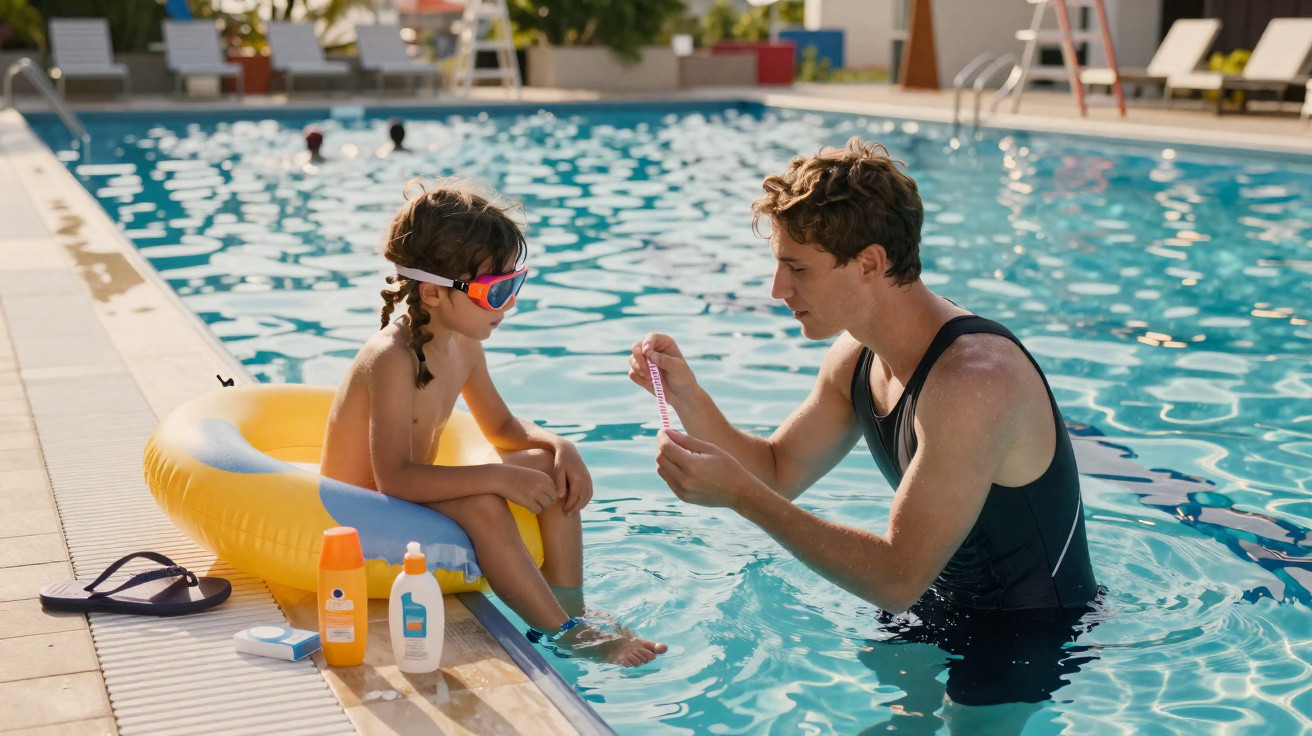
On scorching summer days, few pleasures beat slipping into a pool. Yet it’s worth asking whether the water is truly as clean as it looks when it’s sparkling blue.
I’m an immunologist and infectious disease specialist, and my work focuses on how germs move through shared public environments - and how we can stop them spreading. I even run a module called "The Infections of Leisure", where we look at the health risks linked to recreational pastimes and talk through sensible precautions, without turning students into germophobes.
Swimming - particularly in public pools and water parks - brings its own distinct hazards, ranging from mild skin irritation to stomach bugs. At the same time, getting in the water offers a host of physical, social and mental health benefits.
With a bit of understanding and some attentiveness, you can enjoy a swim without fretting about what might be under the surface.
The reality of pool germs
Summer headlines and social media posts regularly highlight the "ick-factor" of shared swimming venues. Those worries aren’t entirely unfounded.
The reassuring part is that chlorine, commonly used in pools, kills many disease-causing organisms. The less reassuring part is that chlorine doesn’t act immediately - and it doesn’t eliminate every germ.
Each summer, the Centers for Disease Control and Prevention issues warnings about swimming-related outbreaks caused by exposure to germs in public pools and water parks.
According to a 2023 CDC report, more than 200 pool-associated outbreaks were recorded between 2015 and 2019 across the US, affecting over 3,600 people. The outbreaks involved skin infections, breathing problems, ear infections and gastrointestinal illness. Many cases are mild, but some can be severe.
Germs and disinfectants
Even when a pool is correctly chlorinated, certain pathogens can persist in the water from minutes to days.
One frequent offender is Cryptosporidium, a microscopic germ that triggers watery diarrhoea. This single-celled parasite has a hardy outer coating that enables it to survive in chlorinated water for up to 10 days. It spreads when faecal material - often from someone who has diarrhoea - gets into the water and is then swallowed by another swimmer. Even a minuscule amount, impossible to see, can infect dozens of people.
Another common germ is Pseudomonas aeruginosa, a bacterium associated with hot tub rash and swimmer’s ear. Viruses such as norovirus and adenovirus can also remain in pool water and make people ill.
Swimmers add a variety of bodily residues to the water, including sweat, urine, oils and shed skin cells. These materials - especially sweat and urine - react with chlorine to create chemical by-products known as chloramines, which may carry health risks.
These by-products are what produce that sharp "chlorine" smell. In reality, a well-maintained pool shouldn’t have a strong chlorine odour - or any other noticeable smell, for that matter. It’s a widespread myth that a powerful chlorine smell signals a clean pool. In fact, it can be a warning sign suggesting the reverse - that the water may be contaminated and perhaps best avoided.
How to play it safe at a public pool
Most swimming-related risks can be lowered through straightforward steps taken by both pool operators and swimmers. And although most pool-related illnesses won’t be fatal, nobody wants to spend their holiday - or a glorious week of summer - stuck on the toilet.
These 10 tips can help you steer clear of germs at the pool:
- Shower before swimming. A quick rinse for at least one minute removes most dirt and oils from your skin that would otherwise reduce chlorine’s effectiveness.
- Keep out of the pool if you’re unwell, particularly if you have diarrhoea or an open wound. Germs can spread rapidly in water.
- Do your best to avoid getting water in your mouth to reduce the chance of swallowing germs.
- Don’t swim if you have diarrhoea, as this helps stop germs spreading.
- If you’ve been diagnosed with cryptosporidiosis, often called "crypto," wait two weeks after your diarrhoea has stopped before going back in the pool.
- Take regular toilet breaks. For adults and children alike, routine breaks reduce the likelihood of accidents in the water.
- Check nappies every hour and change them well away from the pool to prevent faecal contamination.
- Dry your ears thoroughly after swimming to reduce the risk of swimmer’s ear.
- Avoid swimming with an open wound - or, at the very least, ensure it’s fully covered with a waterproof dressing to protect you and everyone else.
- Shower after swimming to rinse germs off your skin.
Lisa Cuchara, Professor of Biomedical Sciences, Quinnipiac University
This article is republished from The Conversation under a Creative Commons licence. Read the original article.



Comments
No comments yet. Be the first to comment!
Leave a Comment