
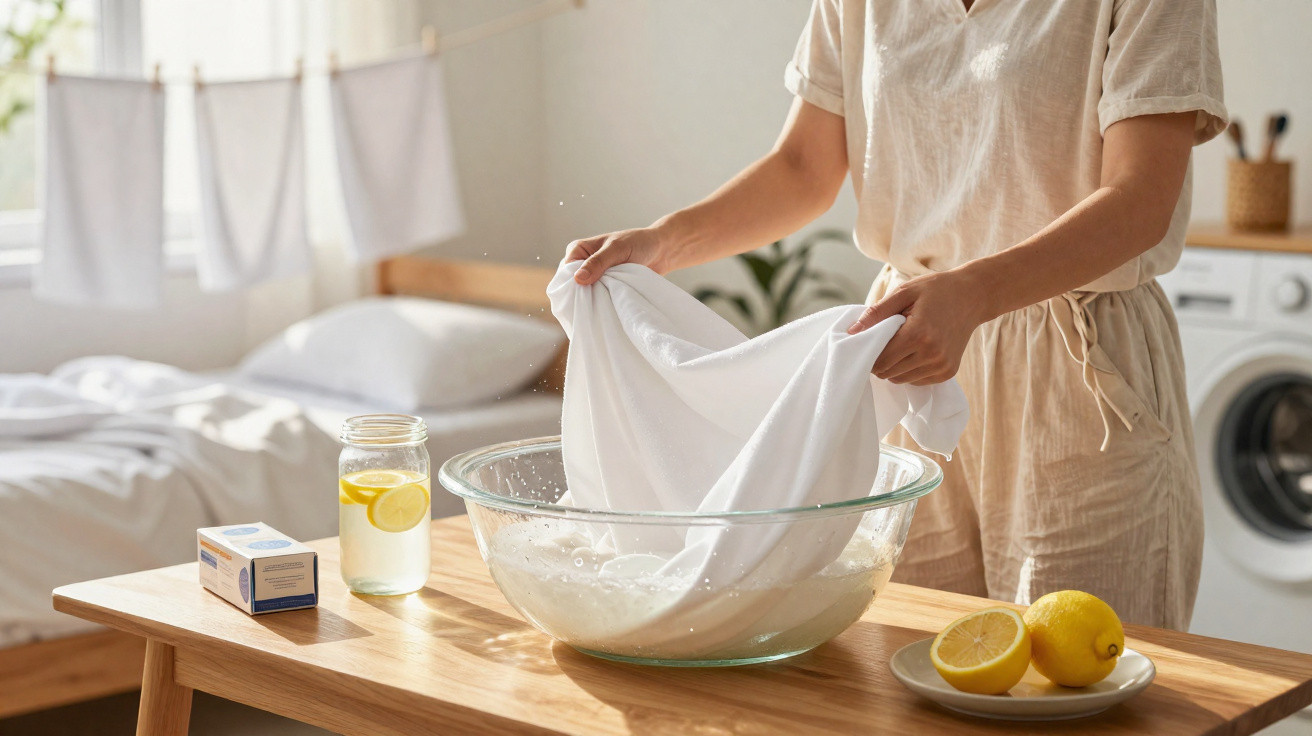
Yellowish marks and general wear on white sheets are a familiar issue in homes where bedding gets heavy use. Sweat, toiletries, detergent residue and even the minerals in your wash water can slowly shift fabric away from its original shade. Rather than reaching for bleach every time, a few straightforward mixtures can help bring back the white with less impact on the fibres, acting as an occasional boost within your normal care routine.
How does the homemade solution help to brighten white sheets?
The idea behind this method is to use ingredients that lift stains and reduce yellowing without the harshness of many strong bleaches. By combining mild alkalinity, gentle abrasion and grease-cutting action, the mix tackles sweat marks, product build-up and detergent trapped in the weave.
A popular blend uses hot water, bicarbonate of soda, a good-quality laundry detergent and white vinegar. Bicarbonate of soda supports whitening and helps with odours, the detergent loosens heavier soiling, and the vinegar helps break down residue and neutralise smells, so the fabric looks more evenly white.
You can also watch the video on Lia Moraes’ YouTube channel about deep-cleaning sheets and pillowcases. The content shares tested homemade recipes for soaking bed linen and restoring the look of yellowed white cotton.
How to prepare the soak mixture for white sheets
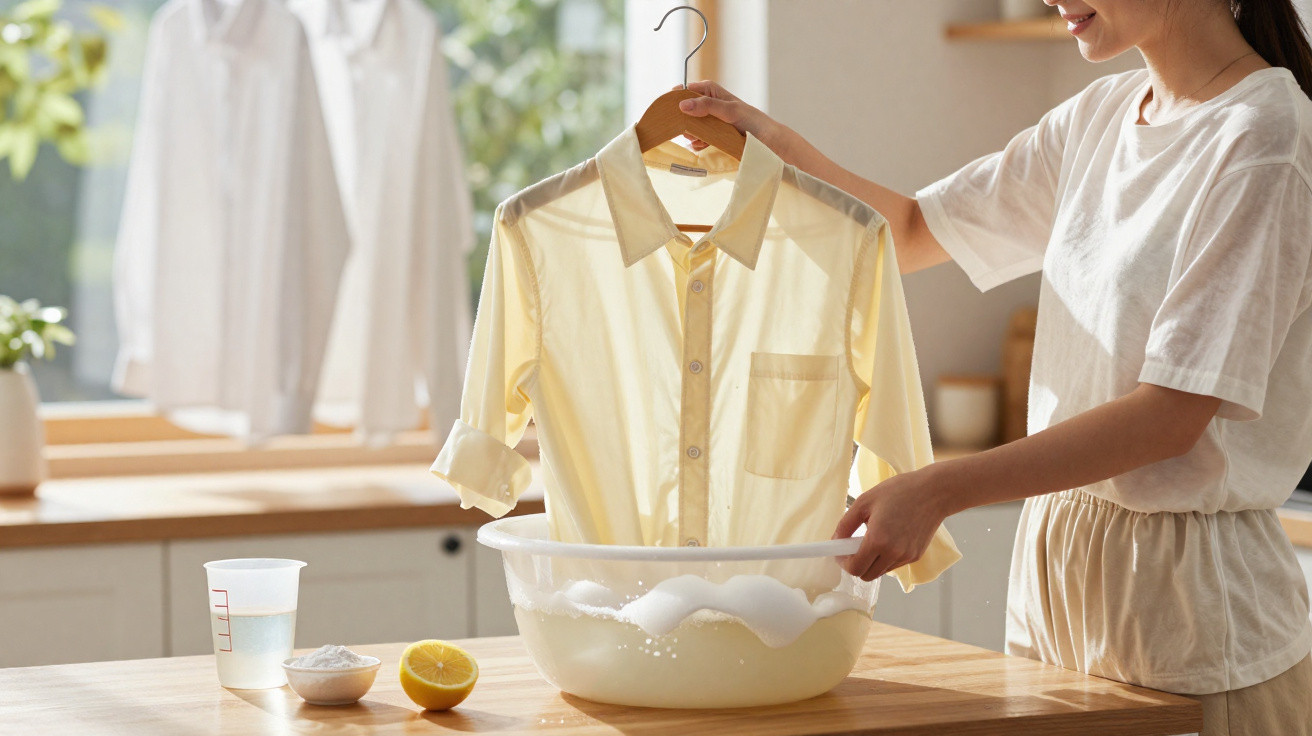
For the best outcome, stick to simple proportions and follow an orderly process. Use a large bucket or deep washing-up bowl, add enough hot water to fully cover the fabric, then mix in the ingredients that work on the yellowing.
A typical starting point for a double sheet set is:
- 5 litres of hot water (not boiling, to avoid weakening the fibres)
- 2 tablespoons of bicarbonate of soda
- 2 tablespoons of laundry powder or a mild, neutral laundry detergent
- 120 ml of white vinegar
First, stir the laundry powder and bicarbonate of soda into the water until fully dissolved. Then pour in the vinegar (it may fizz slightly). Add the sheets after removing any obvious surface dirt, making sure they are completely submerged, and agitate the fabric from time to time so the liquid works through the fibres.
How long to soak, and how to finish the wash
Soaking time varies with how yellow the sheets are and what sort of staining is present. For light discolouration, around 30 minutes can already improve the look; if the wear is more noticeable, many people leave them for 1 to 2 hours. Check periodically to make sure there is no uneven lightening, particularly on more delicate fabrics.
After soaking, drain off the excess water without aggressively wringing the fabric. Then either machine-wash or rinse by hand under running water. Wash on your usual cycle, choose a mild detergent (or one intended for delicates), go easy on fabric conditioner, and ideally dry in the shade in a well-ventilated spot. A final rinse with a small amount of diluted vinegar can help remove detergent residue and leave the fabric feeling softer.
How often can you soak sheets without damaging them?
Even though this soak is gentler than many bleaches, using it too often can still wear down fibres-especially on fine fabrics or delicate weaves. It’s best saved for when sheets look clearly yellowed or have stubborn marks, rather than being used every wash.
If you change sheets weekly, a sensible guide is to soak heavily used items every 1 to 2 months, soak moderately used bedding about every 3 months, and treat rarely used sets only when stains appear. Between soaks, regular washing (without mixing in coloured items), avoiding overloading the machine, and making sure everything is thoroughly dry before storing will help keep whites brighter and extend the life of the fabric.



Comments
No comments yet. Be the first to comment!
Leave a Comment