
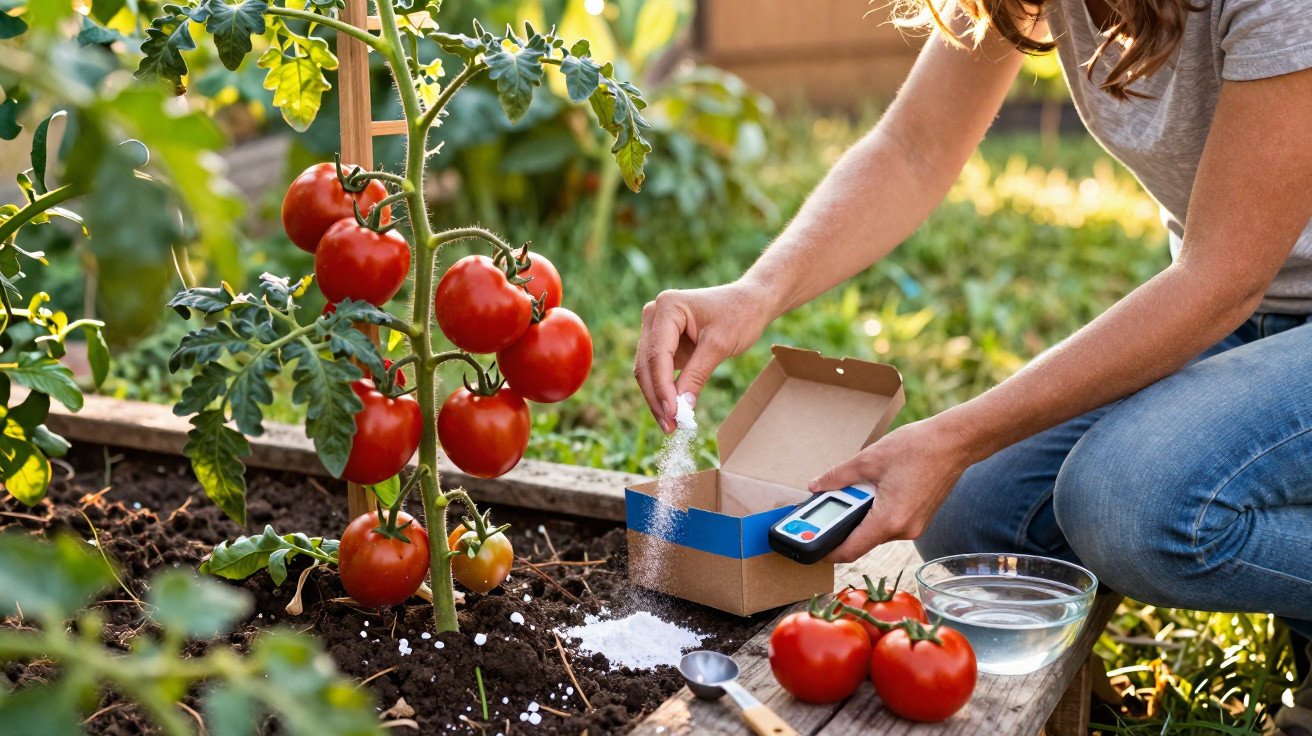
The fruit glows red and looks plump and healthy, yet on the palate it’s missing what you’ve been looking forward to for months: sweetness, fragrance, that unmistakable summer aroma. Instead, some tomatoes seem firm, sharp, and in some cases even a bit harsh on the stomach. For years, gardening groups and forums have passed around a tip that claims to fix exactly this - using a basic ingredient most people already keep in the kitchen cupboard.
The supposed miracle helper: bicarbonate of soda in the tomato bed
The substance at the centre of the debate is ordinary bicarbonate of soda (sodium hydrogencarbonate). Many people know the powder from baking, as a home remedy for heartburn, or as a cleaning staple. Tomato growers swear that a small amount worked into the soil around the plant can make the fruit taste less acidic.
"The idea: bicarbonate of soda is meant to buffer some of the acidity in the soil - and in doing so, indirectly influence the flavour of the tomatoes."
Countless blog posts, YouTube videos and social media clips recommend applying bicarbonate of soda sparingly around the root zone. The promise sounds almost too simple: one small spoonful into the soil, and a sour fruit becomes a mild, "sweet" snack. In practice, though, it isn’t that straightforward.
How gardeners use bicarbonate of soda on tomatoes
The most common approach starts at planting time, whether you’re putting young plants into a bed or into a large container:
- When planting, add a small amount of bicarbonate of soda (around 1 teaspoon / about 5 ml) to the planting hole.
- Mix the powder with a little soil so it isn’t sitting directly against the roots.
- Then place the tomato plant in position and backfill as usual.
Some people take it a step further during the season. As soon as the first small fruits set - roughly cherry-sized - they sprinkle a very light pinch onto the soil around the stem. A second tiny dose may follow once the fruit is about half ripe.
What matters is restraint: recommended quantities remain extremely small. Many tips explicitly say to use well under a quarter cup per plant over the entire season (a quarter cup is about 60 ml). The reasoning is that more than this can upset the soil’s balance.
Does it really make tomatoes taste sweeter?
Reports vary widely. Some hobby gardeners describe fruit that tastes noticeably milder, with less of an acidic edge. Others, using the same method, notice no change at all. There’s very little in the way of systematic evaluation - it’s essentially a collection of individual experiences that are difficult to compare.
If you’re curious, you can test it yourself. One straightforward approach is:
- Treat one tomato plant with bicarbonate of soda.
- Grow a second plant of the same variety right next to it as normal.
- With identical care, taste the ripe fruit blind and compare.
That usually makes it clear fairly quickly whether the effect is genuinely noticeable in your soil - or not.
Why bicarbonate of soda might change flavour
The explanation centres on pH. Bicarbonate of soda is mildly alkaline, with a pH of about 8. Tomatoes, by contrast, prefer soil that is slightly acidic to neutral - ideally roughly between 6 and 7. If the soil pH rises, the acidity you perceive in the flavour tends to decrease.
"Less acidity often translates for our tongue as: 'tastes sweeter' - even if the sugar level hasn’t actually increased."
Many people recognise a similar effect from cooking. When a tomato sauce tastes overly sharp, a tiny pinch of bicarbonate of soda is sometimes added to round it out. The sauce then seems milder, without resorting to adding sugar.
In the garden there’s a second factor: soil pH affects which nutrients the plant can take up. If nutrient availability shifts, the fruit’s composition may shift too - meaning the balance of acids, sugars and aroma compounds could change.
Is there scientific evidence?
For home-grown tomatoes, there are currently very few robust studies showing a real increase in sugar content. There are, however, a handful of studies in viticulture where a five per cent bicarbonate spray reduced rot on grapes and slightly increased measured sugar values. Whether that result can be applied directly to tomatoes in the garden remains unclear.
For now, the bicarbonate-of-soda “trick” for tomatoes is supported mainly by practical experience. Some gardeners are convinced; others remain unconvinced. That’s exactly why a small personal trial is more useful than copying advice blindly.
Risks and limits of the bicarbonate-of-soda trick
As harmless as bicarbonate of soda feels in the home, too much of it in the garden can cause genuine issues. Because it’s alkaline, it raises soil pH. If the pH stays too high for too long, tomatoes can become stressed.
- Leaves may take on a yellowish tone.
- Growth can slow, and the plant may look "tired".
- Certain nutrients - such as iron or manganese - can become less available.
Anyone who scatters larger amounts year after year risks turning a slightly acidic, tomato-friendly growing medium into soil that’s too alkaline. That’s why specialists advise using it only very sparingly, and at most trying it on only some plants.
Check pH rather than sprinkling blindly
A simple soil test from a DIY store or garden centre is enough to keep an eye on pH. Even a basic strip test can tell you whether your soil is on the acidic side, neutral, or already slightly alkaline.
It can also help to watch how the soil and plants respond over two to three years when bicarbonate of soda is used occasionally. That builds a realistic picture of whether the method works in your garden - or whether it’s simply a placebo.
What really makes tomatoes sweet and aromatic
Bicarbonate of soda may slightly change how strongly you perceive acidity. But the biggest drivers of flavour and sweetness are still the classic factors every gardener can control:
| Factor | Effect on flavour |
|---|---|
| Variety | Cherry tomatoes and heritage varieties often deliver more sweetness and aroma than standardised mass-market types. |
| Light | Plenty of sun supports sugar production and aroma development in the fruit. |
| Watering | Water moderately - constant drenching from the water butt can dilute flavour. |
| Feeding | Balanced nutrition supports aroma; too much nitrogen produces large but bland fruit. |
| Ripeness | Fully ripe tomatoes picked from the plant taste more intense than fruit harvested half ripe. |
So if you’re aiming for sweeter tomatoes, it makes sense to start with variety choice, siting, watering and feeding. Bicarbonate of soda can be, at most, a small extra tweak - not the core strategy.
Practical examples: when bicarbonate of soda can make sense
There are situations where bicarbonate of soda is genuinely worth considering. If your soil is very acidic - for example, on former peatland or in areas affected by strongly acidic rain - you may find your tomatoes taste particularly sharp. In that case, a very cautious, targeted attempt to raise pH around the plants could be worth trying.
For people with sensitive stomachs who react strongly to acidity in raw foods, a slight reduction in perceived sharpness can also be welcome. Combined with naturally mild varieties, that can produce tomatoes that feel noticeably easier to tolerate.
Alternatives and sensible combinations
Instead of relying on bicarbonate of soda alone, many gardeners prefer longer-term ways to nudge soil towards neutral:
- Work in compost in moderation
- Mulch with mature organic material that isn’t overly acidic
- For strongly acidic soils: occasional liming, correctly dosed
Alongside these measures, bicarbonate of soda is best viewed as a fine-tuning tool for people who like experimenting. If you do use it, it helps to remember it doesn’t magically transform flavour - it mainly alters the perception of acidity, and only when the soil really was too acidic to begin with.
Ultimately, your own taste decides. If you enjoy testing ideas, set up two identical tomato rows next season - one with bicarbonate of soda and one without. You’ll learn more from the difference than from any heated online debate.



Comments
No comments yet. Be the first to comment!
Leave a Comment